
Ex-MAGA Staffer Claims Man at NBA Game Told Her She Should Be 'Gang-Raped,' Raising Mental Health Concerns
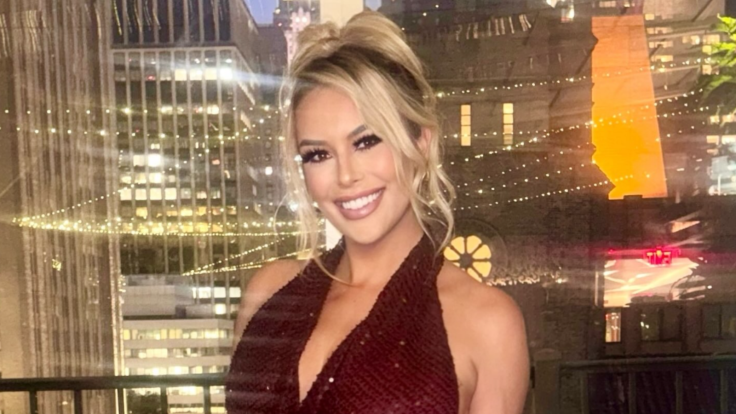
Britt McHenry, a former Trump administration staffer, shared her account of the 21 October incident at the Washington Wizards and Milwaukee Bucks game in a social media video on 28 October.
She said she had been defending another woman and herself when the confrontation escalated. Her account comes amid research into the potential psychological effects of public humiliation and sexual harassment.
McHenry Describes the Alleged Harassment at the NBA Game
McHenry said the confrontation began when a man seated in front of her allegedly insulted Milwaukee Bucks player Kyle Kuzma's fiancée, model Winnie Harlow, making derogatory remarks about her appearance and vitiligo, a condition characterised by patches of skin losing their pigmentation.
According to McHenry, the man said Kuzma's fiancée was unattractive and compared her skin condition to Michael Jackson. She responded sarcastically: 'Oh, I'm sure your girlfriend's really beautiful, right?'
McHenry acknowledged that her comment may have escalated tensions. She said another man then turned towards her and allegedly told her to 'shut the f*** up, you dumb b****'.
She attended the game with her friend, YouTuber Andrew Fenichel. The pair briefly left their seats, and an usher offered to relocate them. However, they decided to return because Fenichel had purchased good tickets.
'In hindsight, I wish we had left,' McHenry said, recalling that people in the group subsequently began throwing items towards them.
She Says an Alleged Gang-Rape Threat Prompted Her to Throw Beer
McHenry alleged that the confrontation escalated when the man she described as the main agitator made a sexually violent remark about her.
'The main agitator says something truly vile to me about what should be done to me, allegedly about getting gang-raped outside,' McHenry said.
McHenry said she then threw the remainder of her beer in the man's direction before turning to Fenichel and telling him they should leave. She also alleged that members of the group continued throwing drinks and rally towels at them as they exited, adding that an usher was struck.
In her accompanying post, McHenry wrote: 'I believe in sticking up for another woman, which is what I did, and for yourself when you're being heckled and harassed.'
This is what truly happened at the Wizards game. I could say a lot more, but I already lost my job for it. I believe in sticking up for another woman, which is what I did, and for yourself when you’re being heckled and harassed. pic.twitter.com/JNnmeVP0ri
— Britt McHenry (@BrittMcHenry) October 28, 2026
McHenry Reportedly Lost Her Government Job After The Incident
Footage of McHenry throwing a drink circulated online after the game, drawing attention to her actions and the confrontation with spectators.
According to media reports, McHenry was forced to resign from her position as a press adviser at the US State Department after the incident. The reported departure came just one day after she received a promotion.
In her latest video, she suggested that losing her job had limited what she felt able to say publicly.
'This is what truly happened at the Wizards game. I could say a lot more, but I already lost my job for it,' she wrote.
McHenry's account offers her explanation of the events leading up to the drink-throwing incident, which drew widespread attention after footage circulated online.
Public Humiliation and Harassment Can Affect Mental Health
The incident also raises questions about the psychological toll of being humiliated or threatened in front of others, particularly when footage of a confrontation spreads online.
A 2024 systematic review and meta-analysis published in the Journal of Pacific Rim Psychology examined 33 studies involving 40,468 participants.
Researchers found that experiencing public humiliation was associated with poorer mental health outcomes, including emotional distress, anxiety, depression and stress. The findings suggest that public humiliation can be more than a fleeting embarrassment for some people.
Sexual harassment can also have psychological consequences. A 2024 study published in the Journal of Interpersonal Violence examined cyber-sexual harassment among 136 adult women.
Researchers found that reported experiences were associated with higher levels of anxiety, depression and trauma symptoms, although the study was relatively small and focused on online harassment rather than incidents at sporting events.
The allegations about the remarks and subsequent harassment have not been independently verified.