
Gay Man Who Lost Friends To Aids Wins Landmark Court Battle Against Colonial-Era Law
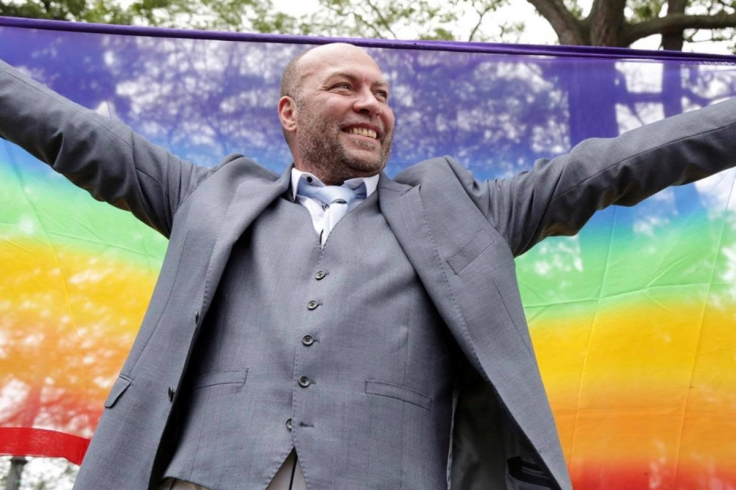
Trinidad and Tobago's colonial-era ban on consensual same-sex intimacy between men has been struck down by the Judicial Committee of the Privy Council. In a unanimous ruling delivered in London on Tuesday, judges allowed Jason Jones' appeal, ending a legal fight that began in 2017.
Jones, a gay man born in the Caribbean nation, has said he lost friends to HIV/AIDS and left the country after experiencing homophobic violence and discrimination. He challenged the laws on the grounds that they breached his constitutional rights.
What the Privy Council Ruled
The five-judge panel found that two provisions of Trinidad and Tobago's Sexual Offences Act 1986, which criminalised acts described as 'buggery' and 'serious indecency' between men, breached rights to private and family life under the country's 1976 constitution. The offences carried prison terms of up to five years.
Lord Sales said those rights protected 'such a core part of human identity as one's sexual orientation.' He added: 'Laws which seek to criminalise such activities cannot be justified.'
The government argued that the provisions were protected as 'existing law,' a category covering some statutes inherited from before the constitution. It also argued that the laws had been passed by a parliamentary super-majority.
The judges rejected the arguments, finding that the provisions could not be justified in a society that properly respected individual rights and freedoms.
The Privy Council allowed Jason Jones' appeal and dismissed the Attorney General's counter-appeal. Jones' lawyer, Anand Ramlogan, a former attorney general, said: 'Constitutional rights exist precisely because majorities are not always right.'
The laws have not been enforced in recent years, according to reports on the case. Jones and his supporters say they nevertheless continue to criminalise gay people. The Attorney General's office, which opposed the appeal, did not immediately respond to a request for comment, Reuters reported.
From High Court Victory To Final Appeal
Jones challenged the laws in 2017 and won at the High Court in 2018. The Court of Appeal partly reversed that ruling in 2025, sending the case to the Privy Council, Trinidad and Tobago's final court of appeal.
Born in Trinidad and Tobago, Jones now lives in Britain. He has said he left the country in 1996 after homophobic violence and discrimination, and was openly gay from the age of 16.
Jones told the Associated Press that losing friends to HIV/AIDS helped prompt his campaign. He also recalled meeting Nina Simone in 1984.
'Nina was the one who said, "Jason, get off this rock and go see the world,"' he shared.
The Ruling's Reach Beyond Trinidad and Tobago
Similar colonial-era laws remain in force in several Caribbean countries. Courts in Barbados, Dominica, St Lucia and Antigua and Barbuda have struck down comparable provisions, while other countries in the region retain them.
The Privy Council's decision may provide a basis for future legal challenges, but it does not change laws in other countries. Nor does it settle wider questions of equality for LGBTQ+ people in Trinidad and Tobago. Jones has said those broader human rights issues remain unresolved across the Commonwealth.
The judgment addresses a specific challenge to two provisions of Trinidad and Tobago's law. For Jones, it ends a lengthy legal battle over whether the state could criminalise private, consensual intimacy between adult men. The broader legal and political questions remain.