
Woman Went Out for Pizza on Partner's Birthday – Then Gave Birth Hours Later
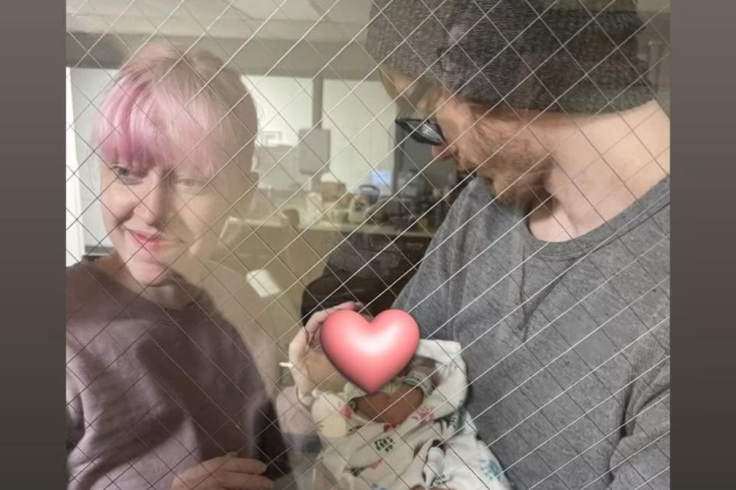
A 28-year-old woman who thought she was suffering from severe period cramps went out for pizza on her partner's birthday, only to give birth to a baby girl hours later after discovering she had been pregnant without knowing it.
Helen Dale, from Illinois, USA, said she experienced no obvious pregnancy symptoms throughout the pregnancy. She continued having what she believed were regular periods and gained only around 10 pounds, which she attributed to eating more.
The unexpected delivery happened on November 22, 2025, after Helen woke at around 2 a.m. with what she described as the worst period cramps of her life.
Despite being in pain throughout the day, she initially tried to carry on with her plans for her partner Justin Hile's 32nd birthday. The couple even went out for pizza while Helen was unknowingly in labour.
By around 7 p.m., the pain had become unbearable. Helen suspected appendicitis and decided to run a bath, hoping it would help.
She Gave Birth After Two Pushes
Just 10 minutes after getting into the bath, Helen felt an overwhelming urge to push. She then realised a baby's head was emerging.
'I thought, "Oh my God, what's happening? There's a baby coming and the rest has to come out",' she recalled.
Helen said she pushed again and found herself holding her newborn daughter. She unwrapped the umbilical cord, suctioned the baby's nose and rubbed her back until she began crying.
Her partner was in the next room and initially had no idea what was happening. Helen eventually called out for help, and Justin contacted emergency services.
The baby, named Clara, weighed approximately 5 pounds at birth. Helen was discharged from hospital after a day, while Clara remained under medical care for five days. The baby was reported to be healthy.
Doctors Suggested Why She Missed the Pregnancy
Helen said doctors suggested that a tilted uterus and an anterior placenta might have contributed to her not recognising the pregnancy.
An anterior placenta develops when the placenta attaches to the front wall of the uterus. According to Cleveland Clinic, this positioning can make fetal movements harder to feel because the placenta cushions some of the baby's kicks.
However, these factors do not establish exactly why Helen experienced so few noticeable signs. Her account does not identify a confirmed medical explanation for the unexpected delivery.
She also said her mother, a nurse practitioner, had seen her the week before Clara's birth and did not realise she was pregnant.
What Is a Cryptic Pregnancy?
Helen's experience resembles what is commonly called a cryptic pregnancy, when someone remains unaware of a pregnancy until late in gestation or even the onset of labour.
Cleveland Clinic estimates that approximately one in 475 pregnancies remain unrecognised until around 20 weeks, while about one in 2,500 are not discovered until delivery.
People may overlook pregnancy symptoms, mistake them for other conditions or experience changes that are less noticeable. Some may also mistake pregnancy-related bleeding for menstrual periods, although a true menstrual period does not continue during pregnancy.
Pregnancy tests detect human chorionic gonadotropin (hCG), a hormone produced during pregnancy. A healthcare provider can confirm a pregnancy through urine or blood testing and ultrasound.
Going through pregnancy without knowing can mean missing important prenatal checks, including assessments for gestational diabetes and pre-eclampsia. It can also leave someone unprepared for labour and delivery without medical support.
Couple Adjusts to Unexpected Parenthood
Before Clara arrived, Helen said she had not wanted children, while Justin had hoped to become a father. The couple had not been trying for a baby and had bought their home just three weeks before the birth.
The sudden change initially left Helen in shock, but she said she bonded with Clara after arriving at the hospital.
Friends and relatives helped the couple prepare for their new arrival, donating baby clothes, a cot and a pram. They also converted a games room into a nursery.
A year after the unexpected birth, Helen described motherhood as an experience she would not change.
'It's been such a big change but I wouldn't change it for the world,' she said.