
AI-Generated 'Doctors' Go Viral With False Cancer Claims About Deodorant and Phones, Experts Warn
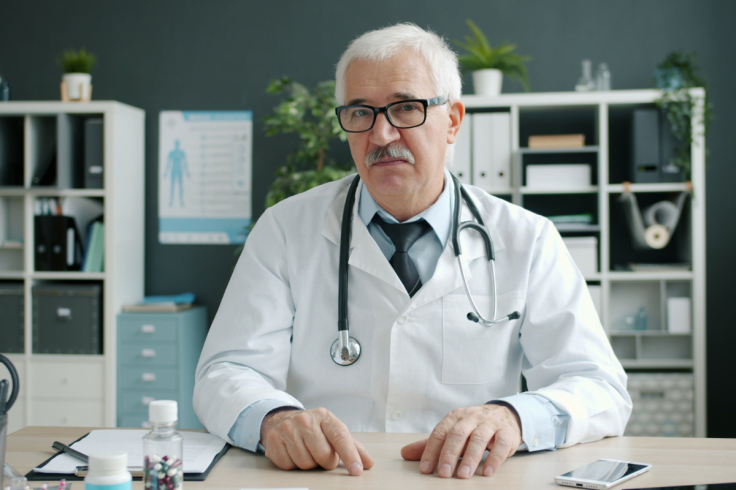
AI-generated videos featuring convincing 'doctors' are spreading health misinformation on social media, with some AI-generated presenters posing as doctors and making alarming claims about everyday products and behaviours supposedly causing cancer.
The videos can look and sound like legitimate medical advice, complete with white coats, clinical settings and authoritative explanations. But the people presenting the information may not exist, and the claims being delivered can have little or no scientific basis.
A recent investigation highlighted the growing public-safety concern surrounding AI-generated medical content on TikTok, including videos falsely linking common products and habits to cancer.
The analysis of 1,198 TikTok videos found AI-generated content in 40% of the top health-related videos examined, rising to 84% among videos returned for the search term 'health tips'.
Among the claims circulating online are suggestions that deodorants can cause cancer or that sleeping near a mobile phone increases cancer risk.
Neither claim should be treated as established medical fact.
There Is No Evidence Deodorant Causes Cancer
Dr Debra Jaliman, a board-certified dermatologist and clinical assistant professor at the Icahn School of Medicine at Mount Sinai, said there is no evidence that deodorants or antiperspirants cause cancer.
She pointed to a 2002 study published in the Journal of the National Cancer Institute that examined antiperspirant use and breast cancer risk among 1,606 women. The study, which included 813 women with breast cancer and 793 women without the disease, found no association between antiperspirant or deodorant use and breast cancer risk.
The concern has persisted partly because some antiperspirants contain aluminium-based compounds, which temporarily block sweat ducts to reduce perspiration.
Although aluminium compounds can be absorbed through the skin, the NCI says no studies have confirmed substantial adverse effects that would increase breast cancer risk.
'These ingredients have not been found to cause cancer,' Jaliman said.
She also addressed another common claim involving parabens, preservatives used in some cosmetic and personal-care products.
'Parabens, which are preservatives, do not have any research that supports they cause cancer,' she said.
That does not mean every cosmetic ingredient is automatically risk-free. Rather, claims that a particular ingredient causes cancer require evidence from appropriately designed studies rather than viral videos or convincing-looking AI presentations.
Why AI-Generated Doctors Can Look So Convincing
The danger of these videos is not simply that they contain incorrect information.
AI-generated presenters can create the appearance of medical authority without having any medical expertise at all.
A viewer scrolling through TikTok may see someone who appears to be a doctor speaking confidently about cancer, complete with medical terminology and a professional-looking background. That presentation can make unsupported claims seem more credible than they would in a text post.
Researchers and health experts have increasingly raised concerns about AI-generated health misinformation because synthetic content can be produced quickly, replicated easily and distributed to large audiences.
The problem becomes particularly serious when the content concerns conditions such as cancer, where frightening claims can encourage people to change their behaviour or avoid products and treatments without consulting a qualified healthcare professional.
Sleeping Near Your Phone Is Not the Same as Having a Known Cancer Risk
Claims about mobile phones and cancer often rely on another source of confusion: the difference between a theoretical biological concern and an established health risk.
Mobile phones emit radiofrequency radiation, a form of non-ionising radiation. Unlike ionising radiation from sources such as X-rays, non-ionising radiation does not have enough energy to directly damage DNA in the same way.
Research into long-term mobile phone exposure has continued for years, but current evidence does not show that mobile phone use causes cancer in humans.
The same principle applies to many viral health claims.
A biological mechanism that sounds plausible is not enough to establish that an everyday exposure causes disease. Researchers need evidence from epidemiological studies, laboratory research and other forms of investigation before a causal relationship can be established.
The Real Health Risk May Be the Misinformation
The consequences of medical misinformation can extend beyond whether someone buys a particular deodorant or moves their phone away from their bed.
A person who repeatedly encounters false claims about cancer may begin avoiding products unnecessarily, spending money on unproven alternatives or becoming unnecessarily fearful of ordinary activities.
More seriously, misinformation can undermine trust in evidence-based healthcare.
Cancer is already a condition in which early detection and appropriate treatment can matter enormously. Advice that encourages people to focus on unsupported causes while overlooking established risk factors can distract from measures that actually have evidence behind them, such as recommended cancer screening, avoiding tobacco, limiting alcohol and protecting the skin from excessive ultraviolet radiation.
The rise of AI-generated 'doctors' makes that distinction harder for viewers to navigate.
A realistic-looking medical professional on a screen is not evidence of medical expertise. When a health claim sounds frightening or absolute, checking who is making the claim, what evidence supports it and whether qualified medical organisations agree can be more important than ever.