
Stage 4 Cancer Patient Says Canada Offered Assisted Death Before Oncology Appointment, So She Fled
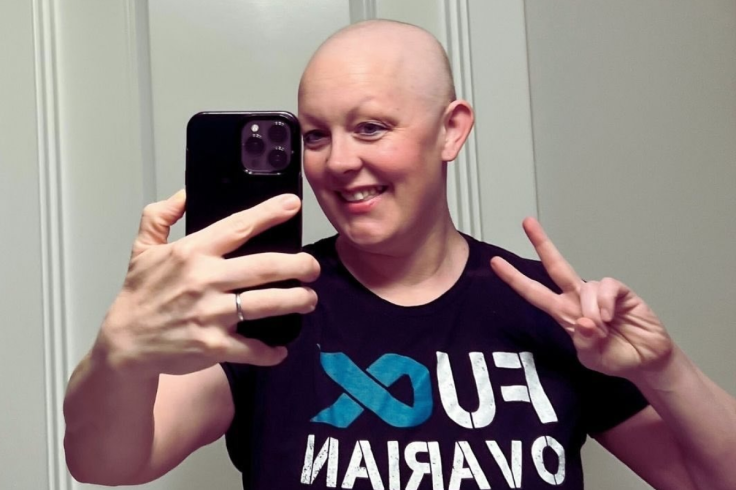
A US Air Force veteran with stage 4 ovarian cancer says she received information about Canada's assisted dying programme before she could see an oncologist. She and her husband later returned to the United States to seek treatment.
Kristin Logan and her husband, Donovan James, moved to Canada hoping to benefit from publicly funded healthcare and avoid high medical costs.
However, Logan told Fox News Digital that learning about medical assistance in dying (MAID) before seeing a cancer specialist made her feel that she was being encouraged to give up on treatment.
'It was the most heartbreaking experience, to basically be set up to die,' she said. Logan added that she felt she had to leave Canada if she wanted to keep fighting her illness.
Fox News Digital reported that Health Canada had not immediately responded to its request for comment. The report does not establish whether Logan was formally assessed for MAID eligibility or whether a healthcare professional recommended it to her.
Why Did Kristin Logan Leave Canada During Cancer Treatment?
Logan was diagnosed with stage 4 ovarian cancer in September 2023, aged 43. She left Canada later that month to begin treatment in the United States.
In March 2024, she suffered a bowel obstruction. She returned to Canada the following month, but her cancer came back in December. The couple decided to leave Canada permanently in January 2025 and completed their move to the US in May.
James said Logan later suffered another medical emergency. According to him, Canadian healthcare providers told the family there were no immediate plans to operate on her. He also said a helicopter transfer to Vancouver was unavailable and that a doctor advised Logan to leave Canada if she had the means.
The couple then arranged an emergency journey by car and ferry to Seattle, where Logan underwent surgery. James said the surgeon warned that she could have developed sepsis and died if she had waited another day.
What Is Canada's Medical Assistance in Dying Programme?
MAID allows eligible people in Canada to receive medical assistance to end their lives. However, a cancer diagnosis alone does not qualify someone for the programme.
Under federal law, applicants must have a grievous and irremediable medical condition, which includes a serious and incurable illness, disease or disability; be in an advanced state of irreversible decline in capability; and experience enduring physical or psychological suffering that they find intolerable and that cannot be relieved under conditions they consider acceptable. They must make a voluntary request and be assessed by two independent medical practitioners.
Patients must be informed of available means to relieve their suffering, including counselling, mental health and disability support services, community services and palliative care. Providing information about MAID is not the same as recommending it or approving someone for the procedure.
Logan's account raises questions about how the programme was discussed with her.
How Common Is Assisted Dying in Canada?
Health Canada's latest report, which covers 2024, recorded 16,499 cases of MAID, up 6.9% from the previous year. This accounted for 5.1% of all deaths in Canada. Most people who received MAID were in Track 1, meaning their natural death was reasonably foreseeable. The remaining 4.4% were in Track 2, for whom natural death was not reasonably foreseeable.
On 27 October 2026, the Canadian government introduced Bill C-41, which proposes allowing eligible adults with an incurable condition expected to cause a loss of decision-making capacity to make advance requests for MAID, subject to safeguards. It would also prevent the scheduled expansion of MAID to people whose sole underlying condition is mental illness. The bill has not yet become law.
Logan and James eventually left Canada to seek treatment in the United States. Their experience has raised questions about how patients are informed about assisted dying while trying to access medical care.