
'Wolverine' Peptide Surges 33-Fold for Injury Recovery Despite Little Evidence It Heals the Body
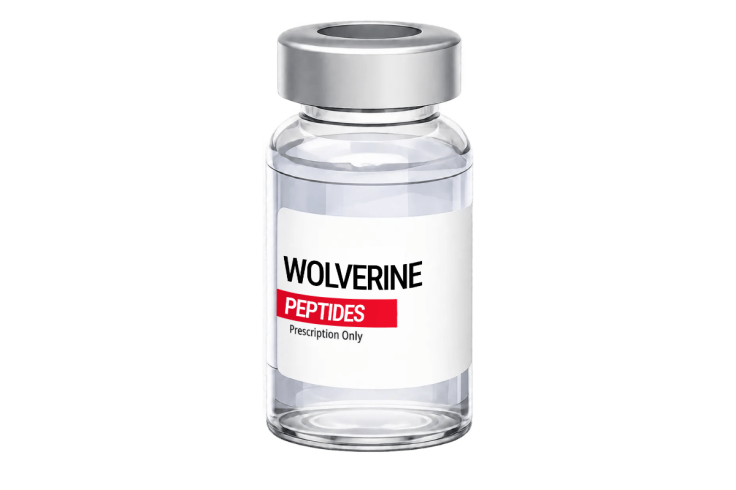
BPC-157, an experimental peptide nicknamed the 'Wolverine' compound for its supposed ability to accelerate healing, is increasingly being used by people seeking faster injury recovery and pain relief. New research suggests documented use of the peptide increased roughly 33-fold between 2020 and 2026, despite limited evidence showing that it actually works in humans.
A September 2026 preprint examined more than 15 million medical records and identified 1,039 people with documented BPC-157 use. The researchers found a roughly 33-fold increase in new users over the study period. The findings have not yet undergone peer review, meaning they should be interpreted cautiously.
The surge reflects a growing interest in experimental peptides promoted online for injury recovery, muscle performance and pain relief. But popularity is moving considerably faster than the clinical evidence.
What Is the 'Wolverine' Peptide?
BPC-157 is a synthetic 15-amino-acid peptide derived from a sequence associated with a protein found in the stomach. It has been studied for potential effects on tissue repair, inflammation and blood-vessel formation.
Its 'Wolverine' nickname comes from the fictional X-Men character known for rapid regeneration. Online fitness communities have adopted the name to describe claims that BPC-157 can help the body recover from damaged muscles, tendons, ligaments and other tissues.
Some users also combine BPC-157 with another experimental peptide called TB-500, a fragment related to thymosin beta-4, in what is commonly marketed as a 'Wolverine stack'.
The biological theory is not entirely baseless. Animal and laboratory studies have reported effects involving inflammation, tissue repair and angiogenesis, the formation of new blood vessels. However, findings in animals do not establish that the same treatment will safely or effectively heal human injuries.
@houstonmethodist The “Wolverine peptide” is often described online as a powerful regenerative option — but what does that actually mean? We unpack what’s typically included in this peptide stack, why it’s drawn interest and why evidence behind many of the claims is still limited. #wolverinepeptide #peptide #skincare ♬ original sound - Houston Methodist
Human Evidence Is Still Extremely Limited
A 2025 systematic review of BPC-157 research found 36 relevant studies, but 35 were preclinical and only one was a clinical study. The review concluded that there was no clinical safety data available to establish how safe the peptide is in humans.
That distinction matters because a treatment can appear promising in laboratory experiments while failing to produce the same benefits in people.
One small retrospective study examined 16 people with chronic knee pain who received injectable BPC-157; seven reported pain relief lasting more than six months. However, the study did not have the size or controlled design needed to establish that BPC-157 caused the improvement.
The latest 33-fold usage study also cannot establish whether BPC-157 works. Researchers found that pain relief was the most frequently documented reason for use, while reports of wound or tissue healing were much less common.
Sports medicine specialist Bert Mandelbaum, MD, told Healthline there is currently no clinical evidence demonstrating that BPC-157 is effective for pain or healing.
The Biggest Question May Be Safety
The lack of evidence is not limited to whether BPC-157 works. Researchers also do not have enough information to determine its long-term safety.
The U.S. Food and Drug Administration has previously warned that compounded BPC-157 may present safety concerns related to immune reactions, impurities and difficulties in characterising the active ingredient. The agency said it has limited safety information for proposed routes of administration.
FDA records also contain reports of adverse events involving people who used compounded BPC-157, including injection-site redness and swelling, shortness of breath and changes in skin and gum pigmentation. The agency cautioned that these reports cannot establish whether BPC-157 itself caused the reactions.
That uncertainty becomes particularly important when products are purchased online or obtained from sources where manufacturing, sterility, dosage and ingredient purity cannot be independently verified.
BPC-157 is also prohibited by the World Anti-Doping Agency as an unapproved substance for athletes.
Did the FDA Approve BPC-157?
No.
In July 2026, an FDA advisory committee voted to recommend adding BPC-157 to the Section 503A bulk drug substances list, which concerns substances that may be used by certain compounding pharmacies. That vote did not make BPC-157 an FDA-approved medication, and BPC-157 is not an ingredient in an FDA-approved product.
The distinction is important because an advisory committee decision about compounding is not the same as regulatory approval demonstrating that a drug is safe and effective for a particular medical condition.
For people recovering from an injury, established treatments such as appropriate rehabilitation, physical therapy, pain management, and evidence-based surgical or nonsurgical care remain the better-supported options.
The appeal of BPC-157 is understandable, particularly for people dealing with persistent pain or injuries that have been slow to heal. But a dramatic rise in use does not provide evidence that the treatment works. For now, the 'Wolverine' label reflects a promise of regeneration that clinical research has yet to prove in humans.