
Christa Pike Says 'I Am Not Afraid To Die' Hours Before Tennessee's First Female Execution in 200 Years
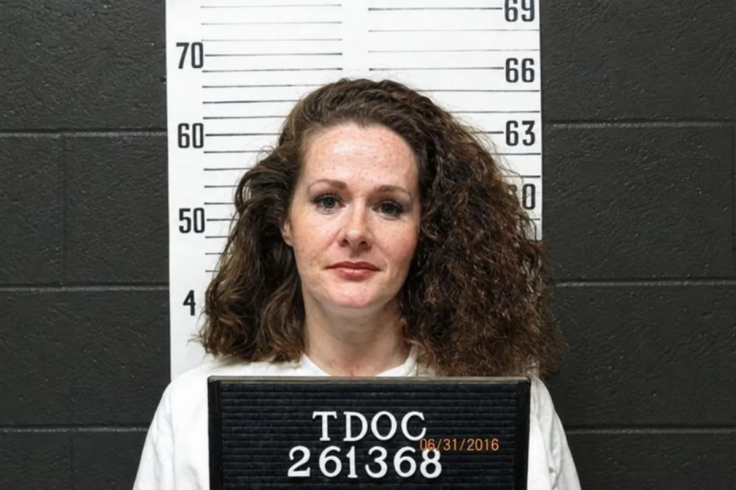
After more than three decades on death row, Christa Pike is facing the final hours before a scheduled execution that would make her the first woman put to death by Tennessee in more than 200 years.
Pike, now 50, was sentenced to death for the 1995 murder of 19-year-old Colleen Slemmer, a fellow student at a Tennessee Job Corps programme. Pike was 18 when the crime occurred. She has since spent decades incarcerated, while her lawyers have continued challenging her sentence and seeking clemency.
Ahead of the scheduled September 30 execution, Pike has said she is at peace and is not afraid to die, according to reports. Tennessee Governor Bill Lee has declined to intervene, while her attorneys have asked the US Supreme Court to halt the execution.
The case has also drawn attention to Pike's documented history of childhood trauma and mental health conditions, raising questions about the psychological effects of prolonged incarceration and facing an imminent execution.
What Happens to the Mind Before an Execution?
Facing an imminent death can represent an extraordinary psychological stressor, but there is no single psychological response to it.
While she said she is at peace, Pike has also said she is nervous about the execution process, according to reports. Her legal filings have described a history of severe childhood abuse and diagnoses including PTSD and bipolar disorder.
People exposed to extreme stress can experience very different responses, including fear, anxiety, emotional distress or, in some circumstances, a sense of acceptance. A person's outward behaviour also cannot reliably reveal their internal psychological state.
How Can Long-Term Incarceration Affect Mental Health?
Pike has spent decades on death row, a period that her lawyers and supporting experts have highlighted in legal proceedings surrounding her execution.
Research into prolonged solitary confinement has associated it with psychological problems including anxiety, depression and other adverse mental-health symptoms. The effects vary between individuals and depend on factors including the duration and conditions of isolation.
Experts supporting Pike's legal challenge have argued that aspects of the execution process could retraumatise her because of her history of sexual abuse and rape.
Those claims concern potential psychological effects and should not be presented as a prediction of how Pike herself will respond.
Why Is Pike's Childhood Trauma Part of the Legal Debate?
Pike's lawyers have argued that her childhood history should have received greater consideration when she was sentenced. Her clemency petition describes repeated sexual abuse and neglect and later diagnoses of PTSD and bipolar disorder.
Her attorneys and supporting experts argue that these experiences provide context for understanding her development and behaviour at the time of the crime.
The state's position is different. Pike was convicted and sentenced to death for Slemmer's murder, and Slemmer's family has opposed efforts to spare Pike's life. Pike's documented trauma does not alter the fact that she was convicted of the killing.
How Does Lethal Injection Affect the Body?
Tennessee's current lethal-injection protocol uses the single drug pentobarbital. The state's Department of Correction revised the protocol in 2024 following an independent review.
Pentobarbital is a barbiturate that enhances signalling through GABA-A receptors in the brain, increasing inhibitory activity in the central nervous system. At sufficiently high concentrations, this produces profound central nervous system depression.
One important effect is suppression of the neural systems that control breathing. Pharmacological research has shown that pentobarbital can depress respiratory drive and, at sufficiently high exposure, produce apnoea, meaning breathing stops. It can also depress cardiovascular function, including blood pressure and heart activity.
As breathing and, ultimately, circulation fail, oxygen delivery to the brain and other organs falls. This is not simply equivalent to ordinary sleep or anaesthesia: the intended outcome of the execution protocol is irreversible loss of vital functions.
There has been longstanding medical and legal debate over whether lethal-injection protocols reliably maintain unconsciousness throughout an execution. Research into older multi-drug protocols has raised concerns about inadequate anaesthesia and possible awareness, although those studies do not directly establish what occurs under Tennessee's current single-drug protocol.
What Happens to the Body After Circulation Stops?
Once circulation has stopped, the brain is particularly vulnerable because its cells require a continuous supply of oxygen and glucose to produce energy.
Without that supply, brain cells rapidly lose their ability to function, and if circulation cannot be restored, the resulting injury becomes irreversible.
After death has been determined, the body undergoes normal post-mortem changes. Cells stop maintaining their normal energy-dependent processes, the body gradually cools and muscles relax. Chemical and cellular breakdown then progresses through the natural processes of decomposition.
These biological changes occur regardless of the cause of death and are separate from the psychological question of what a person experiences immediately before death.
Pike's statement that she is 'not afraid to die' describes her reported experience.