
Christina Applegate Says Misdiagnosis 'Stopped My Life' as She Breaks Down Over Losing Her Career and Mobility
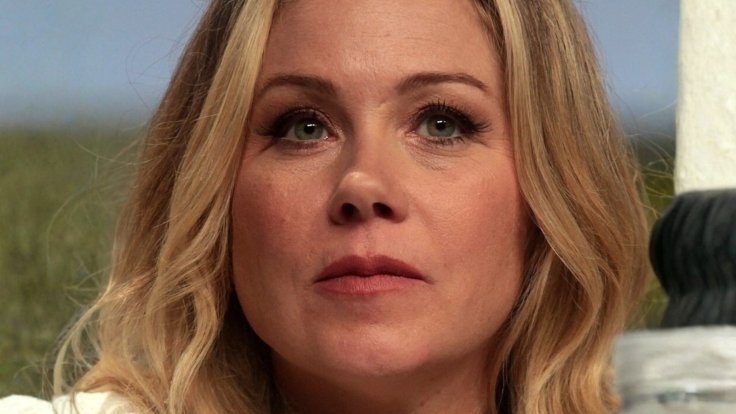
Christina Applegate announced she was misdiagnosed with multiple sclerosis, more than five years after doctors told her she had the chronic disease.
The 54-year-old actress revealed the news on her podcast MeSsy, which she co-hosts with fellow performer Jamie-Lynn Sigler. Applegate said her physician entered the room and declared: 'Congratulations, you don't have MS.'
Applegate expressed anger and grief rather than relief, explaining that her severe physical symptoms remain unexplained and untreated.
'You don't get misdiagnosed and then all of a sudden I'm better,' Applegate said. 'If anything, I've gotten worse in some ways. So I'm back at square one, that I don't know what's going on.'
Multiple sclerosis occurs when the immune system mistakenly damages the protective layer around nerves, blocking messages sent from the brain to the body.
Infusion Test Disproved Applegate's MS Diagnosis
Doctors made the discovery after pausing Applegate's regular infusion treatments to track her B cells. When her cell counts did not change at all, clinicians began questioning whether multiple sclerosis was ever present.
The finding overturned five years of medical assumptions that drove Applegate into retirement amid chronic pain. She stepped away from Hollywood after filming the final season of Netflix series Dead to Me, where crews adjusted scenes around her physical limitations.
Today, Applegate attends physical therapy three times a week and still relies on a wheelchair for doctor appointments. 'It's clear now that they're finding something different,' Applegate said. 'Something else is going on.'
Neurologists Warn False MS Diagnoses Are Common
Applegate's diagnostic reversal exposes a major blind spot in modern neurology. Appearing on the podcast, Cedars-Sinai neurologist Dr Marwa Kaisey explained that nearly one in five diagnosed patients do not actually have MS.
Because the condition lacks a single definitive test, doctors frequently mistake look-alike illnesses for multiple sclerosis.
A 2019 review in Frontiers in Neurology reported that studies at specialised multiple sclerosis centres found that around 30% of patients referred with suspected MS were ultimately diagnosed with other conditions.
Separate research found that more than half of misdiagnosed patients had lived with the incorrect diagnosis for at least three years, while 70% had received disease-modifying treatments and 31% experienced unnecessary morbidity.
Neurologists caution that common conditions like migraines, fibromyalgia, and small-vessel disease are often mistaken for multiple sclerosis.
How Misread Brain Scans Lead to False MS Diagnoses
Researchers link many diagnostic errors to the misuse of the McDonald criteria, which evaluate MRI scans for nerve damage. However, MRI abnormalities associated with conditions such as migraine and small-vessel disease can sometimes be mistaken for signs of multiple sclerosis.
The rush to start aggressive treatments early can also push doctors toward premature conclusions.
Once a diagnosis is made, physicians often hesitate to reconsider it, even when warning signs emerge.
Neurologists urge using spinal fluid tests and advanced imaging markers to rule out look-alike illnesses. Without these rigorous checks, patients risk taking toxic medications for conditions they do not actually have.
Applegate Grieves Lost Years After Shock MS Misdiagnosis
For Applegate, the misdiagnosis has triggered severe psychological distress alongside her unresolved physical disability.
She broke down in tears as she described the impact on her career and mobility. 'I lost everything. I lost my job,' she said. 'What do you say to someone who's been living with this for six years ... because it stopped my life.' She added that she still needs a wheelchair to attend medical appointments and cannot walk from her car to the doctor's office.
Being a prominent voice for the chronic illness community, she admitted feeling like she let down fellow patients. 'I had a reason as to why my day sucked every day,' Applegate said. 'And now I don't have a reason.'
Applegate said her doctors would investigate what has caused her symptoms since 2021, although she remains uncertain about the underlying condition.