
Chicago Mother and 3 Adult Children Need Open-Heart Surgery After Discovering Rare Genetic Disorder
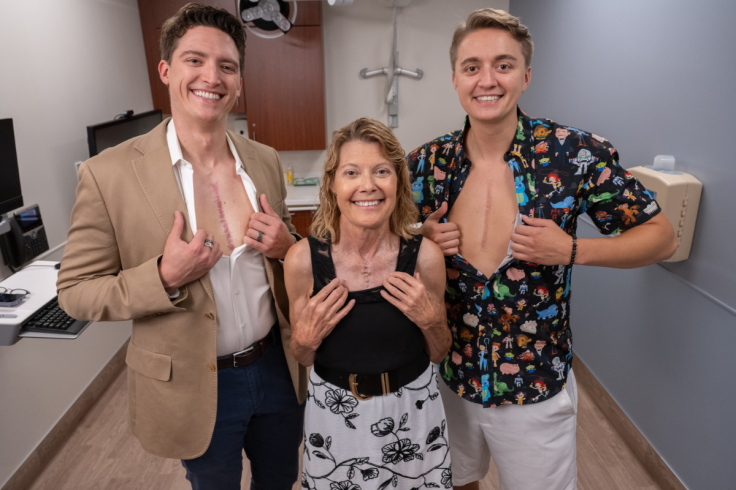
A Chicago-area mother and three adult children underwent major heart surgery within six months after a rare inherited disorder was found in their family. The condition raises the risk of a potentially deadly tear in the body's main artery.
Annette Wagner, 66, survived an aortic dissection in July 2025. Her three children, who carry the same condition, later had planned operations to reduce their risk of a similar emergency.
Northwestern Medicine shared the family's story on 26 November 2026. It highlights how family medical history can help identify inherited heart risks before they become life-threatening.
How the Family Discovered Loeys-Dietz Syndrome
Wagner has Loeys-Dietz syndrome, a genetic disorder affecting connective tissue, which supports and holds parts of the body together. It can weaken the aorta, the large artery carrying blood from the heart.
The condition can cause an aneurysm, where an artery becomes enlarged, and an aortic dissection. This occurs when a tear forms in the aorta's inner wall, allowing blood to flow between its layers. It can be life-threatening.
Wagner began investigating her family's health history after her brother suffered an aortic dissection at 38 in 1992. Her brother's experience prompted Wagner to investigate a family history of aortic disease.
She collected blood and skin samples from more than 40 relatives in Nova Scotia for researchers studying aortic disease. In 2011, she learned that she and three of her six children carried a genetic variant associated with Loeys-Dietz syndrome. Wagner and three of her six children carried the mutation.
Why Her Children Had Preventive Surgery
In July 2025, Wagner felt sudden, severe chest pain while seeing a patient at work. Recognising the symptoms, she asked a colleague to call emergency services.
Her first operation did not resolve the damage. After her heart stopped and she was placed on life support, she was transferred to Northwestern Memorial Hospital. Surgeons later replaced parts of her aorta and heart valves. She spent weeks in intensive care.
After waking from a coma, Wagner urged her three affected children to have preventive surgery. Her children's aortas measured between 4.0 and 4.1 centimetres, just 1 to 2 millimetres below the 4.2-centimetre measurement recorded when Wagner suffered her dissection.
Doctors considered their family history and genetic risk. The children underwent procedures to replace weakened sections of the aorta with synthetic grafts. Surgeons preserved the aortic valves of her sons, Gavin and Charlie. Her daughter, Kirstin, had surgery in Paris.
The operations were intended to prevent a dissection, not treat an existing one.
What Loeys-Dietz Syndrome Means for Families
People with Loeys-Dietz syndrome need regular monitoring because blood vessel changes can develop over time. Doctors may use echocardiograms, which create ultrasound images of the heart, and MRI scans to check the aorta.
Surgery is not automatic for everyone with the condition. Specialists consider the genetic variant, aortic size, growth rate and family history before recommending an operation. Decisions must be tailored to each patient.
Wagner's children say the operations have eased their fear of an unexpected emergency. The family now shares its experiences, hoping others will ask relatives about inherited conditions.
Wagner hopes to work with doctors to gather more information about SMAD3-related disease. She said having her children home and healthy for the holidays would be her biggest celebration.