
Viral Photo of South Sudan Official Sparks Obesity Mockery, but Image Tells a Different Story
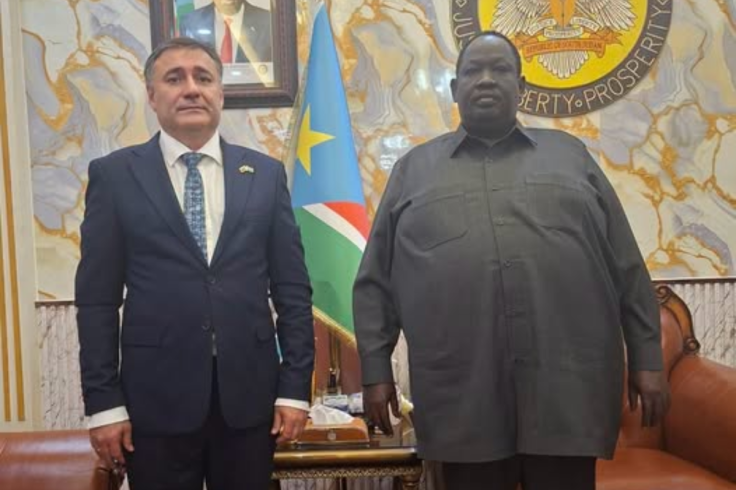
A viral photograph of a South Sudanese presidential adviser has drawn online ridicule after his body appeared dramatically enlarged in an image shared across social media. But a comparison with the original photograph shows the viral version was digitally manipulated, turning an official meeting into a misleading spectacle.
The image showed Tut Gatluak Manime, presidential adviser on national security affairs, standing alongside Russia's ambassador to South Sudan, A.V. Kosmodemiyanskiy. Posts circulated with claims that the meeting had included discussions about food insecurity, prompting users to mock Manime's appearance and suggest he was responsible for the country's food shortages.
Fact-checkers traced the image to an original photograph published by Russia's Ministry of Foreign Affairs. The original showed the same officials in the same setting, but Manime's body proportions were notably different.
Original Photograph Reveals Altered Appearance
The original image was published in connection with a meeting between the Russian ambassador and Manime. Background details, including the South Sudanese flag, presidential emblem, portrait and furniture, matched the viral version, confirming both images depicted the same encounter.
However, the viral image showed Manime's abdomen and overall body width substantially enlarged. FactCheckHub said its comparison confirmed the circulating photograph had been manipulated, but could not establish how it was altered.
The misleading image spread alongside captions connecting the meeting to food insecurity. The official Russian account, however, described discussions about bilateral cooperation projects and continuing efforts to develop relations between the two countries. It did not mention food security.
Social Media Mockery Focused on Body Size
The altered image prompted comments mocking Manime's body and linking his appearance to hunger in South Sudan. Some posts implied that the official was consuming resources meant for people experiencing food insecurity.
Body size alone cannot establish an individual's health, eating habits or access to resources, and the viral photograph was not reliable evidence of what Manime looks like.
The image also redirected attention away from the reported diplomatic meeting and towards ridicule. The official account did not support those claims.
How Manipulated Images Can Mislead
Images can be persuasive because viewers often treat photographs as direct evidence. Yet a photograph may be altered or shared with a misleading caption, changing how audiences interpret an event.
Reverse-image searches can help identify earlier versions of a photograph. Comparing details in the image and checking the original publisher's description can help distinguish what is visible from claims added later. In this case, the matching background and positions of the officials helped fact-checkers trace the viral image to its original.
A Viral Image Does Not Prove a Health Claim
The episode is also a reminder that online images should not be used to draw conclusions about someone's health. Obesity is a complex medical condition influenced by biological, environmental, social and behavioural factors, and visual appearance alone is not a diagnosis.
The manipulated photograph turned a public official into the target of body-based insults while attaching an unsupported claim to a real diplomatic encounter. Verifying the image and its context helped expose the alteration and separate the meeting itself from the misinformation that spread around it.