
Your Smartwatch Might Be Lying About How Many Calories You Actually Burned Today
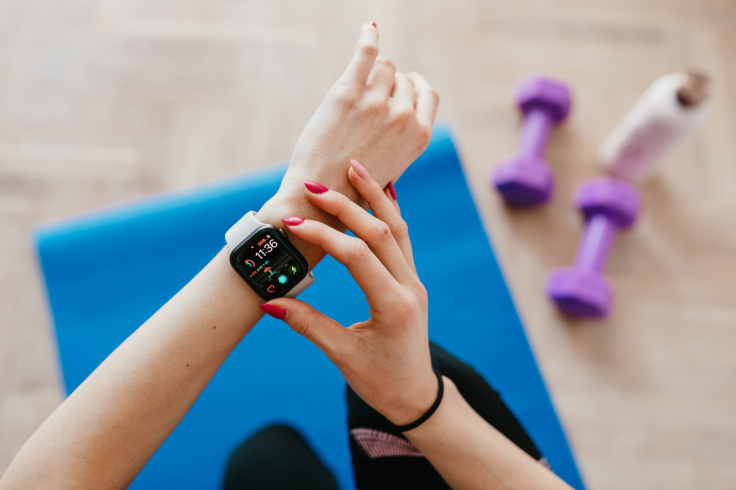
Your smartwatch says you burned 600 calories during your workout. You might feel like you have earned that post-gym meal, but there is a problem: that number on your wrist may be nowhere near as precise as it looks.
A new study has found that popular smartwatches can substantially miscalculate how many calories people burn during exercise, with errors becoming greater as a person's body-fat percentage increases. Researchers compared four widely used fitness trackers with clinical-grade equipment and found that none consistently matched the laboratory measurements.
The findings do not mean your smartwatch is useless. Heart rate, distance and activity tracking can still provide useful information. But when it comes to calories, the number displayed on your wrist is an estimate, not a direct measurement of how much energy your body has used.
How Does a Smartwatch Calculate Calories Burned?
Your smartwatch cannot directly measure the calories your body is using. Instead, it combines information from sensors with personal data to produce an estimate.
Most wearable devices use accelerometers to detect movement and optical sensors to estimate heart rate. The watch then combines these measurements with information such as your age, sex, height and weight before applying its own algorithm to estimate energy expenditure.
The problem is that energy expenditure is complicated. Two people can perform the same workout for the same amount of time but use different amounts of energy depending on factors including body composition, fitness level and individual physiology.
Because the algorithms used by manufacturers are proprietary, researchers cannot see exactly how every device converts sensor readings into a calorie estimate.
How Wrong Can Your Watch's Calorie Number Be?
For the study, researchers from Florida International University tested the Apple Watch Series 8, Fitbit Sense 2, Samsung Galaxy Watch 5 and Garmin Forerunner 955 in 58 adults.
Participants completed controlled cycling sessions while wearing the fitness trackers. Their energy expenditure was simultaneously measured using a COSMED K5 metabolic analyser, a laboratory-grade system that measures respiratory gases to determine how much energy the body is using.
The researchers found substantial differences between the smartwatch estimates and the laboratory measurements. Typical errors were around 15% to 25%, although errors for some participants and devices were considerably larger.
That means a watch displaying 500 calories does not necessarily mean you have actually used 500 calories. The real figure could be meaningfully lower or higher.
Why Does Body Fat Affect the Accuracy?
One of the study's more striking findings was that calorie estimates generally became less accurate as participants' body-fat percentage increased. The researchers could not establish exactly why this happened.
One possible explanation is the way wearable algorithms are developed and calibrated, although this cannot be confirmed from the study. Differences in body composition may also affect how sensors detect movement and physiological signals at the wrist.
The researchers also examined whether skin tone affected calorie-estimation accuracy. Under the conditions tested, they did not find a significant relationship between skin tone and the error in calorie expenditure estimates.
The findings are particularly relevant because people who are trying to manage their weight may be among those most likely to use calorie-burn figures to guide their food intake.
Should You Stop Trusting Your Smartwatch?
Not necessarily. The study does not show that smartwatches are broadly inaccurate at everything they measure. It specifically examined physical-activity energy expenditure, and other research has found that some wearable devices can provide useful measurements for things such as heart rate and activity duration.
The more important point is not to treat a calorie estimate as a precise number.
If your watch says you burned 500 calories during a workout, eating an additional 500 calories because you assume you have created an equivalent energy deficit could give you a misleading picture of your overall energy balance.
The study also has several important limitations. Only 58 adults took part, so the findings may not represent the wider population. Participants performed controlled cycling sessions in a research setting, meaning the results may not apply in exactly the same way to activities such as running, walking, strength training or everyday movement.
Only four smartwatch models were tested, so the findings should not be taken as evidence that every fitness tracker has the same level of error. The researchers also compared the devices' estimates of energy expenditure with a laboratory measurement, rather than assessing the accuracy of every health metric the watches provide.
Further research involving larger and more diverse groups, different forms of exercise and more devices would help establish how consistently these calorie estimates perform in real-world conditions.
For everyday users, the calorie figure may therefore be more useful as a rough indication of activity than as a number to calculate directly against food intake.
Your smartwatch can tell you a lot about your workout, but its calorie counter should not be mistaken for a metabolic laboratory.
The latest research suggests that popular devices can substantially misestimate energy expenditure, with accuracy tending to worsen as body-fat percentage increases.
So the next time your wrist tells you that you have burned hundreds of calories, celebrate the workout, but take the number itself with a little caution.
Frequently Asked Questions
- How do smartwatches estimate calories burned?Smartwatches use sensors like accelerometers and optical sensors to estimate heart rate and movement, combining this data with personal information such as age, sex, height, and weight to estimate energy expenditure.
- Why might smartwatch calorie estimates be inaccurate?Calorie estimates can be inaccurate due to proprietary algorithms, individual differences in body composition, fitness level, and physiology, which affect how sensors detect movement and physiological signals.
- Does body fat affect the accuracy of smartwatch calorie estimates?Yes, the study found that calorie estimates generally became less accurate as participants' body-fat percentage increased.
- Should I trust the calorie count on my smartwatch?While smartwatches provide useful information, the calorie count should be seen as an estimate rather than a precise measurement.