
Trump Directs Federal Boost for Women's Health Studies, With Melania at the Forefront of a New NIH Division
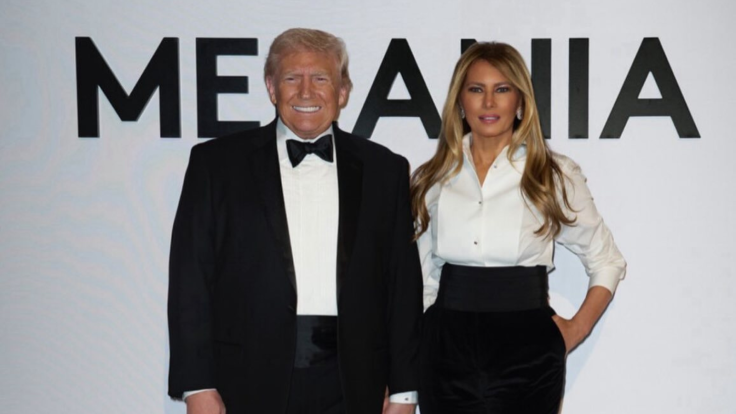
President Donald Trump signed an executive order on Monday directing the federal government to expand women's health research and establishing a White House task force, while ordering the Department of Health and Human Services to create a new division at the National Institutes of Health (NIH) within 90 days.
First lady Melania Trump pushed the plan and joined the signing in the Rose Garden. The order does not specify a dedicated research budget or numerical funding target.
Melania Trump Pushes New NIH Women's Health Division
The order is titled 'Advancing Women's Health to Improve Outcomes in All Phases of Life'. It directs the Department of Health and Human Services to establish the division within 90 days. Trump recalled asking his wife whether the agency really lacked such a body. 'Who the hell wouldn't have a women's health division?' he said, crediting her with the idea.
A White House official said the new division will not replace the NIH Office of Research on Women's Health, but will have a broader mandate that extends beyond research.
Key facts: Trump signed the order on 19 October 2026. It creates an NIH women's health division and a White House task force led by chief of staff Susie Wiles and Health Secretary Robert F. Kennedy Jr. It targets maternal health, mental health and endometriosis, and includes no funding goals.
Task Force and Research Priorities
Wiles and Kennedy will lead the task force, which is to coordinate with federal agencies and programmes. The task force held its first meeting on Monday, the same day as the signing ceremony.
Besides maternal health, mental health and endometriosis, the order mentions Alzheimer's disease, osteoporosis, heart disease and stroke. It is also meant to promote diagnostic technology and improve treatment. In her remarks, the first lady spoke of using artificial intelligence to speed discoveries, and of access to care and its affordability.
Melania Trump helped shape the order after meetings with federal health officials, and in consultation with physicians, White House staff and Kennedy. 'Beginning today we will change the reality of women's health,' she said. It is the second presidential initiative she has spearheaded, after a 2025 foster care initiative.
Funding Questions and the Political Backdrop
Although the order directs the Department of Health and Human Services to cover the task force's administrative costs, it does not specify a dedicated research budget or numerical funding target for the new division.
Reuters noted that the administration has urged health care cuts, including at the NIH, and last year moved to downsize the federal healthcare workforce.
The new order also revokes a March 2024 executive order on women's health research and a November 2023 White House memorandum on the subject. The administration's approach to funding women's health research has also faced scrutiny over proposed cuts and changes to federal research programmes.
A National Academies report found that federal funding for women's health had declined relative to the rest of the NIH budget over the previous decade.
The ceremony also came at a politically sensitive moment. It took place weeks before the 3 November midterm elections, as Trump's approval ratings have declined, including among women. An AP-NORC analysis published in June found that support for Trump among independent women had fallen from about four in 10 during the 2024 election period to around a quarter in the period covering January to April 2026.
For now, the practical test is the 90-day deadline. The Department of Health and Human Services must set up the women's health division within that window. Whether it arrives with money, staff and a clear remit, or mainly as a new division without clearly defined additional resources, remains to be seen.