
'It Is Possible': COVID Inquiry Lays Out Blueprint for Stronger UK Pandemic Test and Trace
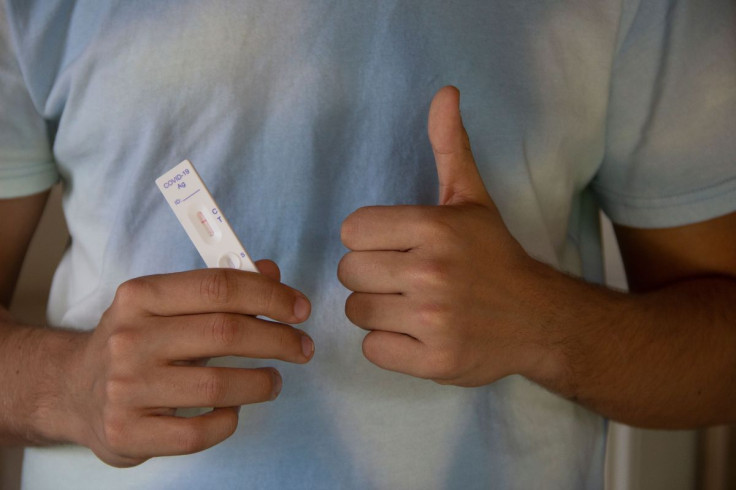
The UK Covid-19 Inquiry has set out nine recommendations for a stronger pandemic test and trace system, after finding the country was not ready to test, trace and isolate when Covid-19 arrived.
Inquiry chair Baroness Heather Hallett published her seventh report on 19 November 2026, her fifth this year. It examines testing capacity, contact tracing, self-isolation support, public communications and border controls across England, Scotland, Wales and Northern Ireland.
Despite the failures, Baroness Hallett said that with better planning, clearer messaging and a single strategy, 'it is possible to build a robust and scalable test, trace and isolate system'. She added that such a system could slow the next deadly virus, ease pressure on health services and save lives.
How the UK Lost Track of the Virus in 2020
British scientists had developed an effective Covid-19 test by mid-January 2020, but the UK lacked the infrastructure and capacity to implement widespread testing, contact tracing and isolation for several months, according to the inquiry.
Community testing and contact tracing were abandoned in March 2020, because the country lacked enough tests, equipment and capacity to process them. Baroness Hallett said this left decision-makers unable to see the true scale of the outbreak.
Earlier that month, on 3 March 2020, then-Prime Minister Boris Johnson had claimed Britain had 'fantastic testing systems', the outlet noted.
For the first three months of the pandemic, the virus spread largely unchecked. Without a working system, the four UK governments were repeatedly forced into harsher measures, including national lockdowns and school closures.
Wuhan Tourists Crossed the UK as Border Controls Lagged
In January 2020, the UK only asked travellers from Wuhan, China, to self-isolate rather than requiring it.
The following month, a coachload of tourists from Wuhan entered the UK and travelled through England, Scotland and Northern Ireland to the Republic of Ireland.
No further border controls were introduced until June 2020. By April that year, 93% of countries and territories had already brought in measures such as flight suspensions, border closures and travel restrictions.
The report found that not bringing in wider border controls from the start was a missed opportunity to slow the spread by cutting imported cases.
Inside the Inquiry's Nine-Point Blueprint
Baroness Hallett pointed out that, unlike vaccines and treatments, test, trace and isolate systems can be set up quickly. Her report calls on the UK and devolved governments to:
- monitor UK testing capability so the diagnostics sector is used effectively
- plan for manual contact tracing on a large scale
- develop a UK-wide digital contact tracing tool
- put local plans in place to give communities practical help during self-isolation
- plan for international border controls
- plan financial support for people who must self-isolate
- align public messaging on testing, tracing and isolation to avoid confusion
- improve data collection to track the impact of measures and how closely people follow them
- create a single UK-wide test, trace and isolate system
Future systems should be accessible and backed by clear communication, border plans and guaranteed financial support, so they are fair, cost-effective and deliverable.
Bereaved Families Still Waiting for Answers
'Too many lives were cut short,' Baroness Hallett said in a statement.
She said millions more faced disruption to daily life, separation from family, isolation, worsening mental health and serious money worries. Some are still living with the consequences today.
Campaigners who lost loved ones have spent years demanding answers about the early pandemic response, the outlet noted.
For more on pandemic preparedness and the NHS, follow our latest health coverage.