
Judge Blocks Trump's HIV Funding Rules on Transgender Care, Citing 'Animus, Loathing, and Discrimination'
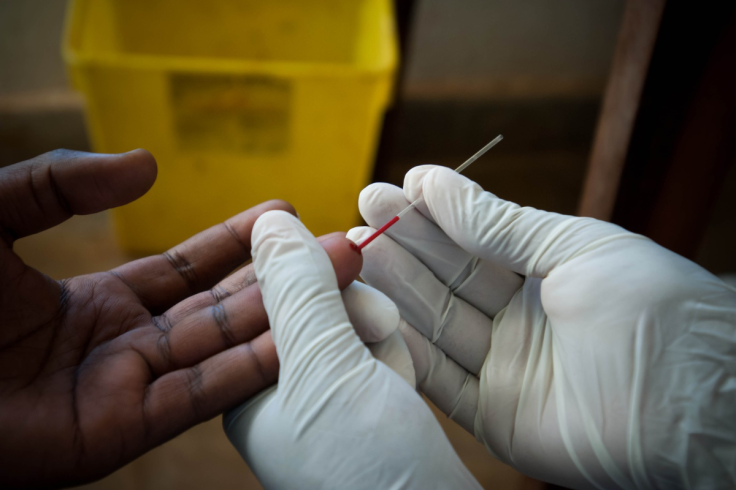
A federal judge in Boston blocked President Donald Trump's HIV funding rules on transgender care on 19 November 2026. US District Judge William Young described the challenged conditions as based in 'animus, loathing, and discrimination'.
He found that the restrictions violated First Amendment free speech protections and amounted to unconstitutional sex discrimination under the Fifth Amendment.
The ruling concerns grants distributed through the Ryan White HIV/AIDS Program, which Congress established in 1990. The programme provides medical services to low-income and uninsured people living with HIV.
National HIV medical associations and healthcare providers challenged the funding conditions introduced following Trump's executive order targeting federal funding for what he describes as 'gender ideology'.
The plaintiffs argued that the restrictions conflicted with the programme's statutory mandate to provide comprehensive medical care.
Judge Finds Trump's HIV Funding Rules Unconstitutional
Young, who was appointed by Republican President Ronald Reagan, issued the 165-page ruling following a non-jury trial in September.
The judge found that the funding conditions attempted to suppress what the administration considered 'dangerous ideas'. He said the restrictions sought to penalise healthcare providers for acknowledging transgender identities and referring to patients by their preferred pronouns.
'They do not stand for justice – in fact, they defy it. They are contrary to the laws of this nation and cannot continue to stand,' Young wrote.
The ruling sided with plaintiffs that included the American Academy of HIV Medicine. Their legal challenge addressed restrictions on healthcare providers' recognition of transgender patients' gender identities and their provision of gender-affirming care.
Young found that the challenged conditions also discriminated on the basis of sex, in violation of the Fifth Amendment.
Trump's HIV Funding Rules Challenged Over Access to Gender-Affirming Care
The Health Resources and Services Administration (HRSA), a division of the US Department of Health and Human Services (HHS), administers the Ryan White programme.
The agency introduced additional grant conditions to implement Trump's executive order directing the federal government to recognise only two sexes, male and female.
According to the lawsuit, the conditions required federal funding to support activities using 'sex-based definitions grounded in biological reality' rather than 'social or medical experimentation'.
The plaintiffs argued that these requirements were unconstitutional and conflicted with the comprehensive healthcare services Congress intended the Ryan White programme to provide.
They maintained that the programme had historically covered services including hormone therapy for transgender patients. The plaintiffs argued that the restrictions threatened access to those treatments.
The legal challenge also addressed restrictions on communication between healthcare professionals and transgender patients, including the recognition of their gender identities during medical care.
The Trump administration has separately moved to restrict gender-affirming care for transgender prisoners in federal custody.
It has also supported state laws barring transgender athletes from participating in female sports teams at public schools and universities.
Young's ruling concerns the challenged funding conditions under the Ryan White HIV/AIDS Program. It does not automatically invalidate restrictions imposed through other federal healthcare programmes.
According to the report, neither the US Department of Health and Human Services nor lawyers representing the plaintiffs, including the American Academy of HIV Medicine, immediately responded to requests for comment.