
Achilles Tendon Injuries: Why They Happen, Recovery Times and Whether Surgery Is Always Needed
Four plays. That was all it took for Aaron Rodgers's season to end in front of a national television audience in 2023, the four-time NFL MVP crumpling to the turf in what should have been a triumphant debut for his new team.
Somewhere behind him, in that instant, his Achilles tendon had torn.
That is the cruel trick of an Achilles rupture: a split-second injury with a recovery measured in months, sometimes the best part of a year. It strikes elite athletes and weekend warriors alike, without warning and without much regard for how fit you think you are.
Understanding why these injuries happen, how long recovery genuinely takes and whether surgery is truly necessary can be the difference between a full comeback and a painful repeat.
Why Achilles Tendon Injuries Happen
The Achilles tendon connects the calf muscles to the heel bone. It is the largest and strongest tendon in the body, built to take the strain of every step, run or jump.
Despite that strength, it has a fairly poor blood supply compared with other tissues. This is the core reason it is prone to injury, and why it heals so slowly once damaged.
Sport is a major driver of that risk. Explosive, stop-start movements - the kind found in soccer, football, basketball, tennis and squash - are the ones most associated with ruptures.
Rodgers is far from an isolated case. Dallas Mavericks centre Dwight Powell suffered the same season-ending injury in 2020, a reminder that the tendon does not discriminate by sport or level of fitness.
Not every Achilles problem is the same, and it helps to understand two key conditions: tendinitis and rupture.
Tendinitis is inflammation or irritation of the tendon, usually caused by repetitive strain or overuse rather than a single dramatic incident.
It causes pain, stiffness and sometimes a cracking sensation when moving. Left untreated, it can become chronic and weaken the tendon enough to raise the risk of a full tear later on.
A rupture, by contrast, is sudden and acute. It happens when the tendon is stretched beyond its limit during an explosive movement, such as a sharp change of direction or a hard push-off.
It can be a partial tear, where some fibres stay connected, or a complete tear, where the tendon fully separates. This is typically announced by a distinct pop, sharp pain, swelling and an inability to rise onto the toes.
Age plays a major role in both conditions. Tendon tissue naturally loses elasticity over time, and ruptures become noticeably more common from the 30s onward.
This has earned them the nickname 'weekend warrior' injuries, since they often catch out adults who train irregularly and then push hard during a game after time off. Certain medications, including some antibiotics and steroid injections near the tendon, can also raise the risk.
The good news is that much of this risk is manageable. Warming up properly before exercise; gradually increasing training intensity rather than jumping straight into competitive speed after time off; and keeping the calf strong and supple all year, not just in the run-up to a season, all help protect the tendon.
Tightness or mild soreness in the Achilles should not be ignored either, since addressing it early can stop it worsening into tendinitis or a full tear.
Recovery Times and What Affects Them
A suspected rupture should never be walked off. An orthopaedic specialist can usually confirm a complete tear through a physical examination alone, often supported by an ultrasound or MRI scan to check the size of the gap between the torn ends. That gap can widen and complicate matters if the injury is left untreated.
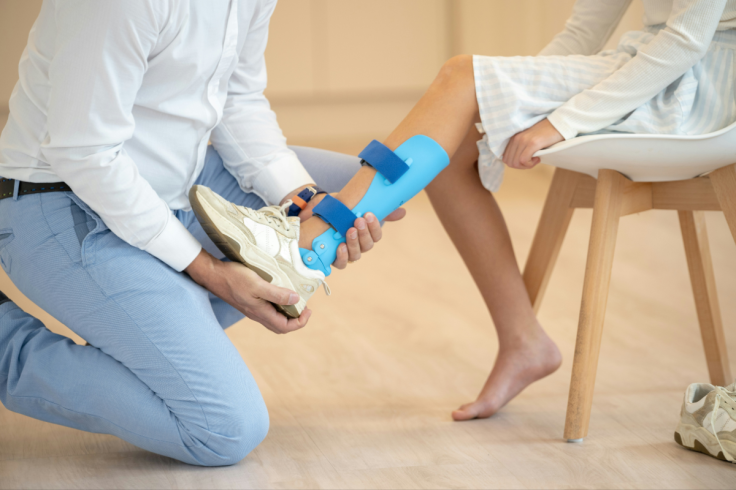
Recovery from a rupture follows a broadly similar pattern whichever treatment route is taken: protected weight-bearing in a boot, then physiotherapy that gradually rebuilds range of motion, calf strength and finally the explosive movement sport demands.
Most people need four to six months before returning to full activity, and some elite athletes take considerably longer to reach their peak again. Most people are walking normally after around three months, well before they are ready for running or jumping.
Tendinitis, by comparison, heals much faster if caught early. Mild cases can improve within two to three weeks, though more severe or long-standing cases can take a few months to settle fully.
Is Surgery Always Necessary?
No, it isn't, for a rupture, this is the question that matters most.
Non-surgical treatment involves immobilising the foot and ankle in a boot with the foot pointed downward, allowing the torn ends to heal together, followed by the physiotherapy programme described above. Surgical repair involves stitching the torn ends back together, sometimes reinforced with nearby tissue, followed by that same rehabilitation arc.
Several studies have found a lower re-rupture rate with surgery, particularly in younger, active patients, along with a faster path back to high-level sport - part of why many competitive athletes choose it.
It's worth being upfront that the research doesn't offer a precise figure for how much lower. What it does show is that modern non-surgical protocols, using earlier and more controlled movement than older approaches, have narrowed that outcome gap considerably, while avoiding surgical risks such as infection or wound complications.
There is no single right answer for every patient. The decision depends on age, activity goals, overall health and the pattern of the tear, and is best made with an orthopaedic specialist, rather than by copying what a professional athlete chose.
Tendinitis is far more clear-cut: surgery is rare and rarely the first option. Treatment usually starts with rest, ice, avoiding the aggravating activity and anti-inflammatory medication. If symptoms persist beyond three weeks, a provider may add corticosteroid injections or structured physiotherapy, with surgery reserved only for severe cases that fail to respond to everything else.
An Achilles rupture is serious, but for most people, professional or recreational, it is not career-ending. With an accurate diagnosis and a treatment plan suited to the individual, most people do return to the activities they love.
The road to healing simply takes patience and a properly followed rehabilitation programme, tailored to the patient rather than modelled on how a professional athlete happened to be treated.
Frequently Asked Questions
- What causes Achilles tendon injuries?Achilles tendon injuries are often caused by explosive, stop-start movements in sports, poor blood supply to the tendon, and age-related loss of elasticity.
- How long does recovery from an Achilles rupture take?Recovery from an Achilles rupture typically takes four to six months, with most people walking normally after three months.
- Is surgery necessary for an Achilles rupture?Surgery is not always necessary for an Achilles rupture. Non-surgical treatment can be effective, but the decision should be made with an orthopaedic specialist.
- How can Achilles tendon injuries be prevented?Preventive measures include proper warm-up, gradually increasing training intensity, and maintaining calf strength and flexibility.