
ACL Tears Explained: Why They Happen, Who's Most at Risk and How Long Recovery Really Takes
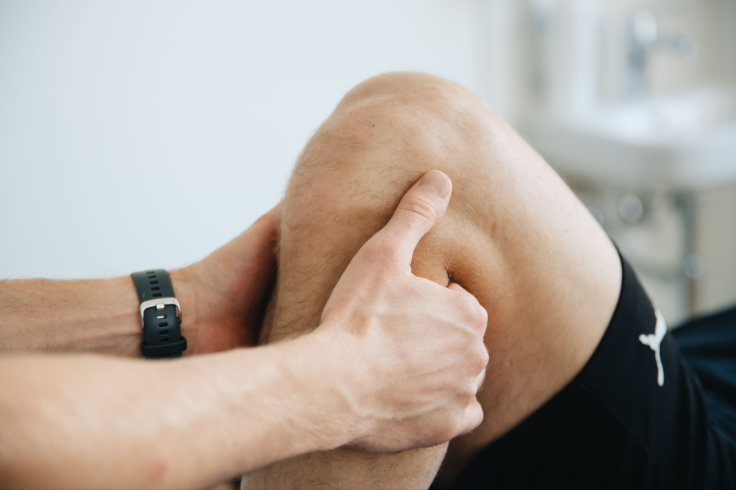
An ACL tear is one of the most devastating injuries in sport, capable of ending a season in seconds and keeping athletes sidelined for up to a year.
Most occur without any contact, women are significantly more likely than men to sustain one, and once the ligament tears, it has a limited ability to heal on its own. Athletes who have already suffered the injury are also far more likely to experience another ACL injury, making prevention, early diagnosis and proper rehabilitation essential.
Female athletes face the greatest risk, with research showing they can be between two and eight times more likely than male athletes competing in the same sport to tear their ACL.
What the ACL Actually Does
The anterior cruciate ligament (ACL) is one of four major ligaments that stabilise the knee. Running between the thighbone and shinbone, it forms an X-shaped structure with the posterior cruciate ligament (PCL) inside the joint.
The ACL prevents the knee from sliding or twisting beyond its normal range, making it essential during the rapid stops, pivots and changes of direction common in basketball, football, volleyball, tennis and MMA.
Why ACL Tears Happen
Most ACL tears occur when the knee bends or rotates beyond its natural limits. Contrary to popular belief, contact is not usually responsible.
Instead, the majority of injuries happen without a collision, when an athlete plants a foot to change direction sharply or lands awkwardly from a jump. These movements can overload the ligament, particularly when combined with poor technique when changing direction or landing.
Sports involving frequent jumping, cutting and pivoting carry the greatest risk because they repeatedly place heavy stress on the knee.
Typical warning signs include a loud 'popping' sound, immediate pain, swelling within hours, reduced range of motion and a feeling that the knee is unstable or unable to support weight.
Doctors classify ACL injuries into three grades. Grade One involves stretching of the ligament and is usually treated conservatively. Grade Two is a partial tear that often requires structured rehabilitation, while Grade Three is a complete rupture that leaves the knee unstable and commonly requires surgical reconstruction for athletes wishing to return to pivoting sports.
Unlike muscles, the ACL has a limited ability to heal on its own. The ligament has a limited blood supply and sits within synovial fluid inside the knee, making it more difficult for torn fibres to naturally reconnect. Even injuries that initially seem minor should therefore be assessed promptly.
Why Women Are at Greater Risk
Women are significantly more likely than men to tear their ACL, although the level of risk varies by sport. Female basketball players are estimated to be around 3.5 times more likely to sustain the injury than men, while female footballers face roughly 2.8 times the risk.
According to Dr Vehniah Tjong, an orthopaedic sports medicine surgeon at Northwestern Medicine, three key factors explain the disparity.
The first is anatomy. Women generally have wider hips and a greater inward angle of the knees, altering how force is distributed during jumping, landing and cutting movements. Their ACLs are also typically thinner, meaning less force is needed to cause a tear.
The second is biomechanics. On the average, women are more likely to land with straighter knees and less core engagement, while men typically land with greater knee flexion and stronger core activation, helping absorb impact more effectively.
The third is hormonal. Fluctuations in oestrogen and relaxin during the menstrual cycle may alter the elasticity of collagen, the protein that gives the ACL much of its strength. Some research suggests these changes could temporarily reduce the ligament's ability to withstand sudden loading.
How Long Recovery Really Takes
Treatment depends on the severity of the injury. Some mild or partial tears can be managed with a knee brace and structured physiotherapy, while complete ruptures usually require reconstruction using a tendon graft taken from the patient's hamstring, quadriceps or patellar tendon. The procedure is typically performed through minimally invasive arthroscopic surgery.
Recovery, however, extends far beyond the operation itself. Surgery replaces the damaged ligament, but patients must also rebuild strength, flexibility, balance and neuromuscular control before the knee can safely cope with the cutting, pivoting and landing movements that commonly caused the injury.
Rehabilitation typically begins with reducing swelling and restoring range of motion before progressing to strength training, balance work, agility drills and sport-specific exercises.
Doctors generally advise against returning to competitive sport for at least six to nine months after surgery, while complete recovery often takes nine to 12 months depending on the severity of the injury and other factors such as the patient's commitment to rehabilitation.
Athletes are usually cleared to return only after the knee demonstrates sufficient strength, stability and function. Returning too early significantly increases the risk of another ACL injury, particularly for those who have previously torn the ligament.
Don't Ignore the Warning Signs
One reason ACL injuries become so serious is that the earliest symptoms can appear deceptively mild. A swollen or painful knee after training may seem like a minor strain, leading athletes to rest for a few days before returning to play.
Specialists warn that delaying medical assessment can delay appropriate treatment and potentially allow the injury to worsen, which may extend recovery. Early diagnosis helps determine whether rehabilitation alone is appropriate or whether surgical reconstruction is needed, giving patients the best chance of returning safely to sport.
Understanding how ACL tears happen, recognising who faces the greatest risk and committing to the full rehabilitation process are key to reducing the chances of another devastating knee injury. For female athletes and anyone with a previous ACL tear, seeking prompt treatment after the first warning signs could be the difference between a successful comeback and another season on the sidelines.
Frequently Asked Questions
- Why are female athletes more prone to ACL injuries?Female athletes are more prone to ACL injuries due to anatomical differences, biomechanical factors, and hormonal fluctuations affecting knee stability.
- What sports have the highest risk of ACL injuries?Sports with quick stops and sharp changes of direction, such as basketball, football, volleyball, tennis, and MMA, carry the highest risk of ACL injuries.
- Can an ACL tear heal on its own?No, an ACL tear cannot heal on its own due to its location within synovial fluid and limited blood supply.
- What is the typical recovery time for an ACL injury?Recovery time for an ACL injury varies but generally ranges from nine to 12 months, depending on the severity and adherence to rehabilitation.