
Oscar-Nominated Star Barbara Barrie Dies at 95 After Making Heartbreaking Decision Amid Cancer Battle
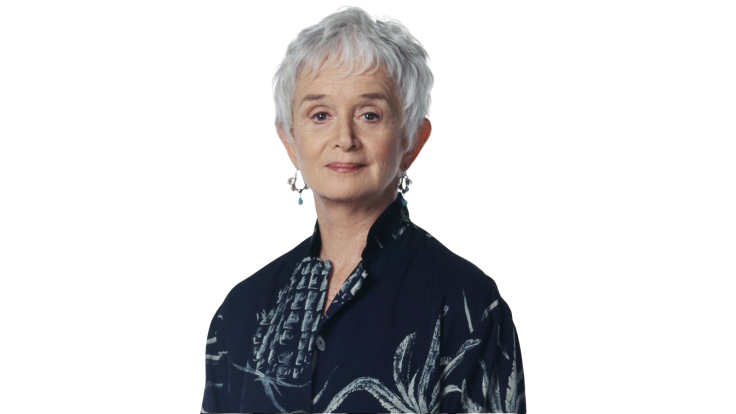
Oscar-nominated actress Barbara Barrie has died at the age of 95 after receiving a terminal cancer diagnosis, with her family confirming that her death was medically assisted under New York State law.
Barrie died at her home in Manhattan on Wednesday, 28 October, her daughter, Jane Harnick, reportedly confirmed.
A representative for the family said Barrie's death was 'medically assisted in accordance with the New York State Medical Aid in Dying law', adding that the actress had supported and advocated for the legislation.
Her death follows a long career across film, television and theatre, with performances that earned her Academy Award, Tony Award and Emmy Award nominations. She was also known for speaking publicly about serious illness, drawing on her own experiences to help others navigate difficult diagnoses.
Barbara Barrie's Illness and Cancer Advocacy
Barrie was diagnosed with rectal cancer in 1994. She later underwent a colostomy and wrote about the experience in two books, Second Act, published in 1997, and Don't Die of Embarrassment: Life After Colostomy and Other Adventures, published in 1999.
The books drew on Barrie's experience of rectal cancer and a colostomy, helping to challenge the stigma surrounding the disease and life after surgery.
In a 1997 interview with the South Florida Sun Sentinel, Barrie explained her motivation for writing about the disease: 'I think if I can get the word out on this thing, that will be my legacy.'
In 2014, she also disclosed that she had been diagnosed with idiopathic pulmonary fibrosis (IPF), a chronic and incurable lung disease that causes progressive scarring of lung tissue and makes breathing increasingly difficult.
In 2014, Barrie said she intended to remain active despite uncertainty about the future. She continued to speak publicly about living with serious illness.
A Career Spanning Film, Television and Broadway
Born Barbara Ann Berman in Chicago in 1931, Barrie began her acting career on stage before moving into film and television.
Her breakthrough film role came in One Potato, Two Potato (1964), in which she portrayed a divorced white woman who marries a Black man. The film explored interracial marriage at a time when such relationships faced substantial legal and social barriers in the United States. Barrie won the Best Actress award at the Cannes Film Festival for her performance.
She later received an Academy Award nomination for Best Supporting Actress for playing Evelyn Stohler in Breaking Away (1979), a coming-of-age film about four young men in Indiana. She reprised the character in a television adaptation and earned an Emmy nomination.
Her other screen credits included Private Benjamin, Barney Miller and Suddenly Susan. On Broadway, Barrie originated the role of Sarah in Stephen Sondheim's musical Company, earning a Tony Award nomination for Best Featured Actress in a Musical.
Barrie's career continued for decades, with her final Broadway appearance coming in 2017 in Significant Other.
What Is Medical Aid in Dying?
Medical aid in dying is a legally regulated process through which eligible terminally ill adults can request medication from a physician to end their lives. Under New York law, eligible patients must meet specific criteria and self-administer the prescribed medication.
New York's Medical Aid in Dying Act took effect on 5 August 2026. It allows eligible adult residents with an incurable, irreversible terminal illness and a prognosis of six months or less to request medication to end their lives, provided they meet the law's requirements, including being able to make an informed decision and self-administer the medication.
Barrie's representatives confirmed that her death was medically assisted under the state law, which she had supported and advocated for. Her career spanned film, television and theatre, while her books and public advocacy helped raise awareness of colorectal cancer.