
Dolores Huerta Dies at 96 After Revealing Civil Rights Icon Cesar Chavez Raped Her
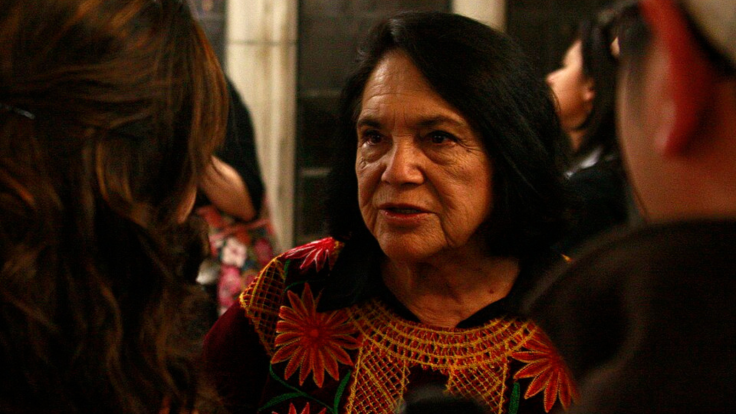
Dolores Huerta, the civil rights activist who co‑founded the union that became the United Farm Workers and later said fellow movement leader Cesar Chavez raped her, has died aged 96 at her home in Bakersfield, California.
Her foundation said she died on Wednesday 28 October, surrounded by close family. A family spokesperson told the Associated Press the cause was cancer.
'Our beloved mother, Dolores Huerta, has passed away today,' her family said in a statement released through the foundation. California's governor, Gavin Newsom, said in a joint statement with his wife, Jennifer Siebel Newsom, that Huerta 'represented the best of us'.
She is survived by 14 children, 24 grandchildren, 23 great‑grandchildren and seven great‑great‑grandchildren, the foundation said.
Allegations Against Chavez
In March, Huerta ended decades of silence after the New York Times published an investigation into alleged sexual abuse by Chavez, who died in 1993. 'I can no longer stay silent,' she said in a statement.
Huerta said she was 'manipulated and pressured' into sex with Chavez on one occasion in the 1960s, and forced into another encounter in circumstances in which she felt trapped. Both led to pregnancies. She said she kept them secret and arranged for the children to be raised by other families, adding that she had since built close relationships with them.
She said she had stayed silent because she feared damaging the farmworker movement. She told ABC News that Chavez 'had an evil side to him'.
The Times investigation also reported accusations that Chavez abused girls. Huerta said she had not known of such claims and was speaking out because there were other victims.
The Chavez family said it was devastated by the Times report and called the allegations deeply painful.
From the Classroom to the Picket Line
Born Dolores Fernández in Dawson, New Mexico, on 10 April 1930, Huerta grew up in Stockton, California. She began her career as a teacher in the state's Central Valley, where she saw the poverty of farmworkers' children. She then joined the Community Service Organization, where she met Chavez.
In 1962 the pair founded the National Farm Workers Association, which later merged with another group to become the United Farm Workers. The union backed a 1965 strike by grape workers in Delano, California, and a national boycott that followed.
Growers signed contracts in 1970 granting higher wages and benefits. In 1975, California passed the Agricultural Labor Relations Act, giving farmworkers the right to organise and bargain collectively. Huerta was a key negotiator.
In 1972, while organising in Arizona, she coined the slogan 'Sí, se puede' ('Yes, we can'), later echoed in Barack Obama's presidential campaign. Obama awarded her the Presidential Medal of Freedom in 2012.
She was also a prominent feminist and an advocate for women standing for office. In 1988 she suffered broken ribs and a ruptured spleen when a police officer struck her with a baton at a San Francisco protest against the then vice‑president, George HW Bush. She won a settlement, and the city changed its crowd‑control policies.
Huerta left her UFW leadership role in 1999 and founded the Dolores Huerta Foundation in Bakersfield in 2002. It organises communities around education, health, environmental justice and economic rights. She remained active into her nineties.