
How Did Christa Pike Survive Two Doses of Pentobarbital? Doctor Explains What May Have Gone Wrong
Dehydration can make veins more difficult to access, a medical expert said, but nothing in the available information indicates that Christa Pike was dehydrated. Her attorneys instead alleged blown veins and other problems.
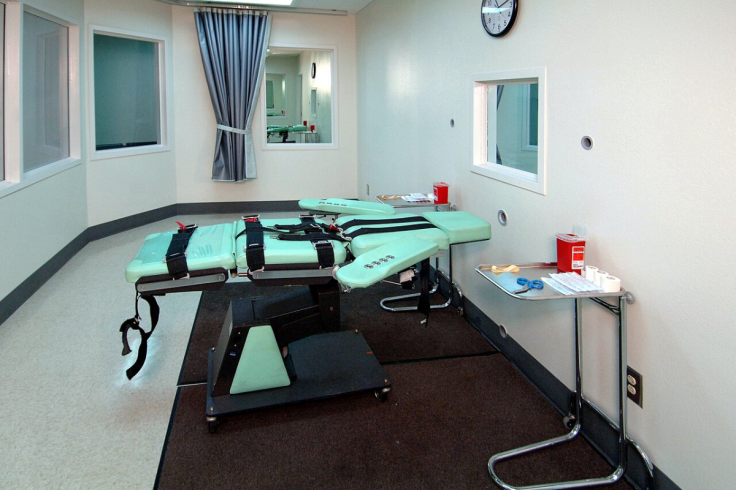
Tennessee officials could not complete Pike's lethal injection on Wednesday after giving two doses of pentobarbital. Pike, 50, was alive and loudly snoring afterwards and was taken by ambulance to a hospital, her attorneys said.
Dehydration Question
Dr Ervin Yen, an Oklahoma City anaesthesiologist, said veins can be difficult to find when a person is dehydrated. He has witnessed several Oklahoma executions as an expert hired by the state's Attorney General's Office.
He made the remark in a general discussion of why setting an IV can be hard for medical professionals.
The Nashville Vein Center listed dehydration, small or fragile veins and low blood pressure among factors that may affect venous access. Veins may look flatter when the body has less fluid, it said.
The centre cautioned that hydration advice must fit each person's medical conditions. It added that medication irritation, catheter position and venous spasm can also affect access.
A temporarily narrowed vein may reopen as spasm, inflammation and swelling ease, the centre said. A vein with substantial scarring may remain closed or difficult to use.
Yen added that some people are predisposed to problematic veins. Others develop them after spending much time in hospitals with IVs or frequent blood draws, while repeated intravenous drug use can also damage veins.
Pike's attorneys had earlier told courts that she had exceptionally small, compromised veins, which they attributed to past substance use. Yen's comment was general, and the available information does not say whether her substance use involved injection.
Other Explanations
After the attempt, the attorneys alleged difficult vein access, blown veins, degraded pentobarbital and no emergency medical care. They also criticised the state's execution protocol as secretive.
A blown vein can cause an injected substance to leak into surrounding tissue rather than entering the bloodstream directly. Depending on the substance, this can reduce the amount reaching the circulation and cause pain or tissue injury.
Witnesses said Pike raised her head and asked prison officials whether her arm was supposed to feel the way it did. It was not clear what she meant.
In an earlier editorial, the editors of PLoS Medicine wrote that untrained staff had attempted intravenous access during lethal injections and that failures had occurred frequently. The editorial concerned drug protocols other than pentobarbital.
Ngozi Ndulue, deputy director of the Death Penalty Information Center, said a number of medical professionals are unwilling to take part in executions. Training requirements vary by state and are usually very minimal, she said.
Robin M. Maher, the organisation's executive director, described the incident as 'singular and unparalleled'. She said she knew of no previous case of someone surviving after the lethal drugs had been administered, although other executions have failed because of problems establishing IV access.
The Tennessee Department of Correction said it followed every step of the state's established protocol, which does not allow additional procedures. It said the drug has consistently been effective but did not explain why the execution was not completed.
Governor Bill Lee has ordered an independent investigation into the failed execution. Pike was reported to be hospitalised under guard, and her condition had not been publicly disclosed.
Her attorneys said they had not been informed of her condition. Until the independent review is complete, dehydration remains one possible explanation for difficult IV access, but there is no evidence currently showing that Pike was dehydrated.