
Kentucky Family's Skin Turned Blue After Relatives Had Children Together for Generations, Doctors Reveal
A Kentucky family became known for its unusually blue skin after generations of relatives had children together, with doctors eventually tracing the colour to a rare inherited blood disorder.
The Fugate family lived in the isolated community of Troublesome Creek in Appalachia, where intermarriage among relatives helped a genetic condition become more common across generations.
The family's history reportedly dates back to 1820, when patriarch Martin Fugate married Elizabeth Smith. The couple had seven children, four of whom were affected by the disorder, according to accounts cited by UNILAD.
The condition was methemoglobinaemia, a rare blood disorder that affects the way haemoglobin delivers oxygen to the body's tissues. It can cause cyanosis, a bluish or greyish appearance of the skin, lips, tongue and nail beds.
A Recessive Gene Helped Spread The Condition
The Fugate family's condition was linked to an inherited form of methemoglobinaemia. In some forms, the disorder follows an autosomal recessive pattern, meaning a child must inherit an altered copy of a particular gene from both biological parents.
People who carry only one altered copy typically do not develop the condition themselves. However, when two carriers have a child together, there is a one-in-four chance with each pregnancy that the child will inherit both altered copies.
This helps explain why the condition became more common in the isolated Fugate community. With a relatively small population and repeated marriages between relatives, the likelihood of two people carrying the same rare genetic variant having children together increased.
However, intermarriage did not create the genetic variant. It increased the chance that children would inherit two copies of a variant already present in the family.
What Happens In The Blood
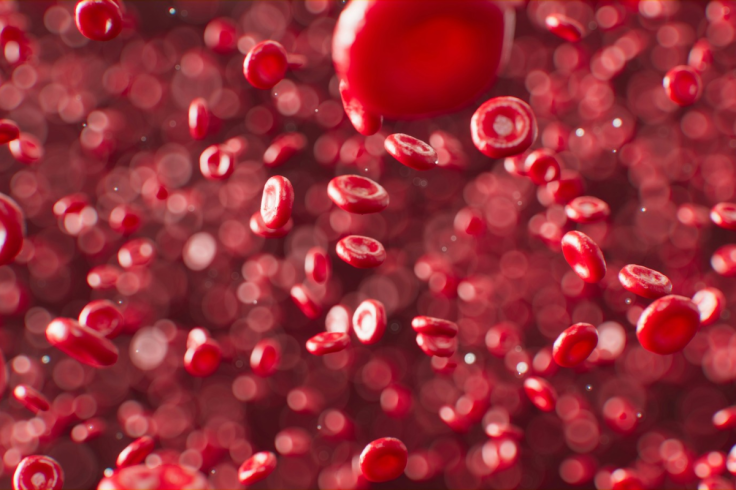
Haemoglobin is the protein inside red blood cells responsible for carrying oxygen from the lungs to the body's tissues. In methemoglobinaemia, some haemoglobin is converted into methemoglobin, which cannot bind oxygen. It also makes the remaining normal haemoglobin hold on to oxygen more tightly, reducing the amount released to the body's tissues.
The resulting lack of oxygen delivery can cause cyanosis, making the skin and other tissues appear blue, purple or grey.
Symptoms depend on the type and severity of the disorder. Some people with inherited forms mainly experience visible blue discolouration, while more severe cases can involve headaches, dizziness, fatigue, shortness of breath, seizures or other serious complications.
Doctors Eventually Found A Treatment
The family's unusual appearance attracted the attention of medical professionals, including University of Kentucky haematologist Dr Madison Cawein.
According to the account, Cawein tracked down surviving members of the family during the 1960s and examined blood samples. His investigations pointed towards a deficiency in an enzyme involved in converting methemoglobin back into normal haemoglobin.
He explored the use of methylene blue, a medication that can reduce methemoglobin levels. The treatment helped lessen the family's blue discolouration, although the UNILAD report said the effect of an injection lasted only a few days.
Methemoglobinaemia Can Have Different Causes
The inherited form is not the only way someone can develop the disorder. Methemoglobinaemia can also be acquired after exposure to certain medicines, chemicals or other substances that alter haemoglobin.
Doctors can investigate suspected cases through blood tests that measure methemoglobin levels and assess oxygen delivery. Treatment depends on the underlying cause and severity. Methylene blue is used in certain cases, but it is not suitable for everyone, including some people with glucose-6-phosphate dehydrogenase deficiency.
The Fugate family's history illustrates how a rare inherited condition can become more visible within an isolated population. It also shows why genetic counselling can be important for people with a family history of inherited disorders.
Frequently Asked Questions
- What caused the Fugate family's blue skin?The Fugate family's blue skin was caused by a rare inherited blood disorder called methemoglobinaemia.
- How is methemoglobinaemia inherited?Methemoglobinaemia can be inherited in an autosomal recessive pattern, requiring a child to inherit altered copies of a gene from both parents.
- What are the symptoms of methemoglobinaemia?Symptoms can include blue discolouration of the skin, lips, and nail beds, headaches, dizziness, fatigue, and in severe cases, shortness of breath or seizures.
- How can methemoglobinaemia be treated?Treatment may involve the use of methylene blue to reduce methemoglobin levels, although it is not suitable for everyone.
- Can methemoglobinaemia be acquired?Yes, methemoglobinaemia can also be acquired through exposure to certain medicines, chemicals, or substances that alter haemoglobin.