
'She Could Have Been Saved': Husband's Anguish After 81-Year-Old Wife Dies Following 15-Hour Ambulance Wait
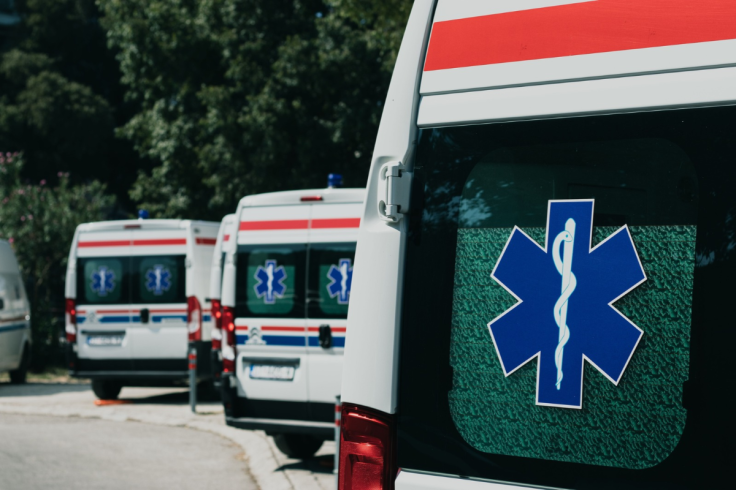
The death of 81-year-old Janet Wigfield after an ambulance failed to arrive following an emergency call has prompted demands for answers from her husband and renewed scrutiny of Scotland's emergency healthcare services. Wigfield died at home in Glasgow after suffering a second fall, around 15 hours after her husband first contacted emergency services.
The First 999 Call
Alexander, 83, called for an ambulance at about 3pm on Saturday, 7 November, after Janet, who had Alzheimer's disease, fell at their home in Dennistoun, Glasgow. No ambulance was sent after the call was assessed as non-life-threatening, the Scottish Ambulance Service said.
81-year-old Scots gran Janet Wigfield collapsed at home. Husband dialled 999. Fifteen hours later she was dead on the bathroom floor while he was still doing CPR. First call was basically ignored.
— Donna Louise (@DonnaLouise1212) November 24, 2026
But if you’d arrived illegally on a dinghy last week, there’d have been a doctor… pic.twitter.com/bSfMFDB2a7
Alexander, a retired social work driver, said he initially thought there was little point repeatedly contacting the service because other patients might also be waiting for help. He later realised no ambulance appeared to be on its way.
He said Janet was exhausted and that they eventually went to bed. At about 6am on Sunday, she got up to use the toilet and collapsed again. Alexander called 999 for a second time and began cardiopulmonary resuscitation while waiting for help.
The ambulance arrived within seven minutes of the second call, the service said. Paramedics could not find a pulse, and Janet was pronounced dead on the bathroom floor. Alexander described the experience as traumatic, saying he believed his wife might have survived if an ambulance had attended after the first call. He said he wanted to ensure another family did not face the same experience.
What the Ambulance Service Said
The Scottish Ambulance Service apologised for Alexander's loss and confirmed it had received the first call on 7 November. It said the incident was assessed as non-life-threatening and that high demand and lengthy hospital turnaround times, including four-hour delays at Glasgow's Queen Elizabeth University Hospital, meant it could not dispatch an ambulance.
It said the second call the following morning was upgraded and that an ambulance responded within seven minutes.
However, the service's account does not establish whether an earlier attendance would have changed Janet's outcome. That question remains central to the family's demand for an investigation.
Political Reaction and Calls for Answers
Scotland's Health Secretary, Angela Constance, described the circumstances as unacceptable and said she expected the Scottish Ambulance Service to investigate. She said ambulances must respond as quickly as possible to emergencies, pointing to government investment in additional paramedics and frailty units for accident and emergency departments.
Miles Briggs, the Scottish Conservatives' health spokesman, criticised the failure to send an ambulance after the first call. He said Janet's family deserved urgent answers, increasing pressure on the Scottish Government over ambulance response times.
Alexander also criticised First Minister John Swinney's comments about efforts to improve NHS waiting times, calling them disgraceful. Swinney had acknowledged that accident and emergency waiting times across Scotland were causing concern three days after Janet's death.
For Alexander, the unresolved issue is whether an ambulance on Saturday afternoon could have prevented the second collapse from becoming fatal. The family is seeking answers about why no crew was dispatched after the first 999 call.