
RFK Jr-Linked $1.6M Baby Vaccine Trial Cancelled After Outrage Over 'Unethical' Experiment
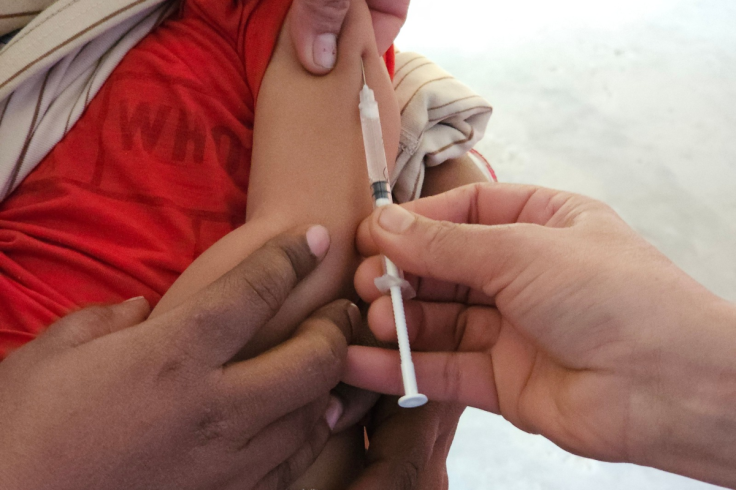
A US-funded hepatitis B vaccine trial involving up to 14,000 newborns has been halted in Guinea-Bissau after authorities refused to authorise it, following international criticism over its proposed design. The World Health Organization (WHO) raised concerns that withholding a recommended birth dose from some infants would expose them to preventable risks.
The proposed trial received a $1.6 million (£1.2 million) grant from the US Centers for Disease Control and Prevention (CDC), with additional private funding also reported. It was to be conducted by Danish and local researchers. It was halted before it began. University of Southern Denmark dean Jakob Grauslund said the trial never started, with no babies enrolled and no doses given.
Co-lead investigator Frederik Schaltz-Buchholzer said in an October update that it would not proceed because 'necessary governmental approval' had not been obtained.
The CDC awarded the $1.6 million (£1.2 million) grant to the university, which hosts the Bandim Health Project, in December 2025. The study drew political scrutiny because RFK Jr, whose department oversees the CDC, has publicly praised Bandim's leading scientists and has long questioned vaccine safety.
Trial Design Clashed With WHO Guidance on Baby Vaccine
The RFK Jr-linked baby vaccine trial would have randomly assigned newborns to receive a hepatitis B vaccine either at birth or at six weeks, which is Guinea-Bissau's current schedule. The WHO has recommended universal birth doses since 2009, with the first shot within 24 hours. Nearly one in five people in the country are infected with hepatitis B.
Researchers at Bandim wanted to examine whether the vaccine had wider 'non-specific' effects on child health beyond preventing hepatitis B infection.
Walter Kazadi Mulombo, the WHO's representative in Guinea-Bissau, said his team grew concerned when it could not find a publicly available protocol for the RFK Jr-linked vaccine study. He said a vaccine used for more than 30 years in over 115 countries was being withheld from half the infants purely for research.
The WHO says infection at birth leads to chronic hepatitis B in about 90% of cases and that 15% to 25% of lifelong carriers later die from liver failure or cancer. It said any study giving the birth dose to some babies while withholding it from others in a high-prevalence setting was unethical and exposed newborns to 'serious and potentially irreversible harm'.
Guinea-Bissau Rejects RFK Jr-Linked Vaccine Trial
Health Minister Quinhin Nantote said his ministry had not approved the RFK Jr-linked vaccine trial. 'We were outraged because even I, as the minister responsible for this sector, was not informed,' he said in an October statement, adding that research involving children must respect national law and international ethics rules.
The government then asked experts from the Africa Centres for Disease Control and Prevention to examine the protocol. On 19 October, judicial police raided Bandim's offices in the capital, Bissau, seizing hepatitis B vaccines and sealing the refrigerator that stored them.
Police said the seizure was an investigative measure and did not indicate any problem with the quality or safety of the vaccines.
The research team said the trial had received approval from Guinea-Bissau's national ethics committee and was designed around the country's plan to introduce a hepatitis B birth dose. However, that approval did not constitute the separate governmental authorisation required for the study to proceed. Bandim has worked in Guinea-Bissau for decades and says its research aims to understand the full effects of vaccines, positive and negative.
The US Department of Health and Human Services had previously defended the study, but the researchers later acknowledged that it could not proceed without government authorisation. Schaltz-Buchholzer has indicated that a revised proposal may be considered in future.