
LED Bulbs Are Everywhere, But Could Their Blue Light Be Harming Your Health?
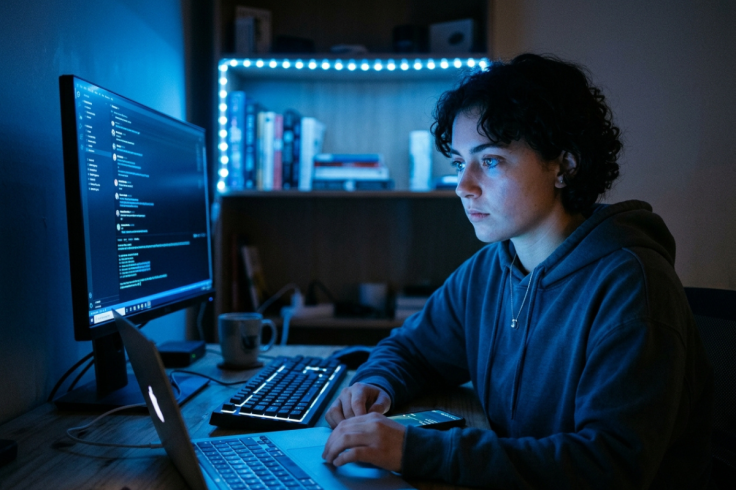
A professor of neuroscience has likened a fixture found in almost every home to asbestos. Glen Jeffery, of University College London, warns the danger from LED lighting is a 'clear and present public health emergency'.
Not everyone agrees. The European Commission's Scientific Committee on Health, Environmental and Emerging Risks has found no evidence of direct harm from normal LED use, setting up a clash between one scientist's alarm and official caution.
The bulbs already lit nearly half of US households as of 2020, according to the US Energy Information Administration. The US Department of Energy predicts LEDs will dominate lighting installations by 2035, making the question impossible to ignore.
What Is Blue Light
Blue light is a segment of the visible spectrum with a shorter wavelength and higher energy than most visible light. LEDs, screens and fluorescent bulbs all emit it in varying amounts.
Jeffery says that concentrated energy is what makes the light damaging to mitochondria, the tiny structures inside cells that generate energy and regulate metabolism. Damage there, he argues, threatens health throughout the entire body, not just the eyes.
Mitochondrial Damage
In mice, daily exposure to short-wavelength blue light cut mitochondrial activity by about half, Jeffery notes. A separate study found blue-enriched LED lighting altered activity, metabolism and liver-related signalling in mice.
That does not prove normal LED exposure causes diabetes or other metabolic disorders in people. Still, Jeffery insists disrupted mitochondria send faulty signals through the blood, described in cytokine profiles that ripple through the body.
The EU's Scientific Committee counters that LEDs cause no proven harm to the general healthy population. It does concede that lighting can disturb the sleep-wake cycle, though it says more research is needed there too.
Ophthalmologist Rishi Singh goes further still, saying research has yet to produce a 'true, strong, long-term study' on the subject. He said scientists cannot yet separate blue light's effects from ordinary eye strain.
Vision and Sleep Effects
Jeffery and colleague Edward Barrett tested whether light quality shapes eyesight. Adults exposed for two weeks to broader-spectrum tungsten lighting added to their LED-lit workplace showed improved colour-contrast vision, while those under standard LEDs did not.
A single three-minute burst of red light improved colour-contrast vision too, Jeffery found. Singh separately warns that prolonged staring at blue-light sources can bring on headaches, dry eyes and blurred vision.
Harvard researchers found 6.5 hours of blue light exposure suppressed melatonin roughly twice as long as comparable green light, shifting circadian rhythms twice as much. Even eight lux, dimmer than most table lamps, was enough to interfere with the hormone.
The same researchers linked nighttime light exposure to higher rates of diabetes, heart disease and obesity. They cautioned, however, that causation remains unproven.
A University of Toronto study found that people wearing blue-light-blocking goggles under bright indoor light kept melatonin levels close to those of people sitting in dim light. Researchers said the goggles appeared to shield melatonin from disruption.
Cleveland Clinic offers a caveat, however: such glasses generally do not ease everyday digital eye strain. The problem there seems tied more to screen habits than to colour alone.
So what should worried readers actually do tonight? Jeffery's answer is balance, not avoidance: pair LED-lit rooms with incandescent or halogen bulbs, and get outside for real, unfiltered sunlight both morning and evening.
Even incandescent bulbs emit some blue light, John Carroll University researcher Richard Hansler notes, just less than most fluorescent bulbs. The difference, he says, is one of degree, not elimination.
Frequently Asked Questions
- What is blue light?Blue light is a segment of the visible spectrum with a shorter wavelength and higher energy than most visible light, nearly as powerful as ultraviolet rays from the sun.
- How does blue light affect health?Blue light can potentially damage mitochondria, disrupt sleep-wake cycles, and may be linked to higher rates of diabetes, heart disease, and obesity, although causation is not proven.
- What are some ways to reduce blue light exposure?Use a combination of LED and incandescent or halogen bulbs, spend time in natural sunlight, use blue-light-blocking goggles, and limit screen time.