
Rfk Jr.'s AI Health Plan Could Transform How Millions of Americans' Medical Data Is Used
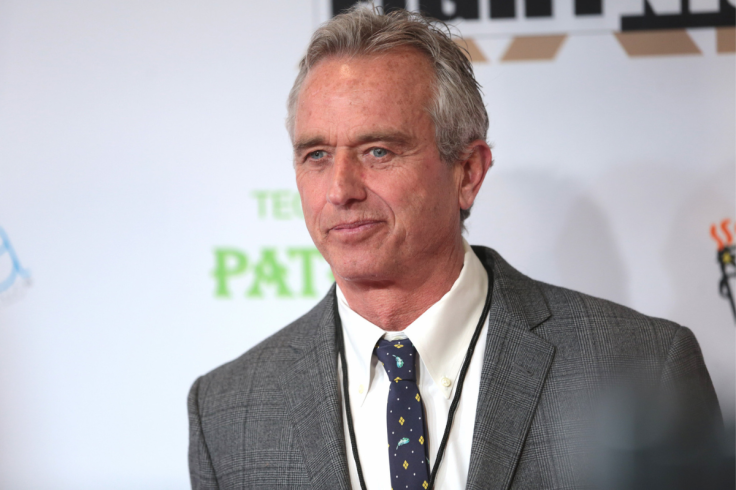
Robert F Kennedy Jr has outlined a plan to connect medical and lifestyle data from millions of Americans and make it more accessible to federal researchers and outside academics, with artificial intelligence used to investigate potential causes of chronic disease.
Speaking at a Monday event in Washington hosted by the Make America Healthy Again (Maha) Institute, a think tank created by his allies, the US health secretary said the country is sitting on a 'goldmine' of fragmented health information.
He wants immunisation records, doctor visits, lab tests, prescriptions and fitness details combined and made 'research ready' for federal scientists and outside academics.
The aim, he said, is to study long-term links between exposures and illness, including vaccines, autism and mortality. 'Your health information should follow you wherever you go,' he told the audience.
Breaking Down the AI Health Plan's Data Silos
Kennedy, whose Department of Health and Human Services (HHS) oversees the Food and Drug Administration, the Centers for Disease Control and Prevention (CDC), Medicare and Medicaid, said state and federal systems hold extensive but underused data.
Central to the plan is standardising state-level reporting to the CDC, which he described as 'unusable' because jurisdictions collect different data points. He wants state health information exchanges, labs and registries to feed a national system that can track patients over decades.
HHS says Medicare and Medicaid claims already support large-scale safety and outcomes monitoring. Commercial platforms such as HealthVerity can link de-identified insurance claims, prescriptions, lab results and electronic records. Kennedy said federal teams are using AI to run studies that once took years 'literally in seconds'.
The effort forms part of the Genesis Mission, a White House science programme launched in 2025 by President Donald Trump. It is a federal initiative intended to accelerate scientific discovery using AI, advanced computing and large datasets.
HHS and the White House Office of Science and Technology Policy are preparing national AI challenges on chronic disease, paediatric cancer and drug discovery.
RFK Jr's AI Health Plan and Fears Over Privacy and Consent
The plan builds on a rapid expansion of the Trusted Exchange Framework and Common Agreement (TEFCA), the network that lets hospitals and clinicians share electronic records nationwide. The Office of the National Coordinator for Health IT says the number of records exchanged through it has risen from roughly 10 million in January 2025 to more than 1 billion by June 2026.
HHS officials say patients remain in control. 'The record belongs to the patient. It goes everywhere the patient needs to go,' said Chris Klomp, a senior HHS official, at a separate event.
Regulators say HIPAA privacy rules still apply, that de-identified data is used for large-scale analysis, and that suspected misuse or information blocking will be referred to law-enforcement bodies, including the Department of Justice.
Even so, obstacles remain. Jonathan Ketcham, until recently the White House's chief health care economist, said Arizona's state exchange cannot be used for research, even in de-identified form, without consent from individual providers.
Andrew Kress, who runs HealthVerity, told US outlet Stat last year that governance, ownership and privacy, rather than technology, usually stall such projects.
Nebraska was singled out repeatedly at the event. Its CyncHealth network has begun sharing data with federal bodies in what Mark Gorton, the institute's president, called a proof of concept for a 'state-federal hybrid model' to study chronic disease and autism.
Other state exchanges have declined similar deals, citing legal and ethical concerns over secondary use of patient information.
Vaccine Claims and the Politics Around the AI Health Plan
The event also highlighted how politically charged the push has become. Gorton has described himself as 'the boldest anti-vaxxer in the anti-vax conference'.
At a Children's Health Defense meeting in September, he called vaccines a 'public health nightmare' and a 'massive fraud', and claimed, without credible evidence, that more vaccines meant more autism.
Those claims conflict with the findings of numerous studies and reviews that have found no association between vaccines and autism.
Kennedy and Gorton argue that earlier attempts by independent researchers to examine vaccine safety using federal databases were blocked by 'gatekeepers', and that opening access to hundreds of outside analysts would expose uncomfortable truths.
Separately, HHS has sought public views on how medical software rules should adapt to machine-learning tools.