
Sophie Cunningham Reveals How WNBA Players Can Have Wives Carry Their Eggs During Pregnancy
WNBA players in same-sex relationships who want to start families have another reproductive option that allows one partner to provide the egg while the other carries the pregnancy.
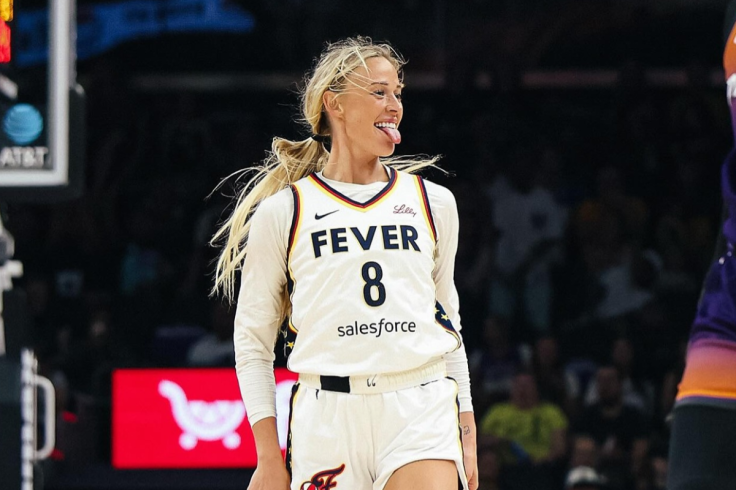
Indiana Fever guard Sophie Cunningham discussed the possibility during an appearance on Theo Von's This Past Weekend podcast, released on 28 October 2026.
Cunningham explained how players in same-sex relationships can have their partners carry pregnancies using eggs retrieved from the players themselves. The process, known as reciprocal in vitro fertilisation (IVF), allows one partner to provide the egg while the other carries the pregnancy.
'I think now you can have your partner carry your egg,' Cunningham told Theo Von.
How WNBA Players Can Use IVF
Cunningham said several of her former teammates had wives who carried their children. She stressed that she was speaking from personal experience rather than describing a league-wide practice.
'Their wives are typically the carriers,' she explained. 'You can have your partner carry your egg.'
Reciprocal IVF involves retrieving eggs from one partner and fertilising them with sperm, usually from a donor in this arrangement. Doctors then transfer the resulting embryo into the other partner's uterus, allowing her to carry the pregnancy.
Also known as reciprocal IVF, the procedure allows one partner to provide the egg while the other carries the resulting pregnancy.
Yale Medicine explains that a gestational carrier does not provide the egg. Instead, she carries an embryo created using an intended parent's or donor's egg.
The approach can be an option for couples who want to share different biological roles in starting a family.
Pregnancy and Motherhood in the WNBA
Cunningham also discussed the physical demands of pregnancy and returning to professional basketball.
'You can be pregnant, have your baby and come back. Now, it's hard on your body. People have done it,' she said.
WNBA players have competed during pregnancy and returned after childbirth. Skylar Diggins-Smith played the entire 2018 WNBA season while pregnant, reaching approximately 14 weeks of pregnancy by the end of the season. Candace Parker returned to the court 53 days after giving birth in 2009.
WNBA Pregnancy Benefits Protect Players' Salaries
Cunningham said pregnancy previously created difficult financial choices for players who feared losing their salaries or roster places.
'It was like play or pay,' she recalled, describing the situation when she first entered the league.
The WNBA introduced stronger maternity protections under its 2020 collective bargaining agreement. That agreement guaranteed full salary during maternity leave, replacing an earlier arrangement that provided half a player's salary.
The 2026–2032 collective bargaining agreement guarantees players 100% of their base salary for the period they are unable to perform their playing duties because of pregnancy, subject to the remaining term of their contracts.
It also allows active players with at least two years of service, or their spouses or domestic partners covered by the player's league-provided health insurance, to receive reimbursement of up to $20,000 per calendar year for eligible family-planning expenses. These include adoption, surrogacy, egg freezing and fertility treatment, subject to the agreement's conditions. The lifetime reimbursement limit is $60,000.
Cunningham welcomed the improvements, saying the league had previously made players feel they had to choose between pregnancy and their earnings.
'I'm glad we fixed that,' she said.
The changes give WNBA players more support to build families while continuing their basketball careers.