
Spain Train Disaster Kills 68 as Survivor Reveals Terrifying Scenes of Blood and Wreckage
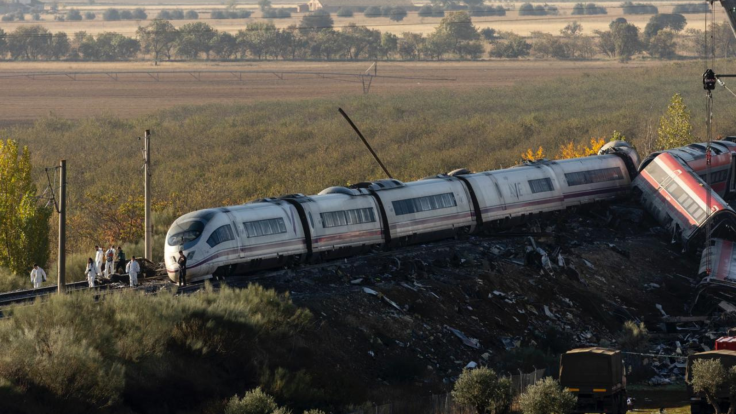
At least 74 people have died after a high-speed Renfe train collided with the back of a stationary Iryo service near Urda in Toledo province, south of Madrid, on Wednesday morning, in Spain's deadliest rail disaster since 2013.
The crash, at about 08:53 on 28 October, is Spain's deadliest rail disaster since 2013. It is also the country's second deadly high-speed rail crash this year. Regional officials warned that the death toll could rise further.
About 540 passengers were on the two trains, according to the Castilla‑La Mancha government. Dozens were injured, with at least 15 in a serious condition.
Survivors Describe Carnage in Spain Train Disaster
Several carriages lay twisted along the track, while others had plunged down an embankment. Firefighters struggled to reach the lowest carriages, which were crushed when the Iryo train was forced off the rails. Crews with cranes and cutting equipment worked through the night.
'Suitcases started flying, people started screaming,' Tangui Binier, 22, told the BBC. His carriage stopped upright, he said, but those behind it overturned.
Mr Binier said he was among the first to escape. 'There were dead bodies, there were missing limbs,' he said. 'I don't know if that is something I will ever recover from.'
Salvador Arriza, 62, told Reuters that passengers smashed windows to get out and that rows of seats were torn from the floor. Some people were trapped among them, he said. A Spanish journalist on board said he was struck on the head and came to rest covered in blood.
A school in Urda has been turned into an information centre for relatives. The Civil Guard has opened collection points in Madrid, Toledo, Córdoba and Seville for families to give DNA samples to help identify the dead.
Control Room Decision at Heart of Spain Train Disaster
Transport minister Óscar Puente said a computer failure on Wednesday morning forced several trains to halt on the Madrid–Seville line.
According to Puente, the control centre authorised the Renfe train to resume normal running at about 08:36, despite the signalling failure. Investigators are examining why the train was allowed to proceed at normal speed while the Iryo service remained stationary ahead on the same track.
'Clearly it was the wrong decision,' Mr Puente said, describing the circumstances as 'inexplicable'.
Renfe said its train had continued as instructed and that the investigation must establish the sequence of events. Iryo said the cause was not yet known. No official cause has been confirmed.
Political Fallout From Spain Train Disaster Weeks Before Election
Spain has declared three days of national mourning. Prime Minister Pedro Sánchez, who visited the site, said 'the whole of Spain is grieving' and promised to 'get to the bottom' of the causes.
He said early information did not suggest a link with the January crash near Adamuz, in which 46 people died. 'If there has been negligence, it will come to light,' he said.
Most major parties suspended campaigning ahead of the general election on 29 November. Alberto Núñez Feijóo, leader of the conservative People's Party, called for a complete and independent review of the rail network.
Vox leader Santiago Abascal pointed to what he called the deterioration of Spain's infrastructure. The CSIF union called on Mr Puente to resign, accusing him of blaming a traffic controller rather than accepting ministerial responsibility.
Spain's high‑speed network is the second largest in the world after China's.