
Man Who Cut Woman's Bra To Perform CPR Urges Men To Do the Same as 3 in 10 Hesitate
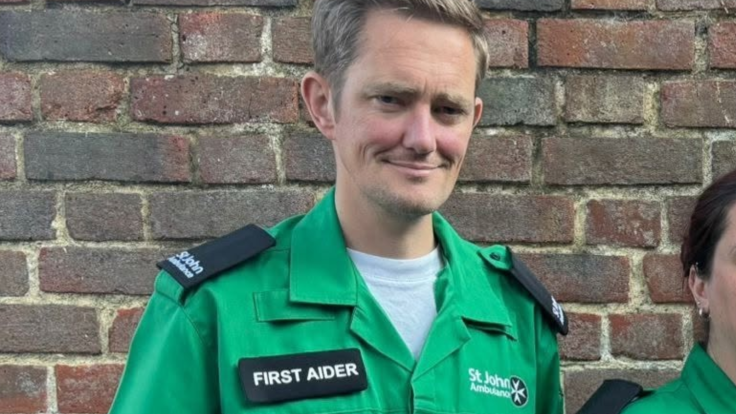
A volunteer rescuer who cut open a stranger's bra to save her life is urging men never to hesitate during a medical emergency.
Peter McLaughlin spoke out after a new survey revealed that three in 10 men would pause before giving CPR to a woman. St John Ambulance warned that this widespread hesitation is costing lives across the UK.
Around 40,000 cardiac arrests happen in UK communities each year. Currently, fewer than one in 10 people survive an out-of-hospital collapse.
CPR Hero Urges Men: Never Hesitate to Save a Life
The life-or-death encounter unfolded when a 45-year-old woman suddenly collapsed inside the Kingston-upon-Thames Guildhall in south London.
McLaughlin, an off-duty St John Ambulance volunteer, started CPR immediately while calling for a defibrillator. He asked someone to bring scissors so he could cut open the woman's bra and place the defibrillator pads correctly before paramedics arrived.
'I didn't have a choice,' McLaughlin explained. 'I either cut the bra off to get the defib pads on her or she leaves in a very different situation.'
He emphasized that medical emergencies leave zero room for social awkwardness or second-guessing.
'In that situation, you don't see a man or a woman,' McLaughlin said. 'You don't think about gender.'
'You just have to put aside any embarrassment it may cause and save a life,' he added.
Why 3 in 10 Men Hesitate to Give Women CPR in Public
A survey conducted by Censuswide for St John Ambulance revealed why many bystanders freeze during a medical crisis.
The study found that 30% of men worry about being accused of inappropriate touching if they step in to help. Another 20% fear that bystanders might film them and post the video online.
Dr Lynn Thomas, medical director at St John Ambulance, warned that this hesitation puts women's lives at direct risk.
'Women are less likely to receive CPR in public, and hesitation is costing lives,' Dr Thomas said. 'No one should ever feel afraid to try to save a life.'
Actor Nikki Sanderson, whose mother survived a 2021 cardiac arrest thanks to quick bystander intervention, echoed the concern.
'It's horrifying that so many people say they are less likely to help a woman in public,' Sanderson said. 'That woman could be someone's mum, sister, or daughter.'
'We need to remove these barriers so we can bust the taboo, because everyone deserves the same chance,' she added.
Social Media Fears Stop Bystanders From Giving CPR
Online commenters pointed out that smartphone culture and viral outrage deepen hesitation during life-threatening medical emergencies.
The Social Action, Responsibility and Heroism Act 2015 requires courts in England and Wales to consider whether a person was acting to help society, behaving responsibly or intervening heroically in an emergency when assessing negligence claims. It does not provide blanket immunity from legal liability. Yet many argue that statutory protections do little to ease the fear of public shaming on social media.
'The best training won't prevent you from being assaulted by a mob of social media wannabes,' one user wrote. Another commenter urged rescuers to prioritise survival over online drama: 'You can always apologize, you can't raise the dead.'
First aid advocates also called for female CPR manikins in training courses to help normalize physical contact during resuscitations.
How to Place Defibrillator Pads on Female Patients
Emergency advice from St John Ambulance confirms that automated external defibrillators require direct contact with bare skin to function.
If a person collapses and stops breathing normally, call emergency services on 999 or 112 and begin chest compressions immediately, St John Ambulance urges.
Rescuers must remove or cut through clothing, including bras, binders, and restrictive garments, using safety shears. For an adult in cardiac arrest, rescuers should give chest compressions at a rate of 100 to 120 per minute, to a depth of 5 to 6 cm.
Medical trainers reassure responders that correct hand placement in the center of the chest may involve touching the breast.
One pad attaches below the right collarbone, while the second sits on the left side beneath the armpit.