
Republican and Democrat Couple Takes Aim at CVS After Man Finds Blood Pressure Medication 'Cheaper' With Cash
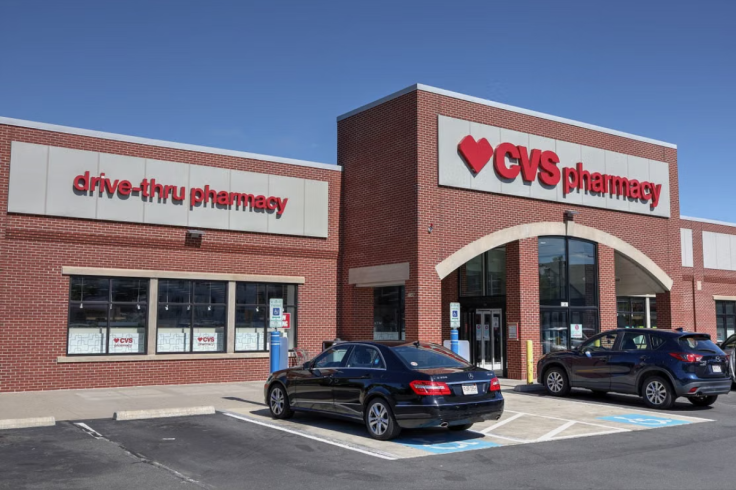
A Republican and a Democrat may not agree on much politically, but Amye and Charlie Joseph have found one issue they can both rally around: the cost of prescription medicine.
The Tennessee couple, married for 35 years, have become vocal critics of CVS Health after Charlie discovered that paying cash at a local pharmacy could give him a 90-day supply of his blood pressure medication for the same price he would have paid for only 30 days through his CVS Caremark drug plan.
Their experience has added a personal dimension to a wider political fight over pharmacy benefit managers, or PBMs, and how prescription prices are set.
A Cash Price Left Charlie Questioning His Drug Plan
Charlie Joseph, a retired fire captain who now works as a custodian, was surprised when he compared the price of his blood pressure medication through his CVS Caremark plan with the cash price offered by his local pharmacy.
Instead of using the insurance-linked benefit, he began paying cash and found that a 90-day supply cost the same as a 30-day supply under the CVS plan. The discovery did not mean his medicine had suddenly become cheaper everywhere, but it highlighted how dramatically prices can differ depending on how a prescription is processed.
For Charlie, the experience became another example of what he sees as an inconsistent healthcare system.
'Right now, it's more of an inconvenience than anything else as far as it goes, but there's no consistency,' he said. 'The whole healthcare thing is just frustrating, on a good day.'
The issue is particularly striking because PBMs were designed as intermediaries between drugmakers and insurers to negotiate drug prices and manage prescription benefits. CVS Caremark is one of the largest PBMs in the US and operates alongside CVS Pharmacy and insurer Aetna under CVS Health.
PBMs were designed as intermediaries between drugmakers and insurers to negotiate drug prices and manage prescription benefits.
A Republican and Democrat Find Common Ground
The Josephs' political differences have not stopped them from sharing concerns about healthcare costs. Amye is a Republican, while Charlie is a Democrat, yet both have grown frustrated with CVS Health.
Amye has criticised what she describes as reduced face-to-face interaction with pharmacists, unexplained price increases and pressure from the couple's CVS Caremark plan to use CVS pharmacies.
'We hate CVS. I'm going to be straight-up,' Amye said. She also accused the company of going beyond the traditional role of a middleman, saying, 'They're not even a middleman. They're a money grab for CVS.'
Her comments reflect a broader political shift. PBMs have increasingly attracted criticism from both Republicans and Democrats, even though the parties often disagree sharply on wider healthcare policy.
Why PBMs Are Facing Pressure Across States
CVS Health owns CVS Caremark, a PBM, while also operating a large retail pharmacy business. Critics argue that this combination can create conflicts when PBMs determine reimbursement rates or influence where patients obtain medicines.
Tennessee lawmakers have moved forward with legislation that would restrict companies from owning both PBMs and brick-and-mortar pharmacies. Republican lawmakers have pushed the measure, but it has also received Democratic support in the state legislature.
The issue has even produced federal bipartisan cooperation. A proposed PBM ownership ban has attracted support from lawmakers including Democratic Sen. Elizabeth Warren and Republican Sen. Josh Hawley.
Antonio Ciaccia, CEO of 46brooklyn Research, said the debate reflects concerns that normal market competition may not be working as expected.
'This is not a free market,' Ciaccia said.
CVS Defends the Value of Its Drug Benefits
CVS has argued that the price of a single prescription does not reflect the overall value of its pharmacy benefits. Phil Blando, a CVS spokesperson, said individual drug prices can vary and argued that patients should consider the wider benefits provided through a comprehensive pharmacy plan.
'Looking at the price of a single prescription does not reflect the value of a comprehensive pharmacy benefit,' Blando said. He added that CVS remains focused on delivering what it considers the lowest overall cost and greatest value for members and plan sponsors.
For the Josephs, however, the debate remains much more personal. Their experience began with one blood pressure prescription and a surprising cash price.
It has since placed their household at the centre of a much larger argument over who should control prescription costs and how much patients ultimately pay for their medicines.