
Two French Republican Guards Suffer Fainting Attacks During Macron's Welcome for Slovak President
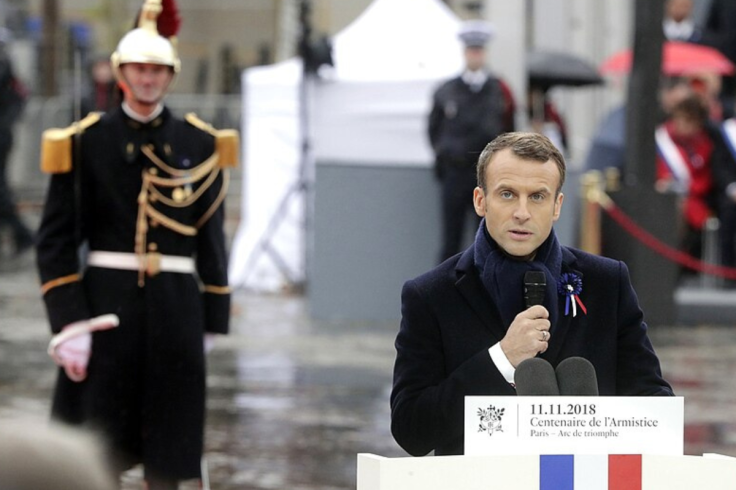
A ceremonial welcome at the Élysée Palace took an unexpected turn after two members of France's elite Republican Guard collapsed while President Emmanuel Macron received Slovak President Peter Pellegrini on 11 November.
Televised footage showed one uniformed guard swaying before falling against a pillar, sending his ceremonial sword clattering to the ground. Macron and nearby aides immediately moved towards him as others rushed to provide assistance.
A second guard also collapsed during the ceremony, although the incident reportedly happened outside the camera's view, according to French newspaper Le Parisien.
A French presidential source told AFP that both guards had suffered 'fainting attacks'. The source added that they were swiftly attended to and that 'everything is fine'.
Why Did Two Republican Guards Collapse During Macron's Welcome?
The guards were part of the honour guard assembled for Pellegrini's official visit to France. Their ceremonial duties involved standing outside the presidential palace in full dress uniform, holding their sabres vertically as part of the formal reception.
The Republican Guard, a branch of France's national gendarmerie, regularly performs ceremonial duties for visiting heads of state and other official occasions.
Although the presidential source did not disclose what caused the two men to faint, the incident drew attention to the physical demands of standing still for extended periods.
Online discussions following the footage suggested that remaining motionless, particularly while keeping the legs in a fixed position, can contribute to fainting.
Some commenters also pointed to locked knees and inadequate hydration as possible factors. However, these explanations remain speculation and have not been confirmed as the cause of the guards' collapse.
How Can Prolonged Standing Affect the Body?
Standing for long periods can place considerable strain on the body, particularly when movement is restricted.
A 2015 review published in the Rehabilitation Nursing journal, examined the health risks associated with prolonged standing at work. The researchers found evidence linking extended standing with lower back and leg pain, cardiovascular problems, fatigue and physical discomfort.
The review also identified interventions that may help reduce these risks, including supportive footwear, shoe inserts, floor mats, compression hosiery and sit-stand workstations.
The study highlighted how occupations requiring prolonged standing can create physical demands that should not be overlooked.
What Happens to Blood Circulation When Someone Stands Still?
The body's circulation partly depends on muscle movement to help push blood from the legs back towards the heart. Standing still for long periods can make this process less efficient, sometimes causing lightheadedness.
This helps explain why prolonged standing can be uncomfortable and physically demanding. However, fainting can happen for many reasons, and there is no evidence to suggest that poor circulation caused the guards to collapse during the Élysée Palace incident.
Postural orthostatic tachycardia syndrome (POTS) is another condition associated with symptoms that can worsen when standing upright. According to Johns Hopkins Medicine, people with POTS may experience excessive blood pooling in the lower body and an unusually rapid increase in heart rate when standing. This can reduce the amount of blood returning to the brain, causing lightheadedness, fatigue and, in some cases, fainting.
However, POTS is a medical condition, and there is no evidence that either guard has the disorder.
For now, a French presidential source has confirmed that both guards received immediate assistance and were doing well. The exact circumstances surrounding their collapse, however, have not been disclosed.