
A Cold Still Costs the Economy Billions. Why Is Masking When You Cough Still Odd?
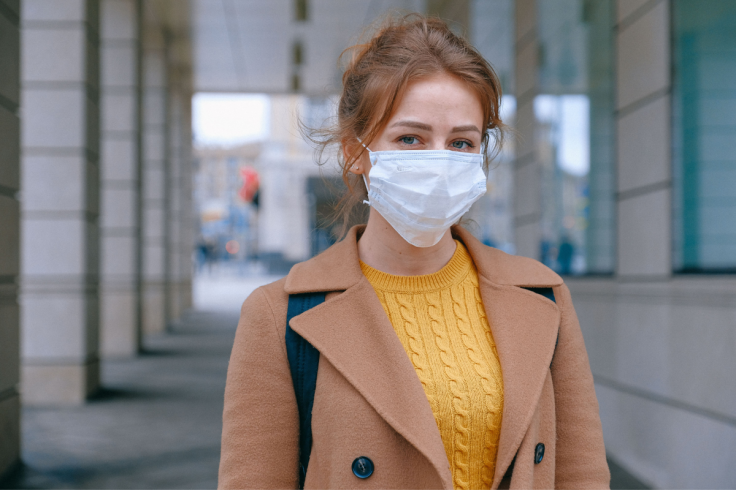
Respiratory infections still cost UK firms tens of billions of pounds a year, yet wearing a mask when coughing in public remains socially awkward. Research by the Office of Health Economics put the productivity loss at £44 billion ($58 billion) a year, or £852 ($1,127) per employee.
Official advice already tells people who must go out while unwell to consider a face covering. Few treat that as ordinary manners.
The Hidden Cost of Respiratory Infections at Work
A Pfizer-commissioned and funded Office of Health Economics report, based on a survey of 2,910 adults, fielded between 11 and 24 October 2023 and published on 16 December 2024, found staff were affected by respiratory infections for 5.2 days a year. Only 1.1 days were taken as absence.
The remaining 4.1 were worked at reduced capacity, with productivity falling by 32 per cent. Presenteeism made up about 55 per cent of the bill.
Amanda Cole, an associate director at the Office of Health Economics and a co-author, said: 'Short-term respiratory infections incur a substantive cost for employers and, in fact, employees working while ill causes more productivity loss than absence.'
The Office for National Statistics reported on 1 May 2026 that 148.8 million working days were lost to sickness or injury in 2025. The absence rate was 2.0 per cent, unchanged from 2024, or 4.4 days per worker.
Minor illnesses, including coughs, colds and flu, remained the most common reason, at 30.4 per cent of occurrences.
Why Masking When You Cough Still Feels Odd
UK Health Security Agency winter bulletins through February 2026 repeated the same line. People with symptoms should stay at home where possible. If they need to go out, they should consider wearing a face mask.
Living safely guidance says a well-fitting face covering can help reduce spread when someone unwell leaves home. Cough etiquette still starts with a tissue, a bin, and the inner elbow if no tissue is to hand.
After most pandemic-era mask requirements were dropped, a covering on a commuter with a cold could still read as leftover pandemic kit rather than everyday courtesy. Officials still recommend it. Yet the pressure to keep working through minor illness can make staying home or masking feel less straightforward.
NHS Scotland guidance says that, where tolerable, symptomatic patients should wear a face mask.
The UK Health Security Agency repeated the same advice on its official account in September 2025: 'If you need to leave the house, you should consider wearing a face covering.'
If you have symptoms such as a high temperature, cough and feeling tired and achy, try to limit your contact with others. If you need to leave the house, you should consider wearing a face covering. Washing hands regularly and using and disposing of tissues in bins.
— UK Health Security Agency (@UKHSA) September 12, 2025
A Habit That Never Became Everyday Manners
In Japan, wearing a mask when unwell has long been associated with consideration for others. The practice became more widespread after influenza outbreaks in the 20th century and has remained common during cold and flu seasons.
South Korea's disease-control authorities have likewise advised people with respiratory symptoms to wear masks.
Britain has not developed the same widespread social expectation that people should mask when they have a cold or other respiratory symptoms.
The Office of Health Economics listed mask-wearing among steps that could cut employer losses, alongside vaccination and hand washing. Many working-age adults remain outside NHS respiratory vaccine programmes.
Respiratory infections will return with the colder months, as they do every year. The productivity cost is already measured in absence and presenteeism. Wearing a mask when coughing is still treated, in most British workplaces and carriages, as the strange option.