
AI Can Now Prescribe Acne Medication Without A Doctor In Utah, Raising New Questions About Patient Safety
Artificial intelligence is moving beyond chatbots and symptom checkers and into an area traditionally reserved for doctors: prescribing medication.
Nolla Health has launched a Utah pilot allowing its AI-powered Nolla Derm app to assess adults with mild-to-moderate acne and generate prescriptions for selected topical treatments. The programme, which began on 5 October 2026, is reportedly the first US state-authorised pilot allowing AI to issue initial prescriptions rather than simply renew medicines previously prescribed by a clinician.
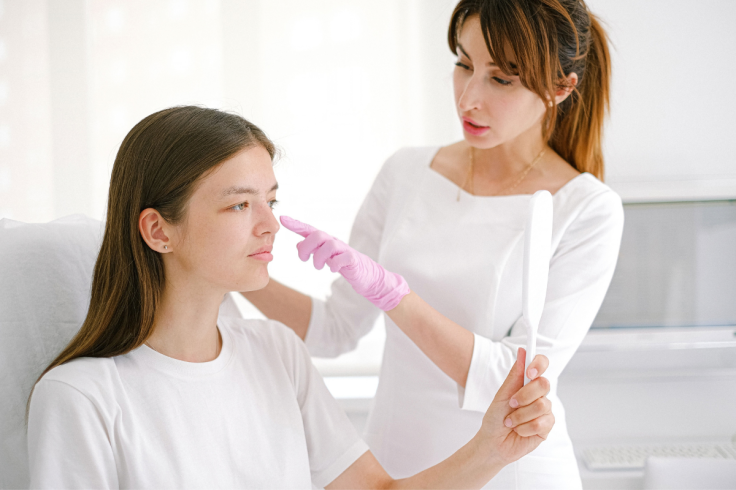
Patients complete an intake questionnaire and submit a five-angle scan of their face. The system analyses the images, assesses acne severity and selects a treatment from a limited list of topical medications. The programme costs $4.99 (£3.85) a month, excluding the cost of medication, according to Nolla Health.
The idea could make acne treatment more accessible, particularly for people facing long waits for dermatology appointments. But it also raises a bigger medical question: how much can an AI system safely determine from a photograph and questionnaire before a human clinician needs to step in?
What the Utah AI Acne Pilot Can Actually Prescribe
The programme is considerably narrower than the idea of an 'AI doctor' might suggest.
Under Utah's agreement, Nolla can prescribe and refill a limited range of topical acne treatments to adults with mild-to-moderate acne. It cannot prescribe oral acne medication or isotretinoin, a treatment commonly used for severe or treatment-resistant acne.
The pilot also has safeguards. Patients with severe acne, who are pregnant or planning to become pregnant, breastfeeding, immunocompromised or who have previously reacted to one of the listed medications are excluded from the AI pathway. Prescriptions can also be referred to a human provider when the system cannot safely determine an appropriate treatment.
During the programme's initial stage, two Utah-licensed doctors review every prescription before it reaches the patient. Later stages move towards retrospective review and eventually sampling, meaning the AI could make prescribing decisions without a doctor approving each prescription beforehand.
Why an Acne Diagnosis Is More Than a Skin Scan
Acne may look straightforward, but not every breakout is necessarily acne.
A clinician can consider the appearance and distribution of lesions alongside a patient's medical history, medications, allergies, pregnancy status and other symptoms. Some conditions can resemble acne, including folliculitis and rosacea, which may require different treatment.
The distinction matters because acne medications are not interchangeable. Dermatology guidelines recommend treatments such as topical benzoyl peroxide and retinoids, while antibiotics and other medications may be appropriate for particular patients or disease severity.
An automated system therefore needs to do more than recognise spots. It must also identify patients who may fall outside the boundaries of routine acne treatment.
Acne Treatments Can Still Carry Medical Risks
Even topical acne treatments can cause irritation and other adverse effects, while some medications require additional precautions.
Topical retinoids, for example, are widely used to treat acne but are generally avoided during pregnancy. The American Academy of Dermatology's acne guidelines also recommend limiting systemic antibiotic use because of the risk of antibiotic resistance.
More severe acne may require oral medication or isotretinoin, which has substantially greater monitoring requirements and is not included in the Nolla pilot.
That means the safety of AI prescribing depends partly on whether the system can reliably recognise when a patient needs a treatment outside its approved list.
Could AI Miss What a Doctor Would Notice?
Nolla Health says its programme is intended to address gaps in access to dermatology care. The company estimates that about 100,000 people in Utah have active acne, while only around 10% see a dermatologist. It also reports that the average wait for a dermatology appointment in the state is 61 days.
For patients with straightforward mild-to-moderate acne, faster access to treatment could be useful. The bigger test, however, will be whether the system can consistently identify cases that are not straightforward.
The pilot is designed to gather real-world safety and efficacy data under state supervision, as Utah brings independent third-party evaluators into its healthcare AI sandbox.
The experiment could ultimately show whether AI can safely handle some routine prescribing decisions. But for patients, the crucial safeguard may remain the same one doctors have relied on for years: recognising when a seemingly simple condition needs a closer look.