
Man, 97, Dies Peacefully of Illness at Own Birthday Party After Dancing to 'Stayin' Alive'
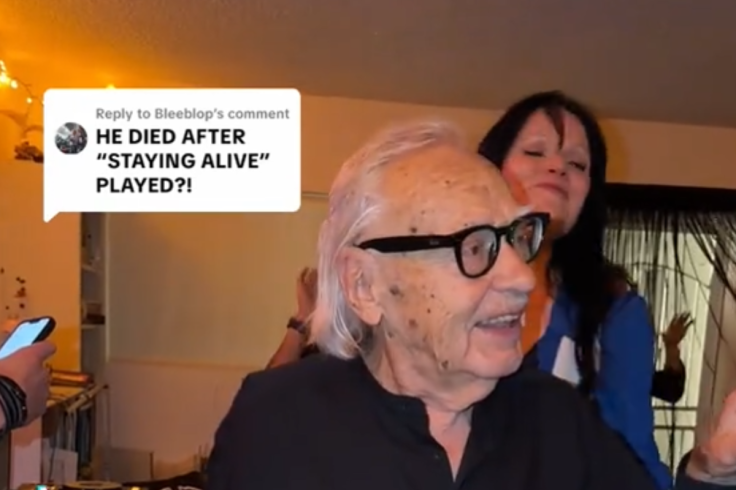
A 97-year-old California man has died peacefully at his birthday celebration after dancing to the Bee Gees' hit 'Stayin' Alive'.
The pensioner, known to friends as Vito, was celebrating a joint Halloween-themed 97th birthday party thrown by his neighbour in Los Angeles.
Footage posted online showed the elderly man swaying, smiling and clapping to the 1970s disco classic while wearing a black button-down shirt and dress trousers.
Vito died shortly after friends gathered to sing 'Happy Birthday' to him, prompting widespread tributes across social media.
Los Angeles baker Eden Malinoff, 24, who organised the celebration, described her neighbour's final moments as a fitting exit.
'Unfortunately the night did not end as anticipated and Vito made a dramatic exit,' Malinoff said. 'But if there's any way he could have chosen to go out it would have been like this.'
Vito's best friend confirmed the sudden death on social media, noting that the pensioner had underlying medical issues whose severity remained unknown to those around him.
'He had some medical issues that we didn't know the severity of, and he passed away peacefully with his favourite music going,' the friend posted.
Social media users reacted with admiration, with one noting: 'Lived nearly a century, danced to the Bee Gees with his best friends, and went out like an absolute legend.'
Biological Mechanisms Behind Mortality in Elderly Populations
While public commentary often attributes late-life deaths to old age, medical science rejects advanced age itself as a direct cause of death.
The World Health Organization (WHO) does not classify old age itself as a disease. However, its International Classification of Diseases (ICD-11) includes a category called 'Ageing associated decline in intrinsic capacity', which is used when medical records or death certificates contain unclear statements about the cause of death. The term 'old age' remains in the classification's index to help healthcare professionals and coders identify the relevant category.
Ageing can increase vulnerability to illness but is not itself a specific cause of death.
As people age, senescent cells can accumulate in different tissues. These cells stop dividing but remain metabolically active, sometimes releasing inflammatory substances that can contribute to tissue dysfunction.
Telomeres, protective structures at the ends of chromosomes, also tend to shorten as cells divide. This process is one of several biological mechanisms associated with ageing.
Ageing can affect both the heart and skeletal muscles. Changes in cardiac structure and function may reduce cardiovascular reserve, while the gradual loss of muscle mass and strength, known as sarcopenia, can affect mobility and physical independence.
When an underlying illness strikes, a reduced reserve of physical function leaves older bodies unable to compensate for sudden physiological strain.
According to US mortality statistics, heart disease, cancer and stroke are among the leading causes of death among adults aged 65 and older.
Clinical Distinctions Between Natural Causes and Terminal Disease
In death investigations, 'natural' describes a manner of death resulting from disease or an internal medical condition rather than an external cause, such as an accident, homicide or suicide.
A natural death indicates an internal pathological process, such as a heart attack, respiratory infection, or blood clot, rather than external trauma.
Unexpected deaths among older adults can result from several medical conditions, including cardiovascular disease, respiratory infections and other acute illnesses. Determining the cause generally requires medical investigation.
Regular physical activity, balanced nutrition, avoiding smoking and limiting alcohol consumption can help older adults maintain their health and physical independence.