
Top Health Official Warns Ebola Could Reach UK as Africa's Deadliest Outbreak Spreads Across Continents
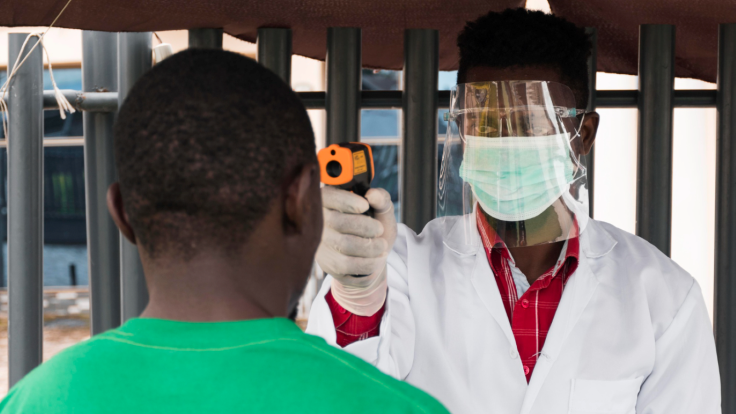
A rapidly spreading Ebola outbreak in Africa has prompted a warning that the disease could reach the UK, with a senior health official urging countries worldwide to strengthen their preparedness before infections spread further.
Dr Jean Kaseya, director general of the Africa Centres for Disease Control and Prevention (Africa CDC), said countries should not assume they would remain unaffected. 'We want all countries to know that they are not safe if they don't take appropriate measures,' he told The Guardian.
His warning comes as the outbreak caused by the Bundibugyo strain has become the largest and deadliest Ebola epidemic in the Democratic Republic of the Congo (DRC). Kaseya described its geographical spread as 'unprecedented', calling for greater international coordination, improved screening and greater capacity to treat infected patients.
He also drew comparisons with the early stages of the COVID-19 pandemic, when countries initially underestimated the possibility of widespread transmission.
Ebola Outbreak Surpasses 10,000 Cases
The outbreak had recorded more than 10,000 confirmed cases and nearly 5,000 confirmed deaths in the DRC, according to the World Health Organization's update published on 28 October.
The outbreak has also involved Uganda, Kenya and Nigeria, while France previously reported an imported case in a doctor who had returned from the DRC. The spread across multiple African regions and the detection of an infection outside Africa have intensified concerns about international preparedness.
However, a warning that Ebola could reach Britain does not mean an outbreak in the UK is inevitable. The concern is that international travel could transport an infected person across borders, making early detection, isolation and coordinated public-health responses important.
The current outbreak is particularly challenging because the Bundibugyo virus has no approved vaccine or specific treatment. Vaccine trials are under way, with results expected within three to six months, according to the report.
Why Is the Outbreak Difficult to Contain?
Health workers are facing several obstacles, including shortages of protective equipment, delayed funding, conflict, and mistrust among affected communities.
Violence and insecurity can restrict access to people who need medical care and make it harder for response teams to investigate cases, trace contacts, and prevent further transmission. Misinformation can also undermine public cooperation with health measures.
Kaseya has called for international support and safer access for healthcare teams working in conflict-affected areas. Governments have reportedly pledged $3 billion (£2.3 billion) towards the response, but more than $2 billion remains outstanding.
What Are the Symptoms of Ebola?
Ebola is a severe viral disease that can cause high fever, headache, muscle pain, weakness, sore throat, vomiting and diarrhoea. In severe cases, patients may develop internal or external bleeding, although bleeding does not occur in every infection.
The virus spreads primarily through direct contact with the blood or other bodily fluids of an infected person who is symptomatic, or through contaminated objects and the bodies of people who have died from the disease. It does not typically spread through the air in the same way as measles.
Anyone who develops compatible symptoms after possible exposure should seek urgent medical advice and disclose their travel or contact history. People should avoid contact with bodily fluids and follow public-health guidance rather than attempting to manage a suspected infection themselves.
What Does This Mean for the UK?
Kaseya's warning highlights the importance of preparedness, surveillance and international cooperation, rather than suggesting that widespread transmission in Britain is imminent.
For now, the outbreak's trajectory will depend partly on how effectively affected countries can identify infections, protect healthcare workers, support communities and secure the resources needed to contain transmission.
The priority remains stopping the outbreak at its source while ensuring that health systems elsewhere can respond quickly if imported cases occur.