
Boy Develops 'Toasted Skin Syndrome' After Resting Laptop on His Stomach for Eight Hours a Day
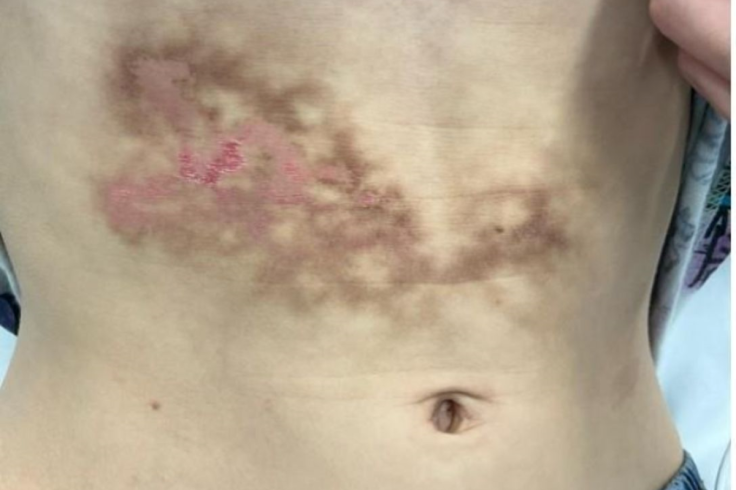
A boy developed an unusual skin condition after spending up to eight hours a day with a laptop resting directly on his stomach, highlighting how prolonged exposure to low-level heat from electronic devices can affect the skin.
The pre-teen, who was being home-schooled, was taken to hospital after developing a reddish-brown, lace-like rash across his abdomen. Doctors initially suspected the marks could be related to bruising or an internal injury.
The case was reported by Dr Mara Znagoveanu and Dr Edward Artley of University Hospitals of Leicester NHS Trust in the journal BMJ Case Reports. Znagoveanu was responsible for writing the case report, while Artley supervised the patient's care and reviewed the report.
What Happened to the Boy?
When the boy first arrived at hospital, neither he nor his parents could identify an obvious cause for the unusual rash. He was otherwise healthy and had no fever, fatigue or abdominal tenderness.
Doctors initially investigated the possibility of an injury after learning that he had been pushed into a chair while play-fighting with his siblings. Blood tests and abdominal imaging, however, did not reveal an internal injury.
The boy returned to hospital about two weeks later after the rash had become larger, darker and tender, with areas of skin beginning to break down.
Further questioning revealed that he regularly used a laptop for schoolwork while resting it directly on his abdomen. He sometimes used it for up to eight hours a day and often kept it charging while he worked. This provided the missing clue.
What Is 'Toasted Skin Syndrome'?
The doctors diagnosed the boy with erythema ab igne, also known as 'toasted skin syndrome'. The condition develops after repeated or prolonged exposure to low-level heat that is not intense enough to cause an immediate burn.
The name erythema ab igne comes from Latin and means 'redness from fire'. It typically produces a distinctive reddish or brown, net-like or lace-like pattern on the skin.
The condition has traditionally been associated with heat sources such as hot-water bottles, heating pads and heaters. However, laptops and other electronic devices can also expose the skin to enough heat over prolonged periods to cause the condition.
Researchers believe repeated heat exposure can affect small blood vessels close to the surface of the skin, contributing to the characteristic discolouration.
Is Toasted Skin Syndrome Dangerous?
Erythema ab igne is generally considered benign and often improves after the source of heat is removed.
In the boy's case, his family reported several months later that the rash had gradually faded and eventually disappeared after he stopped resting the laptop directly against his body.
However, prolonged cases can sometimes leave persistent skin pigmentation. Rarely, chronic erythema ab igne has also been associated with malignant changes in the skin, although this was not reported in the boy's case.
When Should You See a Doctor?
A persistent or unexplained rash should not automatically be assumed to be 'toasted skin syndrome', particularly if it develops without an obvious source of heat.
People should seek medical advice if the affected area becomes painful, develops sores or blisters, changes rapidly or does not improve after the suspected heat source is removed. A doctor may also need to rule out other causes of skin discolouration, including bruising, infections or inflammatory skin conditions.
The appearance of erythema ab igne can provide an important clue, but its distinctive net-like pattern does not by itself confirm the diagnosis. Identifying the source of repeated heat exposure and examining how the skin changes after that exposure stops can help doctors determine whether the condition is responsible.
Frequently Asked Questions
- What is toasted skin syndrome?Toasted skin syndrome, or erythema ab igne, is a skin condition caused by prolonged exposure to low-level heat, resulting in a reddish-brown, lace-like rash.
- Is toasted skin syndrome dangerous?The condition is generally benign and often improves once the heat source is removed, but prolonged exposure can sometimes lead to persistent skin pigmentation or, rarely, malignant changes.
- How can I prevent laptop-related skin damage?Avoid placing a laptop directly on your skin, use a stand or lap desk, take regular breaks, and avoid charging the laptop while it's on your body.