
Democrats Back Parts of Medicare for All as Poll Finds Six in 10 US Voters Want More Government Help With Care
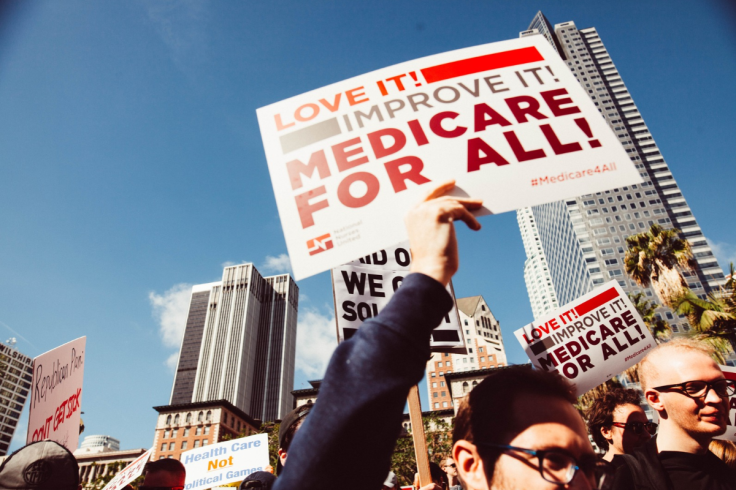
Democratic leaders in Washington are pursuing elements of Medicare for All ahead of the new US Congress convening on 3 January 2027. The AP Voter Poll found that approximately six in 10 midterm voters wanted the federal government to play a greater role in helping Americans obtain healthcare.
A similar proportion said they were very concerned about healthcare costs.
Democratic proposals include lowering Medicare's standard eligibility age from 65, expanding dental, vision and hearing benefits, and ensuring affordable healthcare access for children.
The survey, which involved more than 100,000 midterm voters nationwide, measured support for greater government assistance rather than specific endorsement of Medicare for All.
The proposals follow the November midterm elections, which secured Democratic majorities in both chambers of the incoming Congress. Party leaders plan to reverse Medicaid cuts and restore Affordable Care Act (ACA) tax credits during their first 100 days.
Medicare for All Reforms Gain Support Among Democratic Leaders
House Democratic leader Hakeem Jeffries, who is expected to become House speaker in January, outlined his healthcare priorities at a post-election Democratic conference in Denver.
'I think we've got to lower the age of eligibility as it relates to Medicare,' he said.
His proposals overlap with the initial stage of Vermont independent Senator Bernie Sanders' longstanding Medicare for All plan. However, Democratic leaders have yet to agree on a single legislative framework or collectively endorse a universal single-payer healthcare system.
Earlier this year, Jeffries said he did not currently support Medicare for All, instead highlighting the restoration of enhanced ACA subsidies to improve healthcare affordability.
Former President Barack Obama has also encouraged incoming Democratic lawmakers to pursue reforms beyond the ACA, according to a transcript of his remarks at the Capitol.
'You should push further and get more,' Obama said.
Medicare for All Proposals Face Questions Over Costs and Eligibility
Senator Tammy Baldwin of Wisconsin introduced the Medicare at 50 Act in November. The proposal would allow more than 58 million Americans aged 50 to 64 to purchase Medicare coverage.
Representative Pramila Jayapal of Washington state has also proposed lowering the eligibility age to 50 under her Improving Medicare Coverage Act.
Meanwhile, Representative Rosa DeLauro of Connecticut has proposed the Medicare for America Act, which would broaden access while limiting premiums and out-of-pocket expenses.
Under a Medicare buy-in proposal, younger Americans could be required to pay most or all of their premiums. Lowering the standard eligibility age would generally involve greater federal expenditure.
Larry Levitt, executive vice president at the non-partisan health policy research organisation KFF, highlighted the challenges of implementing universal healthcare.
'A challenge with Medicare for All proposals has always been how do you get from here to there,' Levitt said.
Healthcare providers could face financial pressure because Medicare generally reimburses medical services at lower rates than private insurers. However, they could also benefit if the number of uninsured patients declines.
Trump's Veto Threats Could Complicate Medicare for All Reforms
Democrats are expected to hold 56 seats in the incoming Senate. Most legislation would require 60 votes to overcome a filibuster if Republicans sought to block it.
President Donald Trump has threatened to veto Democratic legislation but has expressed interest in negotiating over healthcare policy.
'There's a real possibility that we'll get a lot of great things done, especially on healthcare,' Trump said at a post-election news conference.
'Now, can it be what they want? No, but it can be a combination of what we all want.'
His remarks did not constitute an endorsement of Medicare for All.
Incoming congressional leaders are prioritising the restoration of ACA tax credits and the reversal of Medicaid cuts. Broader reforms face divisions between progressive Democrats and moderates concerned about federal expenditure.
The proposed Medicare eligibility age, funding arrangements and scope of additional benefits have yet to be agreed. The proposals have not changed Medicare's existing eligibility rules.