
Florida Couple Were Holding Hands When Lightning Struck, Here's What a Bolt Can Do to the Human Body
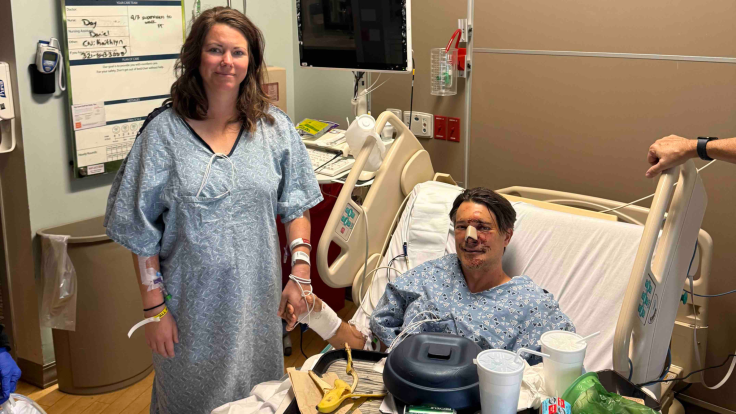
A Florida couple survived a lightning strike while holding hands on a trail, after the bolt left Clare Walenga unable to breathe and her husband Aaron unable to move. Four bystanders rushed to help as the couple lay injured on 2 September.
The 48-year-old and his 43-year-old wife had just dropped their children at church and were walking along the West Orange Trail when they were struck. Aaron later told police he remembered holding Clare's hand at the moment of impact.
A Bolt Can Stop the Heart
A witness told police the couple's umbrella was struck. Charlotte Sachetti Weyand and Amber McManus had just passed them when they saw sparks coming from a fence beside the trail and called 911.
Aaron said a weather app had shown a storm across town, but the couple had seen no lightning. He also said he did not remember hearing thunder before the strike.
The National Weather Service says a person hit by a direct lightning strike becomes part of the main electrical discharge channel. Some current can travel over the skin, while some may pass through the body.
That electrical current can disrupt the cardiovascular and nervous systems. Lightning can also cause burns, but current travelling through the body can pose a serious danger.
A lightning strike can cause cardiac arrest, making immediate CPR and use of an automated external defibrillator, or AED, potentially critical before emergency crews arrive.
Michael Weyand saw Clare's condition and began CPR. He said her skin was blue and she was not breathing. Although he had never performed CPR before, he started chest compressions.
Clare took a 'massive breath' after chest compressions, just before mouth-to-mouth resuscitation was due to begin. Aaron remained conscious but could not get up.
'I couldn't really move, and I was in the worst pain of my life,' he said.
What Happens After a Strike
Both were taken to Orlando Regional Medical Center. Clare suffered a concussion and later reported short-term memory loss, while Aaron sustained facial bruising.
Dr Jeff Lawrence, president of Foundation Academy, where the couple work, said staff had been worried about Clare. He later learned that doctors were preparing to remove her breathing tube.
The couple later said they were 'healing and are on track for a full recovery'.
Surviving a strike does not necessarily mean escaping lasting effects. The National Weather Service lists muscle soreness, headache, nausea, confusion and dizziness among possible injuries.
Longer-term problems can include cognitive difficulties, chronic pain, sleep problems and ringing in the ears. The severity and duration of injuries can vary from one person to another.
The Centers for Disease Control and Prevention says the annual odds of being struck by lightning are less than one in a million. Almost 90 per cent of people struck by lightning survive.
How to Stay Safe
The National Weather Service says the safest response is to avoid the threat altogether. If thunder can be heard, move immediately into a substantial building or a hard-topped vehicle.
There is no safe place outdoors during a thunderstorm. If shelter is not immediately available, avoid open or elevated areas, water, isolated trees and conductive objects such as metal fences.
Do not lie flat on the ground, which can increase exposure to ground current. The National Weather Service also says crouching is not a reliable safety measure.
The Florida couple's experience shows why waiting for a storm to appear overhead can be dangerous. Thunder is a warning that lightning is close enough to pose a threat, so proper shelter should be sought immediately.