
Vets Make History Treating Python's Tumour With Procedure Usually Reserved for Humans
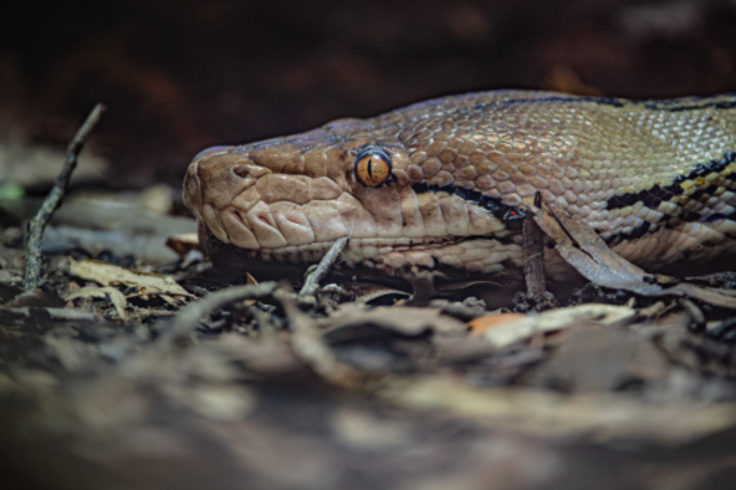
A giant python was staring death in the face. Months later, she's slithering around her enclosure as if nothing happened, thanks to a groundbreaking cancer treatment never before used on a snake.
The 15 ft reticulated python, named Jodie Foster after the Hollywood actress, has just turned 23 and weighs around 50 kg. She lives at Chester Zoo in Cheshire.
Keepers Noticed Warning Signs
Staff first grew concerned when Jodie began eating less and spending more time lying still in her habitat.
She was later diagnosed with a fibrosarcoma, a malignant tumour, in her jaw. Surgeons removed it, but the growth returned and began destroying her jawbone.
The zoo's veterinary team turned to specialists at the University of Liverpool for help. Together they explored whether electrochemotherapy, a treatment normally used to treat skin cancer in humans, could be adapted for a reptile.
Ian Ashpole, a veterinary officer at Chester Zoo, said further surgery alone was unlikely to save her. He explained that the tumour was making it increasingly hard for Jodie to eat, and that the team feared she might not survive.
As far as the zoo is aware, this was the first time electrochemotherapy had ever been used on a snake.
A Double-Bed Sized Operation
Jodie's size posed a challenge before the procedure had even begun. No single operating table at the zoo was big enough to hold her.
Staff pushed two tables together to create a surface roughly the size of a double bed. She was anaesthetised inside her own habitat, then carefully carried to the zoo's veterinary centre.
Heated blankets and warmed air kept her body temperature stable, and Ashpole said she recovered remarkably quickly from the 90-minute operation.
Ashpole first removed the tumour along with part of Jodie's damaged jawbone, in a procedure known as a hemi-mandibulectomy. Electrochemotherapy was then used to target any cancerous cells left behind.
The treatment combines the drug bleomycin with carefully controlled electrical pulses aimed directly at the tumour site. These pulses make cancer cells more permeable, helping the drug work more effectively and often allowing lower doses to be used.
A Career Highlight, and a Blueprint
Jose Alvarez Picornell, from the University of Liverpool's Department of Small Animal Clinical Ccience, credited the outcome to close teamwork between the zoo and university, calling it a special highlight of his career.
He said the two organisations now plan to formally publish details of the procedure, so veterinary teams elsewhere can learn from it and build upon the approach.
Jodie Back to Full Health
Months on from the operation, keepers say Jodie has made a strong recovery. She is eating normally and has returned to what staff describe as her usual bright and feisty self.
Despite losing part of her jawbone, her ability to hunt appears unaffected. Pythons can unhinge their jaws to swallow prey far larger than their own head, and keepers say Jodie has continued to strike, grip and swallow food without difficulty.
A final health check this week confirmed she remains free of any signs of the cancer returning. Ashpole said the team genuinely did not know months ago whether Jodie would survive, and that it has been rewarding to see her exploring her habitat and behaving normally again.
He added that the case shows how far veterinary medicine has advanced, with zoo vets and cancer specialists adapting a human treatment to save an animal in a way never attempted before.