
Sports Physicals Explained: Why Every Young Athlete Should Have One Before the Season Starts
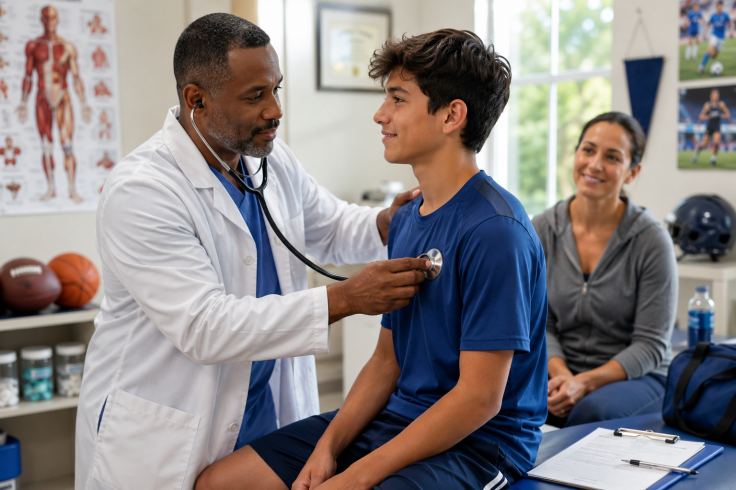
A sports physical is more than a formality before a child joins a team. It gives young athletes an opportunity to identify health conditions, previous injuries and physical concerns that could affect their ability to participate safely.
Finding a medical issue does not automatically mean a young athlete will be disqualified. In many cases, identifying a problem creates an opportunity to treat it, rehabilitate an old injury or make adjustments that allow the athlete to continue playing safely.
That is why the physical should be completed before the season begins. Finding a problem early gives the athlete and healthcare team time to deal with it before training and competition start.
What Is a Sports Physical?
A sports physical, also known as a pre-participation physical examination, is a medical check-up designed to assess whether a young athlete is healthy and fit enough to participate safely in a sport. These exams are mostly aimed at school-age athletes, although younger children taking part in organised sport may also need one.
In many US states, a sports physical is a legal requirement before a young person can join a school team. The examination focuses specifically on anything that could make playing sport unsafe.
There are two main parts to the examination: a medical history and a physical examination. Both are important because they provide information about existing health concerns, previous injuries and factors that could affect participation.
The medical history covers the child's health and family medical history. Questions can include medication use, previous injuries, fainting spells, chest pain, asthma and any previous exclusion from sport for medical reasons.
Girls may also be asked about their periods, while teenagers may be asked about drug, alcohol and tobacco use. Questions about eating and dieting patterns can also help identify concerns such as eating disorders.
The Sports Physical Therapy Section of the American Physical Therapy Association says as many as 90 per cent of potential health issues can be identified through the medical history. It also says the history alone can lead to the diagnosis of 88 per cent of medical conditions and 67 per cent of musculoskeletal conditions during the PPE.
The physical examination checks areas such as height, weight, blood pressure, heart rate and breathing. The heart and pulses, vision and hearing, joints, limbs, back and neck may also be examined for previous injuries or weaknesses.
Why Every Young Athlete Should Have One
The main reason for having a sports physical is that a young athlete can have a health problem or previous injury that needs attention before the demands of sport increase. The examination provides an opportunity to identify those concerns while there is still time to address them.
The Sports Physical Therapy Section of the American Physical Therapy Association says the main goal of the PPE is to promote the health and safety of athletes. Its clinical commentary says the examination should identify the athlete's fitness level, preparation and readiness for participation, as well as factors that might contribute to injury.
The Cleveland Clinic says sports physicals can identify illnesses that could affect playing, signs of past injuries and possible future impacts. They can also identify problems such as heart murmurs, high blood pressure, asthma and muscle strength imbalances.
Previous injuries are particularly important because an injury that has not been properly rehabilitated can leave an athlete vulnerable to further problems. The Sports Physical Therapy Section identifies recurrent ankle sprains requiring rehabilitation, exercise-induced asthma and incompletely rehabilitated injuries as conditions worth identifying.
Cardiac screening is another part of the assessment. The Sports Physical Therapy Section notes that cardiovascular screening remains controversial, particularly regarding how extensive that screening should be.
A sports physical also has limitations. The Sports Physical Therapy Section says there is little evidence that a screening PPE will identify every catastrophic or life-threatening condition, although a comprehensive approach administered consistently provides the best opportunity to screen health risks before participation.
The examination is therefore designed to identify potential problems and determine whether treatment, rehabilitation, restrictions or further evaluation can allow an athlete to participate safely.
Why It Should Happen Before the Season
Timing is important because discovering a problem is only useful if there is enough time to address it. The Sports Physical Therapy Section says the PPE should allow enough time for treatment or rehabilitation before participation and competition.
The literature cited in its clinical commentary suggests having the examination at least six weeks before pre-season practice. The Cleveland Clinic recommends about six to eight weeks before training begins so there is enough time for follow-up testing and treatment if necessary.
Booking early therefore does more than satisfy a school requirement. It gives families and healthcare providers time to respond to whatever the examination finds.
An athlete who needs treatment or rehabilitation can address the problem before returning to training. Someone who requires further testing or specialist evaluation can also complete that process before participation begins.
What Happens if the Physical Finds a Problem?
Finding a medical issue does not automatically mean a young athlete will be disqualified. The Cleveland Clinic says a provider may clear the child without restrictions, clear them with restrictions or treatment, temporarily withhold clearance while further tests or treatments are pursued, or disqualify them if participation is unsafe.
The Sports Physical Therapy Section of the American Physical Therapy Association similarly describes clearance without restrictions, clearance with recommendations or restrictions, temporary withholding of clearance and disqualification as possible outcomes.
The figures support the distinction between identifying a problem and excluding an athlete. A clinical commentary from the Sports Physical Therapy Section reports that only 0.3 to 1.3 per cent of athletes with injuries are denied clearance during PPEs.
The same source explains that the PPE is a screening process in which some athletes may instead require referral for further evaluation, diagnosis or treatment. The goal is to promote safety rather than simply prevent children from competing.
Where Can a Young Athlete Get One?
A sports physical can be carried out by the athlete's usual doctor. Some schools also arrange group sessions in which several students are examined on the same day.
The Sports Physical Therapy Section says PPEs should be useful and comprehensive while identifying the athlete's fitness, readiness and factors that could contribute to injury.
A Sports Physical Is Not an Annual Checkup
A sports physical does not replace a routine annual health examination. A sports physical focuses specifically on conditions or issues that could make it unsafe for a child to play a sport, while an annual physical looks at overall health.
The Sports Physical Therapy Section of the American Physical Therapy Association also stresses that a PPE does not replace a routine health visit. The two examinations therefore serve different purposes.
For young athletes, having both provides a broader picture of their health while giving particular attention to the demands and risks associated with sport.
Frequently Asked Questions
- What is a sports physical?A sports physical is a medical check-up designed to assess whether a young athlete is healthy and fit enough to participate safely in a sport.
- Why is a sports physical important?A sports physical is important because it helps identify health conditions or previous injuries that could affect an athlete's ability to participate safely in sports.
- What happens if a problem is found during a sports physical?If a problem is found, the athlete may be cleared with or without restrictions, temporarily withheld from participation for further tests, or disqualified if participation is deemed unsafe.
- Can a sports physical replace an annual check-up?No, a sports physical does not replace an annual check-up. It focuses specifically on conditions that could make playing sport unsafe, while an annual check-up assesses overall health.