Eight Foods You Should Think Twice Before Giving Your Child, From Baby Food Pouches to Slushies
Children have been rushed to hospital after becoming seriously unwell after drinking flavoured slush drinks, with the Food Standards Agency warning that those containing glycerol should not be consumed by under-sevens.
They are not the only children reported to have become unwell after consuming an everyday product. The UK Health Security Agency said more than 60 children were reported with symptoms consistent with cereulide toxin poisoning after consuming implicated formula.
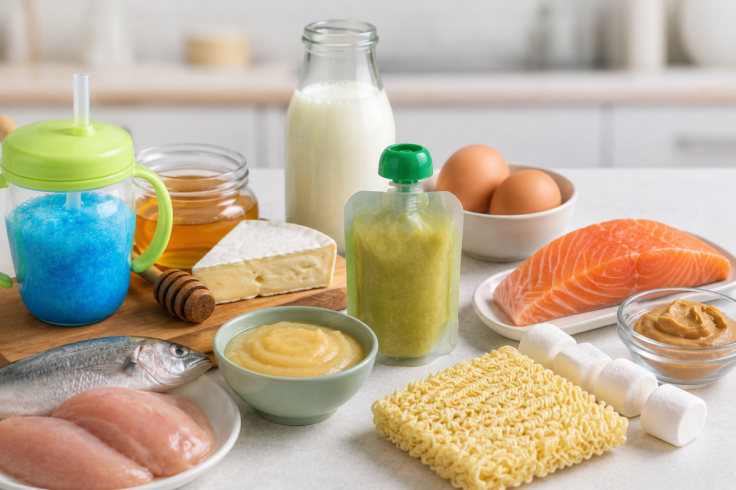
Risk can shift as a baby's gut, kidneys and immune system are developing, which is why NHS guidance is strictest in the first year. Eight foods deserve a second look:
- Baby food pouches
- Honey
- Unpasteurised milk, cheese and juice
- Raw or undercooked eggs, meat and fish
- High-mercury fish
- Marshmallows and thick nut butter
- Slush ice drinks
- Instant noodles
Sugar Hidden in Baby Pouches
Pouches are marketed as healthy first foods, but University of Glasgow researchers found some baby foods contained levels of sugar comparable to fruit smoothies. Fewer than one in ten met NHS criteria.
The researchers warned products should not be given to children under one, as too much sugar risks tooth decay. The NHS says pouches, jars and pots are for occasional use.
Labelling errors bring another danger. One jar was recalled in April after celeriac was not flagged in bold as required, leaving allergic babies exposed.
Bacteria, Toxins and Raw Foods
Honey must wait for a child's first birthday. Aaliyah Nelson, a nutritionist at The Family Chemist, said it can contain spores triggering infant botulism. The NHS advises against unpasteurised milk, which can carry E. coli, salmonella and listeria.
Untreated juices pose a similar risk, and babies under one do not need juice. Formula is subject to strict controls, though contamination has led to recalls.
Nelson urges parents to sterilise bottles and use freshly boiled water cooled for no more than 30 minutes. Raw and undercooked eggs, meat and fish also pose a risk of food poisoning.
The NHS advises cooking eggs until both white and yolk are solid unless they carry the British Lion Quality mark. Some fish contain mercury, which can affect a developing nervous system.
The NHS says children under 16 should avoid shark, swordfish and marlin.
Choking Hazards and Slush Drinks
Marshmallows are a choking risk because of their shape and texture, and the NHS rules out whole nuts under five. Thick blobs of nut butter can be hard to swallow.
The NHS says nut butter is suitable for babies from six months if spread thinly on toast rather than spooned.
Glycerol gives slush drinks their slush effect, but at high levels can cause headaches, nausea, dizziness and low blood sugar. Severe exposure can lead to confusion, loss of consciousness and even shock.
The FSA says under-sevens should not consume these drinks, while seven- to 10-year-olds should have no more than one 350ml serving a day. Researchers reviewing hospital cases warned about the drinks in 2025.
Salt and Salmonella in Noodles
Instant noodles can be high in salt, which young children should avoid. They also lack the protein, fibre, iron and vitamins children need.
A Salmonella outbreak linked to flavoured noodle products reached 14 countries including the UK, with 106 confirmed cases reported between November 2025 and June 2026.
Health authorities identified chicken-flavoured noodle products from one brand as the most likely source, though the brand was not named.
What Experts Suggest Instead
Nelson recommends mashed banana and cooked apple instead of honey, alongside avocado, porridge and steamed vegetables. Smooth purées alone, she said, give babies fewer chances to learn texture.
Water and milk beat juice, and she names salmon, sardines and trout as lower-mercury choices. Homemade lollies of blended fruit and water suit hot days.
Frequently Asked Questions
- Why should honey be avoided for children under one year?Honey can contain spores that trigger infant botulism, a serious illness in young children.
- What are the risks of unpasteurised milk for children?Unpasteurised milk can carry harmful bacteria such as E. coli, salmonella, and listeria.
- How can I reduce choking hazards for my child?Avoid giving whole nuts and thick nut butters to young children, and ensure foods are cut into small, manageable pieces.
- What are safer fish options for children?Salmon, sardines, and trout are lower in mercury and safer for children to consume.