
Jannik Sinner Undergoes Knee Surgery After Months of Conservative Treatment Fail To Resolve His Injury
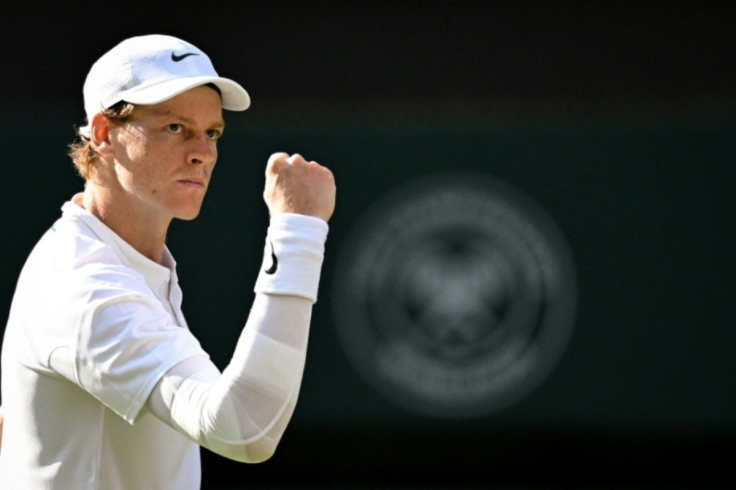
Italian tennis player Jannik Sinner underwent successful surgery on his right knee in Finland on Tuesday, 24 November, after months of non-surgical treatment failed to resolve an injury that has prevented him from competing since July. The 25-year-old confirmed the operation in a statement on Instagram, explaining that his knee had initially shown signs of improvement before his recovery stalled.
Finnish orthopaedic surgeon Professor Lasse Lempainen performed the procedure in Turku, where Sinner arrived on Monday following a reported medical examination in Milan over the weekend. The Italian tennis star's doctor, Herbert Schönhuber, confirmed that the operation was successful.
Sinner Begins Recovery Following Knee Surgery
The operation involved lengthening the iliotibial band to relieve tension around the affected knee. According to a report by Sky Sports, the surgeon performed an arthroscopic procedure involving small incisions. Schönhuber told Italian media that the technique offered a less invasive means of addressing Sinner's persistent knee problems.
Sinner will initially have his knee immobilised before undertaking physiotherapy to restore strength and mobility. Medical sources cited by ANSA estimated that his recovery would take approximately three months, although separate reports suggest he could require up to four months.
This makes Sinner's participation in the Australian Open, where main-draw matches begin on 17 January 2027, unlikely. The tennis star has not announced a definitive date for his return to competitive tennis.
Understanding Iliotibial Band Syndrome
Sinner has been receiving treatment for iliotibial band syndrome (ITBS), an overuse condition affecting the thick connective tissue extending from the hip along the outside of the thigh to the upper shinbone. Repeated knee movements can irritate the surrounding tissues, resulting in inflammation and pain.
Symptoms of ITBS can become more pronounced during prolonged physical activity, particularly in sports involving repetitive knee bending.
According to the Cleveland Clinic, conventional treatments include rest, anti-inflammatory medication, physiotherapy and muscle-strengthening exercises. Corticosteroid injections may also be used to manage inflammation.
Approximately 50% to 90% of patients experience improvement within four to eight weeks with non-surgical treatment, while surgery is rarely necessary. Sinner did not specify which non-surgical treatments he had undergone in his statement announcing the operation.
Persistent Knee Injury Cuts Sinner's Season Short
Sinner withdrew from the US Open on 21 August after unsuccessful attempts to resume training in Monte Carlo. The injury had already prevented him from competing in Montreal and Cincinnati. He had initially planned to return for tournaments in Asia, with appearances in Beijing and Shanghai.
However, on 6 October, Sinner announced that he would not compete again in 2026 following consultations with his doctors. His management confirmed that he required further treatment for knee inflammation. The decision also ruled him out of the Paris Masters, ATP Finals and Italy's Davis Cup campaign.
Sinner Loses World Number One Ranking
Before his extended absence, Sinner had recorded 44 victories and three defeats in 2026, securing six tournament titles.
His achievements include winning the season's opening five ATP Masters 1000 tournaments and defending his Wimbledon title against Germany's Alexander Zverev in July. The Wimbledon victory brought his career total to five Grand Slam singles titles.
Zverev overtook Sinner in the world rankings in early November and subsequently secured the year-end number one position. Sinner has also ended his four-year coaching partnership with Darren Cahill. Swedish coach Magnus Norman has joined his team as the Italian prepares for his eventual return to the ATP Tour.