
Mexico's Supreme Court Upholds up to 5 Years in Prison for Doctors Causing Permanent Injuries via Negligence
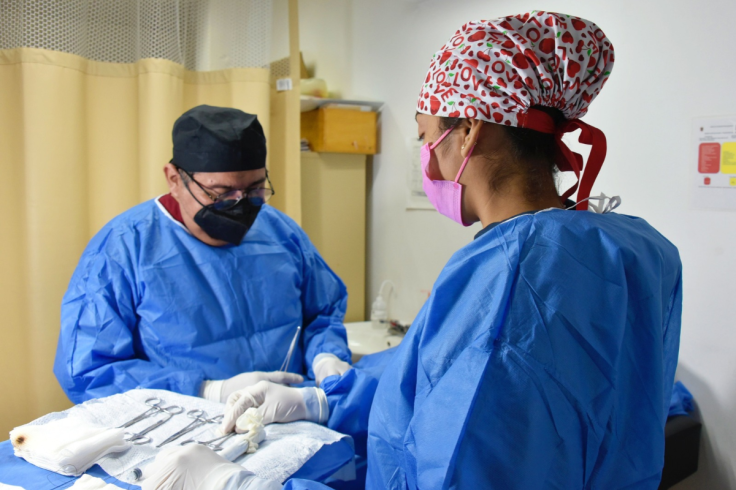
Mexico's Supreme Court has upheld federal laws allowing doctors to face three to five years in prison when culpable negligence during treatment causes specified permanent injuries. An unsuccessful operation or complication is not automatically a crime. Prosecutors must establish a breach of an identifiable duty of care and show that it caused the injury.
The decision was delivered on 11 November in review proceeding 257/2026, involving a neurosurgeon who challenged provisions of the Federal Criminal Code. The court upheld the constitutionality of Articles 60, second paragraph, and 291 of Mexico's Federal Criminal Code, which, read alongside Article 9, establish the framework for imposing criminal penalties for qualifying injuries caused through culpable conduct.
What the Supreme Court Decided
The case followed two spinal operations performed on a patient in 2017. During the first, the surgeon inserted screws to stabilise the spine; during the second, he repositioned them. Following the two operations, the patient experienced a permanent reduction in mobility in his right leg, according to subsequent medical assessments.
Medical assessments documented the impairment. The Federal Attorney General's Office considered that the surgeon had failed to follow required procedures and standards of care. On 3 March 2022, a federal control judge in Reynosa, Tamaulipas, ordered the neurosurgeon to face criminal proceedings over alleged culpable injuries. The decision did not establish his guilt.
The surgeon argued that the provisions were imprecise, breached the principle that criminal law should be a last resort, and interfered with the freedom to work. The court rejected those constitutional arguments, finding that the combined provisions sufficiently defined the conduct and injuries that could attract criminal liability.
Negligence Must Be Established, Not Assumed
The ruling distinguishes a poor medical outcome from negligent conduct. Liability cannot arise simply because treatment fails or a complication occurs. Prosecutors must prove that a professional failed to observe an objective duty of care they were required and able to meet, and that this failure caused a permanent injury covered by law.
The provisions concern culpable, rather than intentional, injuries and do not make doctors strictly liable for every adverse consequence of treatment. The prosecution still has to establish the relevant fault and causal connection in the individual case.
Courts may consult clinical protocols, professional standards and technical rules to assess what care was required. But those materials can guide that assessment; they cannot create a criminal offence or expand the conduct covered by the statute.
The court also described medicine as an activity of means rather than guaranteed results. Doctors must act in accordance with professional standards, but do not promise that every treatment will produce a particular outcome. Complications and risks can remain even when care is appropriate.
The Case Returns to a Lower Court
Article 291 provides for three to five years' imprisonment and a fine of 300 to 500 pesos for injuries that permanently impair sight, hearing, a hand, foot, arm, leg or another organ, or affect speech or mental faculties. Article 60 allows relevant penalties to apply to specified offences committed through negligence.
The Supreme Court did not decide that the neurosurgeon was guilty or finally establish negligence. The Supreme Court returned the case to the Second Collegiate Court of the Nineteenth Circuit to examine the remaining legal arguments, including whether the evidence was sufficient to justify the order linking the neurosurgeon to criminal proceedings.
The ruling confirms that serious, permanent harm caused by a proven breach of medical care can carry criminal consequences in Mexico.