
Motorcyclist, 22, 'Died for Five Minutes' After 110mph Crash Into Ambulance Left Him in Coma
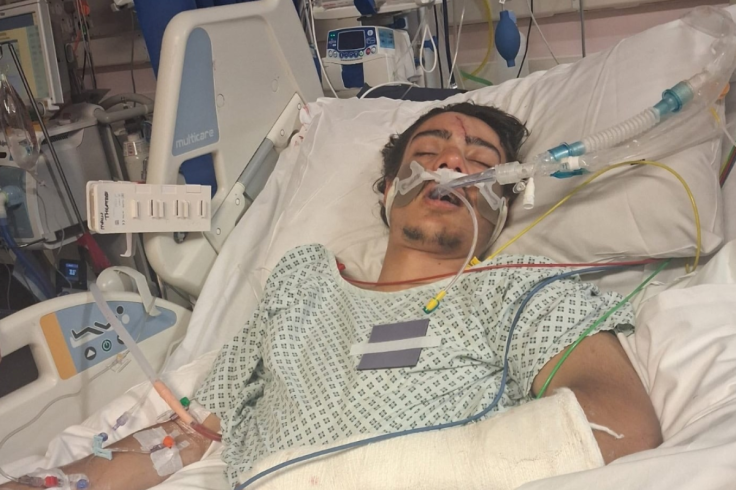
A 22-year-old motorcyclist who suffered cardiac arrest after crashing into a stationary ambulance at 110mph has described his recovery after a devastating racing accident left him with a traumatic brain injury and multiple broken bones.
Brandon Wright, from Lincoln, England, lost control of his Yamaha R6 during a Supersport race at Aberdare Park in Wales on August 1. He struck an ambulance parked beside the track and was thrown approximately 30 feet into the air.
The semi-professional racer suffered cardiac arrest, both lungs collapsed, and he sustained a broken back, broken ribs, a broken wrist and a significant traumatic brain injury.
His father, Dean, was watching the race and later told him that he had been declared dead at the scene for several minutes. Brandon recalled the account in an interview shared by SWNS, saying he had no memory of the collision itself.
'I went from 110mph to 0 in the blink of an eye, and I came off worse than the bike,' he said.
The Crash Left Him in a Coma
Brandon was airlifted to the University Hospital of Wales in Cardiff, where medical teams saved his life. He was subsequently transferred to Queen's Medical Centre in Nottingham while still in a coma.
The National Rehabilitation Centre (NRC), which is part of Nottingham University Hospitals, said Brandon had experienced extensive muscle wastage during his month-long period of critical illness before beginning rehabilitation. He eventually woke up in intensive care, unable to remember the accident or initially understand where he was.
His brain injury continues to affect his memory, speech and some of his vision. He also had to confront the physical effects of prolonged critical illness and immobility.
Rehabilitation Helped Him Learn to Walk Again
After spending several weeks in hospital, Brandon arrived at the NRC in a wheelchair because he had experienced widespread muscle loss, a condition known as deconditioning.
His rehabilitation involved physiotherapy using stationary bikes, treadmills and a leg press to rebuild his strength. He also received support from occupational therapists, speech and language therapists, psychologists and rehabilitation nurses.
After six weeks at the centre, he was able to walk out and return to his family home. He now walks around four miles a day and continues doing exercises as part of his recovery.
However, the accident's effects have not disappeared. Brandon is still working to improve his speech, and metal inserted into his wrist makes certain movements more difficult.
What Happens to the Body After Cardiac Arrest?
Cardiac arrest occurs when the heart suddenly stops pumping blood effectively. This interrupts blood flow to vital organs, including the brain, making immediate treatment essential.
According to the US Centers for Disease Control and Prevention, survivors can experience brain injury and psychological distress, including anxiety, depression and post-traumatic stress.
The American Heart Association explains that emergency treatment includes cardiopulmonary resuscitation (CPR) and the use of an automated external defibrillator (AED), when available. Following resuscitation, hospital teams monitor patients and focus on preventing organ damage, particularly to the brain.
Brandon's recovery highlights how rehabilitation can involve more than regaining the ability to walk. His ongoing speech, memory and vision difficulties show that traumatic brain injuries can have lasting effects even after a patient leaves hospital.
Racer Hopes to Return to the Track
Returning home has also brought emotional challenges. Brandon said he was still grieving the person he had been before the crash, even as he continued making progress.
'I want to get back to the person I used to be, the person I knew before the accident,' he said.
He hopes to return to work and eventually compete again next season, but says he will wait until he is ready.
'I understand how lucky I am,' he said. 'I am more grateful for life.'