
NFL Receiver Clears Concussion Protocol After Head Injury, But Is He Ready To Return To Play?
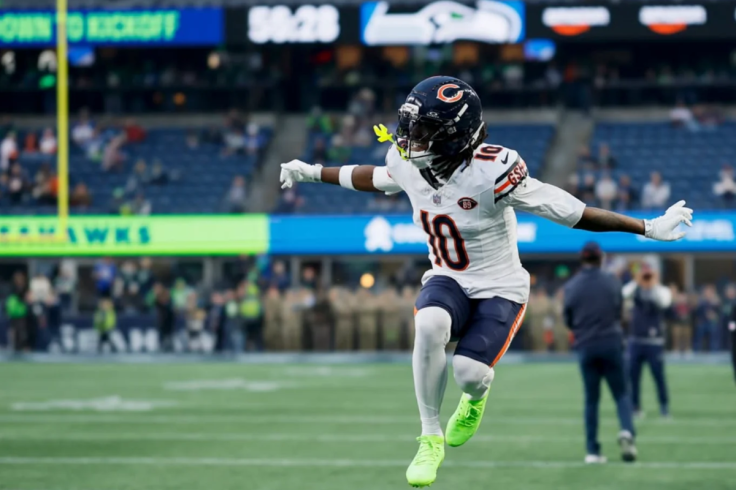
Chicago Bears wide receiver Luther Burden III has cleared the NFL's concussion protocol after a head injury, but clearance does not automatically mean a player is ready to compete.
Head coach Ben Johnson announced on 17 November that Burden had been cleared. The 22-year-old sustained a concussion after a helmet-to-helmet hit from Tampa Bay linebacker Reuben Bain in the fourth quarter of Chicago's 27-24 win on 8 November. The Bears had a bye the following week and are scheduled to face the New Orleans Saints on Sunday.
Burden leads Chicago this season with 49 receptions, 644 receiving yards and four touchdown catches across nine games, Reuters reported. His availability would be a boost, but recovery involves more than simply returning to training.
What Happens After a Concussion?
A concussion is a traumatic brain injury caused by a bump, blow or jolt to the head, or a hit to the body that makes the brain move rapidly inside the skull. It can temporarily affect brain function, even without a visible injury on a scan.
Symptoms may include headaches, dizziness, nausea, balance problems, sensitivity to light or noise, blurred vision, fatigue and difficulty concentrating. Other symptoms may develop hours or days later.
Because symptoms can affect coordination, reaction time and decision-making, returning too soon can expose an athlete to further injury. Medical staff must assess recovery rather than rely solely on how a player feels.
The NFL's Five-Step Return Process
The NFL requires players diagnosed with a concussion to complete a five-phase return-to-participation process before resuming full practice or playing. It begins with symptom-limited activity, followed by supervised aerobic exercise and football-specific exercise.
Players then progress to club-based non-contact training drills, including running, catching and position-specific movements. The final phase involves full football activity, including contact, after the club physician considers the player ready.
There is no fixed timetable. Recovery varies depending on the injury, medical history and other risk factors. Neurocognitive and balance testing also form part of the assessment.
Why Independent Medical Clearance Matters
Completing the five phases is not the only requirement. After the club physician clears a player for full participation, an Independent Neurological Consultant must separately assess the athlete and agree that the concussion has resolved.
The consultant is jointly approved by the NFL and NFL Players Association and is not affiliated with an NFL club. A player cannot return to contact practice or a game until this independent clearance is given.
When Is It Safe To Play Again?
The US Centers for Disease Control and Prevention advises athletes to return to sport gradually under healthcare supervision. Its six-step progression moves from regular daily activities to light aerobic exercise, moderate activity, heavy non-contact training, full-contact practice and competition. Each step typically takes at least 24 hours, and athletes should progress only if symptoms do not return.
If symptoms reappear or worsen, the athlete should stop and contact their healthcare provider. More rest may be needed before restarting at an earlier stage.
Burden's clearance indicates that he has completed the NFL's required process, but it does not reveal details of his individual assessments or confirm his status for Sunday's game. A safe return depends on medical clearance and recovery, not simply the number of days since the injury.