Why Britons Should Check Their Eggs for the British Lion Stamp as Salmonella Outbreak Leaves Hundreds Sick
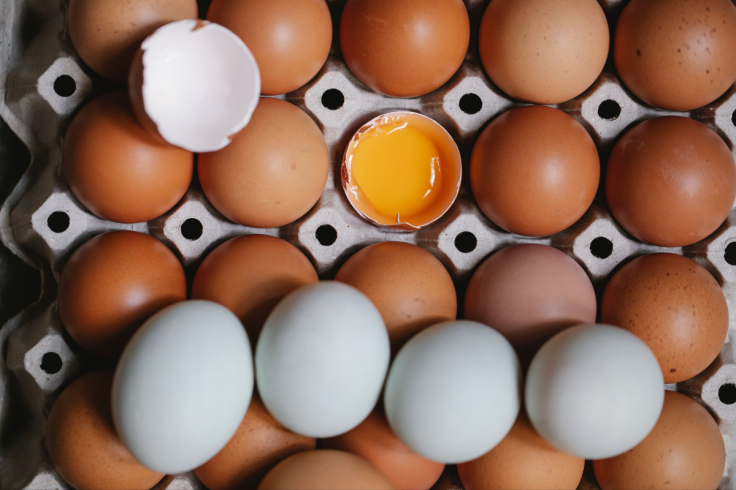
A major Salmonella outbreak linked to imported eggs has sickened 207 people across the United Kingdom and left one person dead.
Health officials traced the infection to a single, genetically related strain of the bacteria after whole genome sequencing showed the cases were likely linked to a common source.
Crucially, experts from the UK Health Security Agency say there is currently no link to UK-produced eggs or poultry, prompting urgent warnings for shoppers to look for official safety marks.
The Catering Blind Spot
Public health interviews conducted by the UK Health Security Agency revealed a dangerous blind spot for consumers, many patients caught the bug after eating food prepared outside the home.
While home cooks can check egg packaging at the supermarket, diners ordering soft-boiled eggs or fresh sauces at a cafe have no way of knowing what the kitchen uses.
Investigating teams from the UK Health Security Agency linked 24 cases directly to five specific food businesses, with official supply chain tracing showing that the premises received eggs from multiple sources, including importers.
Inspectors from local environmental health departments also uncovered cross-contamination risk events on site, prompting officers to step in with urgent food safety management advice.
According to data from the UK Health Security Agency, the current cluster is genetically linked to an earlier 2025 outbreak that sickened 123 people, raising renewed concerns about imported eggs.
Industry Double Standards
The outbreak has exposed a stark divide in food safety regulations, as British laying hens undergo mandatory Salmonella vaccination, strict auditing and full traceability under national quality assurance schemes.
Nick Allen, chief executive of the British Egg Industry Council, warned that foreign produce produced under less stringent rules continues to flood the market.
'British Lion egg producers have invested heavily in world-leading food safety controls,' Allen said. 'Yet increasing volumes of imports produced under less stringent regulations continue to arrive.'
Allen urged caterers not to compromise on safety, arguing that imported stock should meet equivalent standards to protect British consumers from preventable illness.
Officials at the European Centre for Disease Prevention and Control monitoring the ECDC EpiPulse platform have also detected genetically related cases across several EU member states, indicating a wider distribution network.
Scale of the Outbreak
Reports from the UK Health Security Agency indicate the current 207-case cluster peaked sharply in July 2026, building on isolated signals detected late the previous year.
Only six patients had travelled abroad before falling ill, suggesting that contaminated imported eggs distributed through UK wholesalers caused the domestic outbreak.
Epidemiological tracking by the UK Health Security Agency shows England accounts for 199 cases, led by London with 47 and Yorkshire and Humber with 38, while Scotland recorded six and Wales and Northern Ireland reported one each.
Patient ages range from under one year old to 90, with a median age of 30, and 38 per cent of sufferers required hospital treatment.
Protection for High-Risk Groups
The Food Standards Agency emphasised that thorough cooking kills the bacteria, meaning fully cooked egg dishes pose no safety risk.
However, medical experts warn that infants, young children, pregnant women, older adults and immunocompromised individuals face severe risks from blood poisoning or multiorgan failure if exposed.
Jacquelyn McCormick, head of incidents at the Food Standards Agency, advised high-risk groups to only consume runny or raw eggs carrying the British Lion mark or Laid in Britain stamp.
To navigate the restaurant risk, Dr Kathleen O'Reilly of the London School of Hygiene and Tropical Medicine recommended checking a venue's official Food Hygiene Rating before dining out.
Hannah Charles, lead epidemiologist at the UK Health Security Agency, reminded anyone handling raw eggs, shells or packaging to wash their hands thoroughly with soap and water afterwards.
Medical authorities at the UK Health Security Agency advise that anyone experiencing stomach cramps, fever, vomiting or diarrhoea within 12 to 72 hours following exposure should contact their GP or an out-of-hours service immediately.