
Water Isn't the Only Way to Stay Hydrated During a Heatwave: 5 Foods Experts Say Can Help
When a heatwave hits, food is often the last thing anyone fancies. Yet experts say the plate can contribute to hydration as well as the glass.
An analysis of Australian dietary data backs that up. It found moisture in food supplied a substantial share of total water intake among children and adolescents.
Heat increases water loss, particularly through sweating. Intake need not come solely from a cup or bottle, because the water in food counts too.
That does not let anyone off drinking. Water-rich foods should supplement regular drinks rather than replace them.
How Food Helps You Stay Hydrated
People need light meals, eaten often, and must replace the water lost through sweating, dietitian Rebecca Scritchfield told CBS 2. Holistic health counsellor Andrea Beaman urged people to eat light, fresh, water-filled foods.
The advice has evidence behind it. A study of children aged four to ten found solid fruit and vegetables provided part of their total water intake.
Those who ate more also had better measures of hydration. Health guidance puts a notable share of daily fluid intake down to food rather than drink.
Drinking still does the heavy lifting, though. Studies suggest differences in how much people drink account for most of the variation.
What Foods Keep You Hydrated
These foods appear repeatedly in expert advice on staying hydrated in a heatwave. Each adds fluid without a glass in sight.
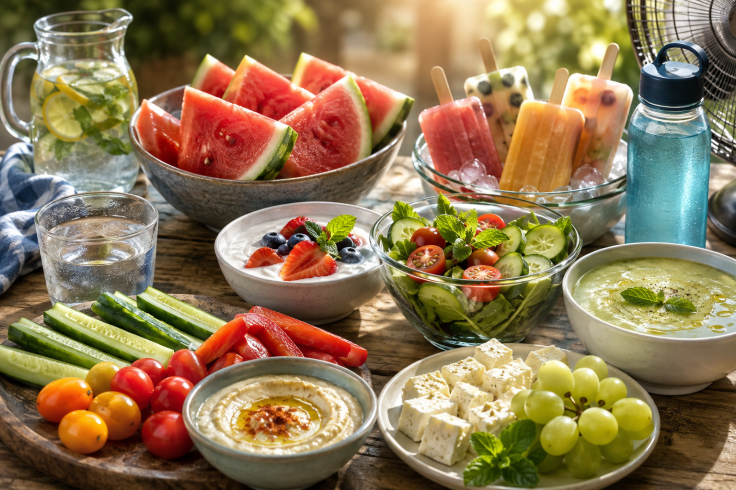
- Watermelon and juicy fruits: Beaman compared watermelon to the coolant in a car, telling CBS 2 it 'is a coolant for your system'. Strawberries and oranges are high in water too, as are peaches, nectarines and grapes.
- Cucumber, tomatoes and peppers: Crisp vegetables and leafy greens, tomatoes and cucumbers are good choices in the heat, along with lettuce and bell peppers. Research in children links fruit and vegetable intake with better hydration.
- Yoghurt, milk and dairy foods: Milk can support fluid balance, research comparing drinks has shown, and yoghurt ranks among high-water foods. Yoghurt is also linked to higher calcium, iodine and riboflavin intakes in British children.
- Homemade ice lollies: Lollies may beat ice cream, whose fat and sugar 'may not make you feel so good afterwards', Dr Lisa Ganjhu told CBS 2. Moulds can be filled with milk, yoghurt or blended fruit.
- Cool soups and salads: Broths and soups carry a high water content, and served cool they suit the weather. Herbs such as mint and basil add a cooling effect.
When the weather turns hot and hazy, food stops appealing for some people. A cold plate of melon, cucumber sticks, yoghurt, cheese and hummus needs no cooking.
Why Drinks Still Matter
Ganjhu warned against sugary drinks and highly caffeinated ones, which are dehydrating. She also advised avoiding high-fat or fried meals, because the digestive tract is more sluggish in the heat.
The better fats in hot weather come from seeds, nuts and avocados, Scritchfield said. Healthline describes electrolytes as vital minerals that help regulate the nervous system.
Sweating strips them out during a heatwave, and electrolyte powder or coconut water can replace what is lost. A study of dehydration in children found no single symptom diagnoses it reliably.
Changes in appearance, behaviour and fluid intake may together be more informative. A dry mouth, tiredness, headache, dizziness and darker urine are all warning signs.
Healthline advises immediate medical help for anyone who stays dizzy on standing or feels confused. The threshold matters, because heat exhaustion can escalate quickly.
Eat light, eat fresh, eat water-filled foods and 'you'll be cool as a cucumber', Beaman said. Keep offering drinks, but hydration can arrive on a plate as well as in a glass.
Frequently Asked Questions
- What foods help with hydration during a heatwave?Water-rich fruits, vegetables, dairy products, and cool soups can help maintain hydration.
- Why should sugary drinks be avoided in a heatwave?Sugary drinks can be dehydrating and are less effective at maintaining hydration.
- How can electrolytes be replenished during a heatwave?Electrolytes can be replenished by using electrolyte powders in water or drinking coconut water.