
Trump's Chronic Venous Insufficiency Diagnosis Resurface After Claims of Possible Compression Device Beneath Trousers
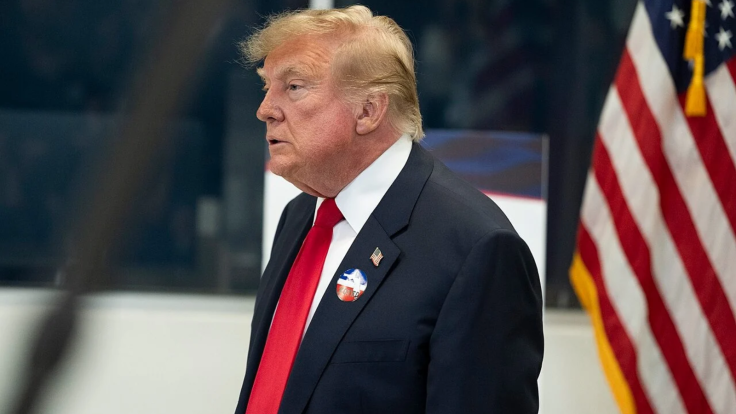
Donald Trump's health has drawn attention after photographs and videos prompted speculation that the US president could be wearing a mechanical compression sock or other leg support beneath his trousers. No evidence confirms that he uses such a device.
Political commentator David Pakman has drawn attention to footage showing Trump apparently walking stiffly, tapping his right thigh and displaying an unusual outline beneath one trouser leg. However, Pakman stressed that the images do not establish what the president may be wearing.
Pakman Raises Questions About Possible Leg Device
In a video, Pakman presented a photograph of Trump standing with his back to the camera, pointing to what appeared to be a protrusion along his lower leg. He suggested it could be a brace, the way his trousers were sitting or something else entirely.
Other footage showed Trump dancing at a Tennessee rally, with a box-like outline visible beneath his suit. Similar shapes were reportedly spotted during a Washington summit and an August rally in New York.
Pakman also referenced footage of Trump walking with an apparently stiff leg after stepping off Marine One. He highlighted occasions when the president tapped his thigh, although he acknowledged that the gesture does not establish whether Trump was checking or adjusting a device.
Pakman raised the possibility that Trump could be wearing a mechanical compression device designed to help blood circulate back towards the heart. However, he presented no evidence confirming its use and emphasised that the theory remains speculative.
What Is Known About Trump's Health
The White House disclosed Trump's chronic venous insufficiency (CVI) diagnosis on 17 July 2025, after he reported mild lower-leg swelling. The condition affects blood flow through leg veins and can cause blood to pool.
Doppler ultrasound scans of both lower extremities showed CVI but no evidence of deep vein thrombosis (DVT) or arterial disease. Blood tests were normal, while an echocardiogram showed normal cardiac structure and function.
Physician Captain Sean Barbabella said tests found no signs of heart failure, renal impairment or systemic illness. He concluded that Trump remained in excellent health.
An annual physical report described normal neurological findings, including gait and balance. Those findings do not establish whether Trump uses compression garments or another form of leg support.
Pakman argued that CVI alone would not explain the need for a leg brace. The diagnosis does not establish that Trump uses a device, and published medical information does not identify one.
How Compression Therapy Works
Compression stockings fit more tightly than ordinary socks and gently squeeze the legs. WebMD says they can improve blood flow, reduce pain and swelling, and lower the risk of DVT.
Graduated stockings are tightest around the ankle, with pressure easing further up the leg. They come in different lengths and pressure levels, depending on the person's needs.
The Cleveland Clinic says compression therapy uses elastic stockings or wraps to prevent blood and fluid pooling in the lower legs. CVI can occur when vein walls weaken and valves fail, making it harder for blood to return to the heart.
Compression levels are measured in millimetres of mercury (mmHg): low is below 20, medium is 20 to 30, and high is above 30. Stockings rated at 20 mmHg or higher require a prescription.
Correct fit is important because stockings that bunch, fold or are too tight can restrict circulation. Side effects include skin irritation, redness, pain and discomfort; people with severe peripheral artery disease should not wear compression socks.
An analysis of nearly 1,000 studies found performance improvements in only a few studies of athletes wearing compression stockings. Most research suggested they could help athletes recover more quickly after exercise.
No medical record or footage confirms that Trump wears a mechanical compression sock or brace. The outline and Pakman's interpretation remain unverified; published findings report normal cardiac function and no DVT or arterial disease.