
Woman With Rare Pain Disorder Reveals How Leg Amputation Changed Her Life: 'I've Never Known a Life Without Pain'
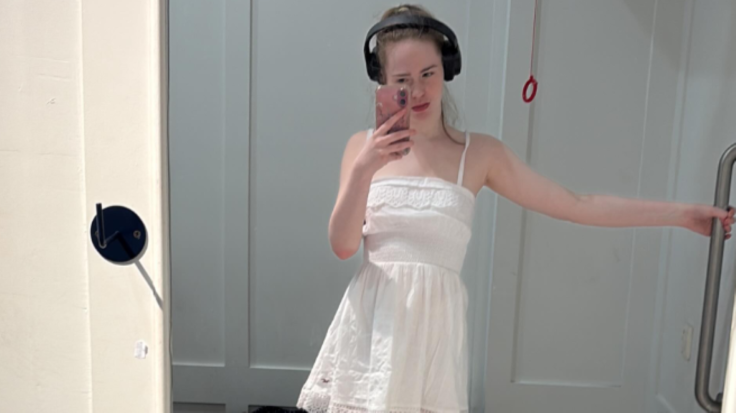
A 20-year-old woman with complex regional pain syndrome (CRPS), a rare and debilitating condition sometimes referred to as 'suicide disease', says her life has improved after she underwent a right-leg amputation following years of severe, persistent pain.
Jess Burkinshaw Says Amputation Has Improved Her Life
Jess Burkinshaw, from Leeds, England, had the operation in April 2026 after spending more than two years discussing the possibility with surgeons. She understood that amputation was not guaranteed to relieve her symptoms, but said the pain had become so severe that she was prepared to accept the risk.
About two months after surgery, Burkinshaw began noticing significant relief and has since reported better sleep, greater independence and an increased ability to leave home.
Burkinshaw is now undergoing physiotherapy while preparing to use a prosthetic leg. A cast has already been taken for the prosthesis, and she has been practising standing and walking during rehabilitation. She also shares her experiences online to raise awareness of chronic pain, disability and accessibility.
Suffering Pain Years Before CRPS Diagnosis
Her health problems began much earlier, as Burkinshaw was diagnosed with juvenile idiopathic arthritis at 16 months old after developing symptoms, including swollen joints, fever and significant pain. When she was 15 years old, severe pain developed in her right ankle, and she was subsequently diagnosed with CRPS.
The condition eventually affected almost every part of her daily life. She said that her pain rarely fell below seven on a 10-point scale, while sensitivity in her foot made ordinary activities such as wearing socks or shoes difficult.
She completed school examinations from home, missed much of her final school year and, during the worst period, remained largely confined to her home for about eight months.
Working Through Years of Treatment
Before choosing amputation, the 20-year-old underwent several treatments without obtaining lasting relief. These include ankle-fusion surgery and a trial of spinal cord stimulation. The latter uses electrical impulses to alter pain signals.
She also consulted three surgeons about removing her right leg, with two supporting the procedure and the other expressing reservations because of her age and the unpredictable nature of CRPS.
While amputation is not a standard treatment for CRPS, Burkinshaw's procedure has so far reduced the severity of her symptoms. She noted that it has allowed her to regain parts of her independence while continuing rehabilitation and adjusting to life after the operation.
What Is Complex Regional Pain Syndrome?
CRPS is a chronic pain disorder that most commonly affects a person's arm or leg, often after an injury or surgery. The National Health Service (NHS) says the pain can be substantially more severe and persistent than would normally be expected from the original injury.
Additionally, affected areas may also become swollen, stiff or extremely sensitive to touch and temperature. Other possible symptoms include changes in skin colour or temperature, muscle spasms and difficulty moving the affected limb.
There is no single test that definitively diagnoses CRPS and no known cure. Treatment can involve physiotherapy, medicines for nerve pain, psychological support, desensitisation therapy and, in some cases, spinal cord stimulation.
The NHS estimates that roughly 85% of people who suffer from CRPS experience some reduction in pain and other symptoms during the first two years. Others continue to experience persistent pain despite treatment.