
Can Mastectomy Preserve the Nipple? A Mother of Three Describes Her Robotic Surgery
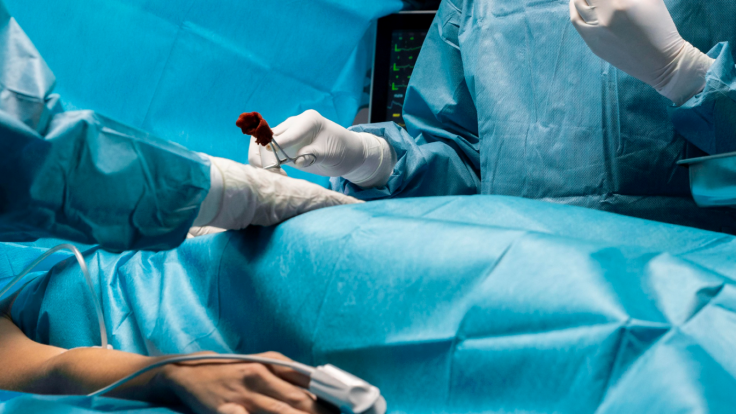
A breast cancer diagnosis can bring an upsetting prospect: losing one or both breasts, including the nipples. However, advances in surgical techniques mean some women may now be eligible for mastectomies that preserve the nipples.
Kaitlin McBride, a 40-year-old mother of three from Cape May, New Jersey, experienced this possibility after being diagnosed with an aggressive form of breast cancer. She underwent a robotic nipple-sparing double mastectomy in July 2026, reportedly becoming the first patient in the tri-state area to undergo the procedure.
McBride discovered a grape-sized lump in her right breast during a self-examination in July 2025. Following a biopsy, she received a diagnosis of stage 2 triple-negative breast cancer in October.
Recalling the moment she realised something was wrong, she told PEOPLE: 'I was beside myself. I was like, "Oh my gosh, I can't handle this — this is scary."'
She subsequently completed 16 rounds of chemotherapy and immunotherapy between November 2025 and June 2026. Although treatment reduced the tumour, surgery was still necessary.
How Does Robotic Nipple-Sparing Mastectomy Work?
McBride's breast surgeon, Dr Kay Yoon-Flannery, introduced her to a robotic procedure using the da Vinci Single Port surgical system.
Unlike a mastectomy that removes the nipple-areola complex, a nipple-sparing procedure removes breast tissue while preserving the nipple, areola and surrounding skin when medically appropriate.
The robotic approach allows surgeons to operate through a smaller incision, potentially positioned near the armpit. According to McBride, her surgeon explained that carbon dioxide is used to create working space inside the breast, allowing instruments to operate without stretching the surrounding tissue.
Yoon-Flannery also explained that the technique could result in smaller scars and potentially help preserve nipple and skin sensation.
When Yoon-Flannery called to say the robotic equipment had arrived and asked whether McBride would become her first patient, McBride recalled responding: 'Heck yes, please.'
What Was Her Recovery Like?
McBride underwent the seven-hour operation on 7 July 2026. Her surgeon removed the breast tissue through an incision measuring approximately 3.5cm, leaving a small scar near her armpit.
She initially received tissue expanders before undergoing further reconstruction with implants.
'I went home from the hospital the day of the surgery,' she told PEOPLE, describing her recovery as easier than anything she had experienced during cancer treatment.
Within approximately two weeks, she was moving around again. Although the expanders initially caused discomfort, she gradually became more comfortable with the reconstruction.
Reflecting on the outcome, McBride said: 'I was really grateful that I ended up being able to preserve so much of myself. And I have full sensation.'
Two weeks after surgery, her pathology report reportedly showed no remaining evidence of cancer. However, she acknowledged that triple-negative breast cancer carries a risk of recurrence and that she remains under close medical surveillance.
Who Is Eligible for Nipple-Sparing Mastectomy?
The procedure is not suitable for every breast cancer patient. Eligibility depends on tumour location, cancer involvement around the nipple, breast anatomy, skin condition, and whether the nipple can be safely preserved without compromising cancer removal.
Although robotic surgery may offer smaller, less visible scars, preserving the nipple does not guarantee that normal sensation will be retained. Nerves can still be affected during surgery.
AtlantiCare says the da Vinci Single Port system had received FDA clearance before the hospital introduced the robotic procedure in June 2026. However, clearance of the equipment does not establish that robotic mastectomy is superior to conventional techniques.
The long-term comparative evidence also remains limited. Patients should discuss potential benefits, complications and reconstruction options with experienced breast and plastic surgeons.
For McBride, the experience has given her an opportunity to rebuild her life after an exhausting year.
'It is scary to be told, "You have cancer." But don't be scared to be seen,' she said, encouraging women to seek medical attention when they notice unusual changes.