
The Truth About Foam Rolling: Does It Really Prevent Injuries or Just Feel Good?
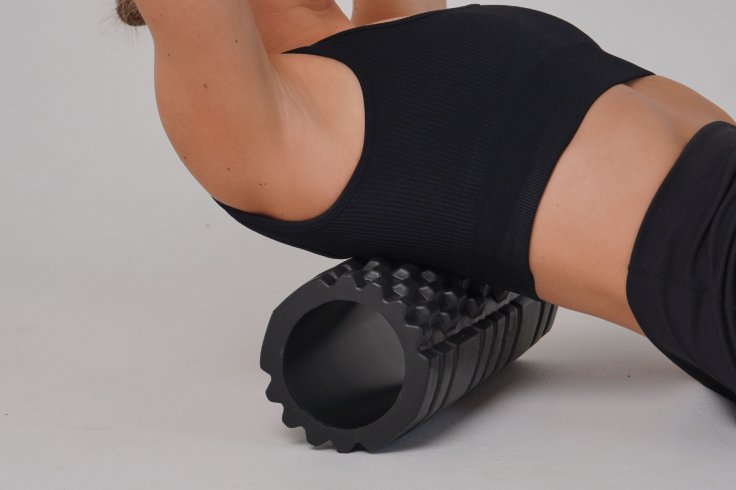
Study after study on foam rolling has measured the same things: flexibility, sprint times, jump height, strength and soreness. Not one counted an injury. Injury prevention — the thing the roller is sold on — was never on the list.
Rollers are sold on smashed knots, released tissue and injuries that never happen. Millions wince through the ritual believing all three.
The physical story does not hold up either. Down the outside of every thigh runs a tough strip of tissue gyms call the IT band, short for iliotibial band. Stretching it by a single per cent would take close to two tonnes of force.
Nobody generates that on a foam tube. So the knots are not being broken up — yet the roller does do something, and the honest version is stranger than the sales pitch.
What Foam Rolling Really Does
The tissue wrapping the muscles is far tougher than gym lore allows. It is built to hold the body together under load, not to give way under a person's own weight.
What happens involves fluid and nerves, not force. Pressure pushes fluid out of those layers, and they soak it back up once it lifts, helping the tissue slide freely again.
Sensors where muscle meets tendon pick up the change in tension and tell the nervous system to ease off. Nothing is torn; the muscle is simply talked into letting go.
Who Actually Needs One
Knots are not just an athlete's problem. They form when tissue locks in a sustained contraction, and the causes are mundane: driving, hours at a computer, sleeping awkwardly, barely moving at all.
Repetitive movement and bad posture are the fastest route to a knot, and poor sleep makes them worse.
Tight hamstrings are a common culprit, and easy to miss. They pull on the pelvis and create back tension convincing enough that people assume they have hurt their back, when the problem is their legs.
Almost anyone stands to gain, from the barely mobile to a bodybuilder.
What the Evidence Really Shows
The clearest picture comes from a meta-analysis pooling twenty-one trials: fourteen testing rolling as a warm-up, seven as recovery. Warm-up rolling produced a small gain in flexibility of about 4 per cent, and a slight lift in sprint performance of roughly 0.7 per cent.
The same analysis found the effect on jumping and strength barely counted, and jump numbers dipped. Rolling afterwards took the edge off the usual drop in sprint and strength performance, and cut reported soreness by around 6 per cent.
Soreness was the clearest win. Its authors backed rolling as a warm-up rather than a recovery tool, while noting no protocol is settled.
That sprint figure deserves caution — and the analysis said so. It rests on four trials, two driving nearly all of it, and belief cannot be ruled out, since nobody can be blinded to lying on a roller.
The question is: why sprinting and not jumping? Sprinting is a complex, repeated task where small gains stack up, while a jump is over too fast to show them.
Holding yourself above a roller also works the body like a plank, so some benefit may be an accidental warm-up.
What Studies Leave Out
Sample sizes are small, methods vary and little is pinned down, including how hard people press. Eight men in one soreness study; eleven teenagers in another.
The largest — 66 adults with fibromyalgia — is the most promising. After 20 weeks they reported less pain, fatigue, stiffness and low mood, plus better movement.
A wider review of 38 trials and over 1,100 participants reached the same conclusion: rolling works, but not for the reasons the gym floor believes. It will not permanently reduce cellulite.
Does It Just Feel Good?
Partly — and that may be enough. The meta-analysis made the argument itself: because psychology counts for so much in sport, an athlete feeling less pain can justify rolling without a measurable physical gain.
The flexibility and soreness gains are real, and measured. The performance case is thinner, because a sprinter only notices a change of about 0.3 per cent.
At elite level, a 0.7 per cent gain is worth having, since hundredths decide medals. Ordinary gym-goers vary more day to day, and are unlikely to feel anything.
The stronger case is preventative. Rolling works best as a habit built before something goes wrong, because stiffness wrecks how the body moves. That is not proof of injury prevention, but it is a sensible bet.
Getting More From the Roller
Technique beats kit. Spikes and ridges matter far less than how long and how slowly the roller is used, and beginners do best on a smooth, softer one. For recovery, the pooled data mildly favoured a roller over a massage stick.
The objective is not to tolerate as much pain as possible, but to change how the muscle behaves for a while.
The calves are the place to learn. Roll slowly until a tender spot appears, hold pressure there until it eases, then shift two inches and repeat above, below and either side.
Around 60 to 120 seconds per muscle is the sweet spot, moving at roughly an inch a second. Beginners can start with ten seconds and build to thirty or sixty.
Pressure should be adjusted, not maxed out. Taking body weight onto the arms lightens the load, slow breathing beats gritting teeth, and a stretch afterwards uses the fresh movement.
A lacrosse ball costs little, and reaches spots a roller cannot. A shorter roller suits calves and arms, and travels well.
Two newer designs are worth knowing. Vibrating rollers appear to dull discomfort more than plain ones, while the peanut roller — shaped like two joined balls — straddles the spine, so pressure lands on muscle, not bone.
Where Not to Roll
That band on the outside of the thigh is the classic mistake. It is not a muscle but a dense strip built to hold the leg steady, and rolling it crushes tissue and nerves against the bone. Glutes and hip muscles are better targets.
The lower back divides opinion. One camp says avoid it, as it lacks the cover the ribs give the upper back; another says it is fine if the roller runs in line with the spine. A peanut roller sidesteps it.
Upper back, glutes, thighs, hamstrings, calves and hips are the safe bets. Knees and elbows are easy to overextend.
Anyone with a torn muscle or a break should see a doctor or physiotherapist before rolling at all.
Worth Doing, Not Worth Overselling
Foam rolling does not iron out the tissue under the skin, and no trial has shown it stops injuries. Possible side effects have been flagged, so it is not risk-free.
What it offers is a cheap lift in flexibility, a real drop in soreness, and ten minutes many find relaxing, even if the evidence is thin. Reason enough to keep one in the bag, as long as nobody calls it injury insurance.
Frequently Asked Questions
- What is foam rolling?Foam rolling is a self-myofascial release technique used to relieve muscle tightness and improve flexibility.
- Does foam rolling prevent injuries?There is no conclusive evidence that foam rolling prevents injuries, but it can improve flexibility and reduce soreness.
- Who can benefit from foam rolling?Almost anyone, from the barely mobile to bodybuilders, can benefit from foam rolling.
- What are the common mistakes in foam rolling?Common mistakes include rolling the IT band and applying too much pressure, which can crush tissue and nerves.