
Ukrainian Officer Shows off Maternity Combat Uniforms, Says Pregnant Soldiers Must Fight 'Until Third Trimester'
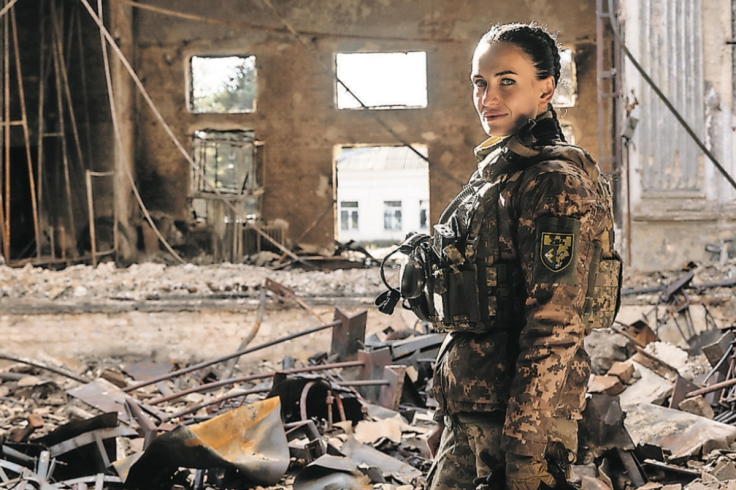
pregnant soldier who cannot outrun a drone 'will probably be killed in action', a Ukrainian major has said, while describing her understanding of the rules governing pregnant servicewomen. The remarks have angered many online.
Major Olga Bihar, call sign 'Witch', was filmed showcasing maternity combat uniforms and explaining how they let pregnant women move fast at the front. 'According to our law, until the third trimester, you're serving,' she said.
She said soldiers have little time to react to drones. 'You have to be fast enough because you have to run away from the drones,' she added, smiling as she handled the garments.
What the Law Actually Allows
Ukrainian guidance says pregnant servicewomen may choose to leave the military or continue serving. However, the Military Ombudsman's Office said in July 2026 that legislation does not clearly define the conditions under which pregnant women must serve, leaving them potentially exposed to physically demanding duties and difficult living conditions.
A servicewoman must register for medical supervision and obtain documents confirming pregnancy, then inform her command. If her condition requires changes to her service, she must provide a certificate of temporary disability or a medical commission decision.
To resign, she must submit a report with a medical document confirming pregnancy. Ukrainian law provides a separate ground for dismissal during martial law, covering both mobilised and contract servicewomen.
Those who stay receive full monetary allowance. A pregnant servicewoman may request a transfer to a position with a lower workload based on medical recommendations. Pregnant servicewomen are not sent to military training camps.
Paid leave linked to pregnancy and childbirth starts from the 30th week and lasts 70 calendar days before birth and 56 days afterwards. Recalling a servicewoman from this leave is prohibited. The basis for granting it is a military medical commission certificate.
Health Risks Around Deployment
A study from the Stanford University School of Medicine, published in the American Journal of Epidemiology in March 2018, shows why timing matters. It examined 12,877 births to US Army soldiers between 2011 and 2014.
Overall, 6.1 per cent of the births were spontaneous preterm deliveries, meaning the babies were born before 37 weeks of pregnancy. Among women who gave birth within six months of returning from deployment, the rate was 11.7 per cent.
Women who gave birth within six months of returning from deployment had approximately twice the adjusted odds of spontaneous preterm delivery compared with women who had never been deployed. Those who gave birth seven or more months after returning faced no increased risk.
Lead author Dr Jonathan Shaw said pregnancies that overlapped with deployment or the return home were 'much more likely to end in preterm birth'. The study found that a history of deployment alone was not associated with a significantly increased risk, but giving birth within six months of returning was associated with higher odds of spontaneous preterm delivery.
Premature birth can cause problems for an infant's vision, hearing, breathing and digestion, as well as lifelong developmental and learning disabilities. Families can also face financial and caregiving burdens.
The research involved American soldiers, not Ukrainian troops. Under US Army policy, a soldier who is confirmed pregnant while deployed and intends to carry the pregnancy to term is placed on temporary non-deployable status and returned to her permanent duty station.
Officer Faces Online Backlash
Many people on social media have taken offence at the interview and at the policy as she described it. The segment was meant to focus on how women's military uniforms have evolved.
Bihar is a former lawyer who enlisted early in the full-scale invasion and served as a mortar platoon commander before moving into senior roles involving unmanned drone systems. Her unit spent five months on the front lines of the Battle of Bakhmut.
Figures vary depending on whether they count civilian employees alongside military personnel. In March 2026, Ukraine's military leadership reported that more than 75,000 women worked in the armed forces, including more than 5,500 serving on the front line. By September, the General Staff reported more than 76,000 women in the Armed Forces, of whom 57,000 were military personnel. More than 20,000 of those servicewomen held combat positions.
Military service for women remains voluntary, although women with medical or pharmaceutical qualifications are required to register for military service. There are currently no legislative initiatives to introduce compulsory mobilisation of women.